




US west coast targets at-berth emissions
Proposals for new technology to reduce at-berth emissions for non-container vessels are being invited in California.
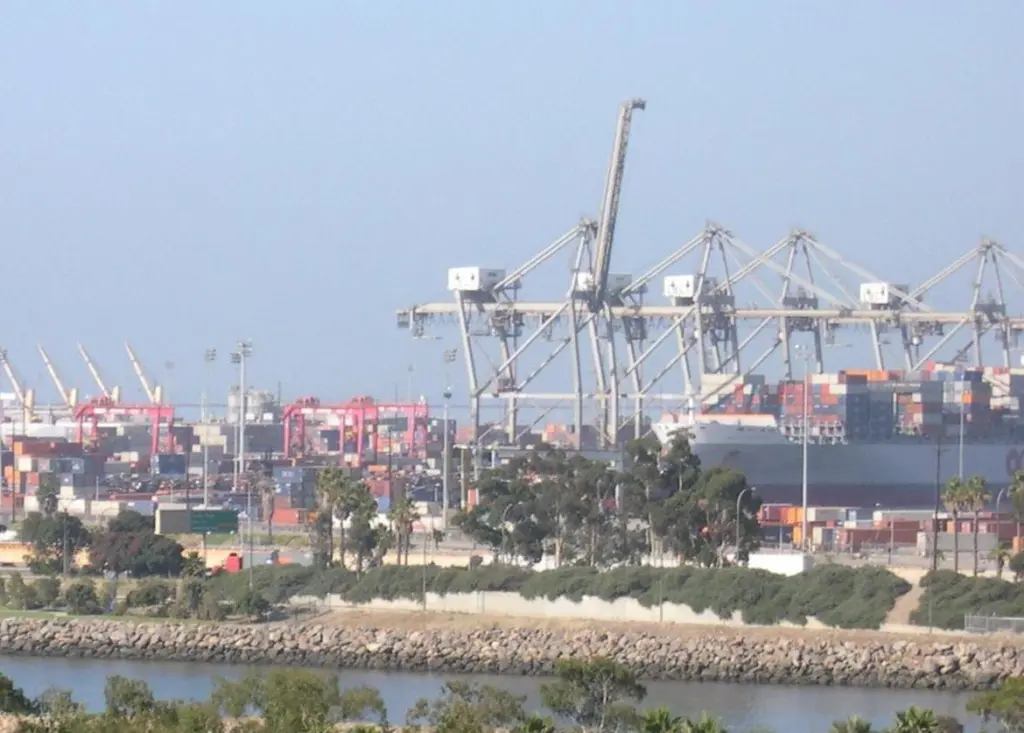
The Port of Long Beach and Port of Los Angeles will consider the technology to tackle emissions from tankers, vehicle carriers, bulk and general cargo ships.
The request for proposals by the ports under their Technology Advancement Programme involves US$1m ($500,000 from each port) to fund demonstrations of one or more cost-effective technologies that can eliminate at-berth emissions from ships that don’t fall under the state’s shore power mandate.
50% investment
Proposers must provide at least a 50% match to the project cost. Proposals are due by 27 February 2018.
At-berth air pollution from container ships is already greatly curtailed by the use of shore power, the ports said in a statement.
The ports have already invested nearly US$400m in dockside power hookups and other infrastructure to facilitate shore power.
Cutting pollution from vessels is a key strategy in the San Pedro Bay Ports Clean Air Action Plan (CAAP), adopted by the ports in 2006.
The CAAP, aimed at reducing health risks, was recently updated to call for a 100% reduction in at-berth emissions from container and non-container vessels by 2030.
Compared to 2005 levels, the ports said the CAAP has helped reduce diesel particulate matter up to 88%, sulfur oxides by 97%, nitrogen oxides by 56% and greenhouse gases 22%.
Related Articles
 ALTERNATIVE FUELS GREENPORT
 OPERATIONS
 ALTERNATIVE FUELS GREENPORT