



Wärtsilä to develop São Mateus port tug
Technology group Wärtsilä has signed a memorandum of understanding with Petrocity, the parent company of the new port being constructed in São Mateus in Espírito Santo in Brazil, to develop a sustainable harbour tug design for the facility.
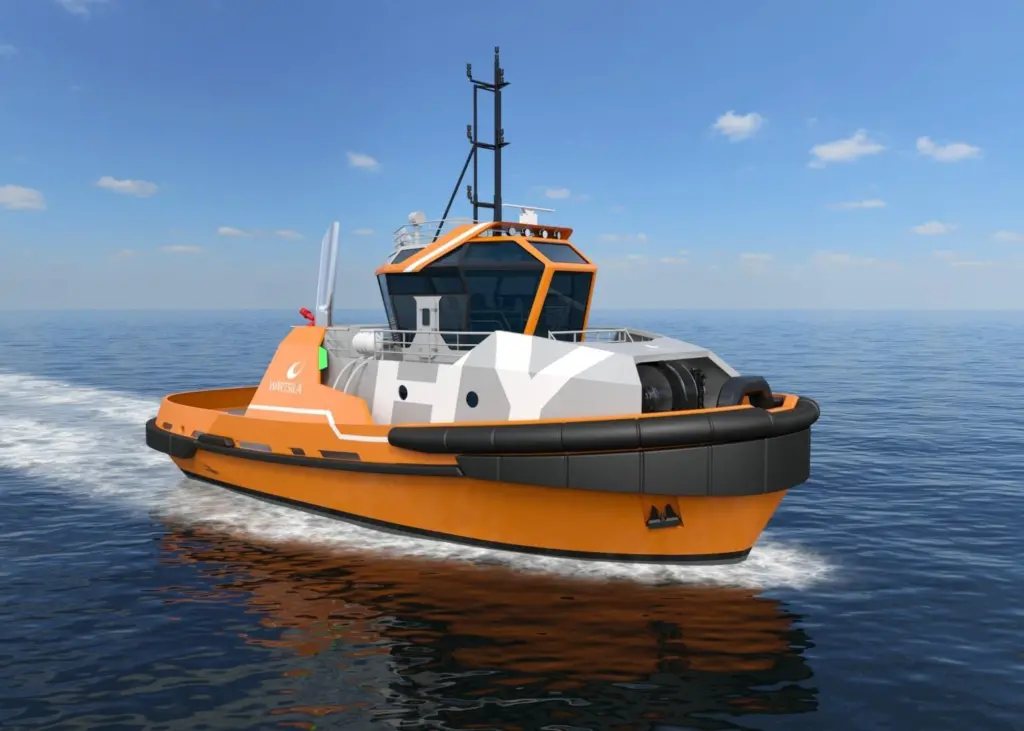
Wärtsilä said that the design’s primary aim was to maximise the vessel’s ecological operational sustainability due to the port’s environmental demands being some of the world’s most strict, and that the design would therefore be based on its recently-launched Wärtsilä HYTug tug design – which features hybrid propulsion and energy storage using batteries.
According to the company, this tug underscores environmental sustainability, operational efficiency and less fuel consumption than with conventional tug designs, with the model’s fuel efficiency also lowering exhaust emission levels.
“The Wärtsilä HYTug will change the landscape of the tugboat market as battery usage significantly increases environmental sustainability and operational efficiency, while at the same time greatly reducing operating costs,” said Mário Barbosa, Wärtsilä Brasil’s Marine Solutions’ sales manager.
HYTug benefits
Wärtsilä added that the Wärtsilä HYTug’s ‘first-of-its-kind’, fully-integrated hybrid power module combines engines, an energy storage system and power electronics optimised to work together through a newly-developed energy management system.
With the load being picked up by the design’s batteries when working in green mode, there is unlikely to be any visible smoke from the tug, and the boat’s noise level will also be notably decreased at the same time, the company explained.
Wärtsilä also said that the overall design of the new hybrid vessel had been “optimised for low hull resistance; high towing and escort performance; efficient sea-keeping; crew safety; and comfort, as well as for easy maintenance”.
Commenting on the harbour tug development, José Roberto, chief executive of Petrocity, said: “This will be the first of many others in a huge logistics project which aims at the regional integration of the Espírito Santo, Minas Gerais and Bahia states.
“It represents a definitive guarantee of the interiorisation of the economy in the north of Espírito Santo.”
Related Articles
 EQUIPMENT
 EQUIPMENT