![PortStrategy[GreenPort]](https://www.portstrategy.com/wp-content/uploads/2026/09/PortStrategyGreenPort.svg)






Capacity Concerns? Not here….
Mexico’s container ports had a good 2024, with further volume growth. AJ Keyes assesses what expansion plans are ongoing in the country and asks whether there are expected to be any space issues moving forward?
In 2024, Mexico’s container ports handled around 9.5 million TEU, reflecting estimated growth of 13.1% over 2023. This increase continues the trend in the country in which container port traffic has risen by an average of 6.5% per annum since 2015. Container volumes at Mexican ports are clearly growing, so what are ports doing to keep pace with demand and can they cope if other ongoing initiatives come to fruition and boost future activity further?
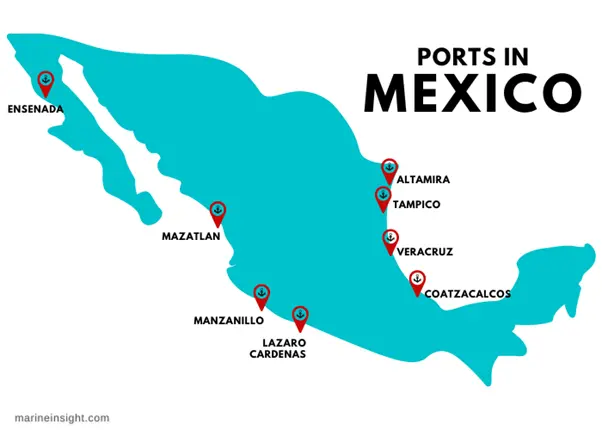
Table 1 provides an overview of port development in Mexico since 2015, with Figure 1 showing the location of the main facilities. Pacific Coast facilities are dominant in terms of volumes, with Manzanillo and Lázaro Cárdenas, accounting for 41% and 25%, respectively, of total country activity. This position is reflective of handling liner services from Asia across the Transpacific using larger vessels than calling to Gulf ports.
Table 1: Development of Container Volumes at Ports in Mexico, 2015-2024 in Million TEU
| 2015 | 2016 | 2017 | 2018 | 2019 | 2020 | 2021 | 2022 | 2023 | 2024e | CAGR | |
|---|---|---|---|---|---|---|---|---|---|---|---|
| Manzanillo | 2.5 | 2.6 | 2.8 | 3.1 | 3.1 | 2.9 | 3.4 | 3.5 | 3.7 | 3.9 | 5.1% |
| Lazaro Cardenas | 1.1 | 1.1 | 1.1 | 1.3 | 1.3 | 1.1 | 1.7 | 2.0 | 1.9 | 2.4 | 9.1% |
| Other Pacific | 0.2 | 0.2 | 0.3 | 0.4 | 0.5 | 0.5 | 0.5 | 0.5 | 0.6 | 0.7 | 14.9% |
| sub-total | 3.8 | 3.9 | 4.2 | 4.8 | 4.9 | 4.5 | 5.6 | 6 | 6.2 | 7.0 | 7.0% |
| Altamira | 0.6 | 0.7 | 0.8 | 0.8 | 0.9 | 0.8 | 0.9 | 0.9 | 0.9 | 1.0 | 5.8% |
| Veracruz | 0.9 | 1.0 | 1.1 | 1.2 | 1.1 | 1.0 | 1.2 | 1.2 | 1.1 | 1.3 | 4.2% |
| Other Gulf | 0.1 | 0.1 | 0.1 | 0.2 | 0.2 | 0.2 | 0.2 | 0.2 | 0.2 | 0.2 | 8.0% |
| sub-total | 1.6 | 1.8 | 2.0 | 2.2 | 2.2 | 2 | 2.3 | 2.3 | 2.2 | 2.5 | 5.1% |
| Mexico total | 5.4 | 5.7 | 6.2 | 7 | 7.1 | 6.5 | 7.9 | 8.3 | 8.4 | 9.5 | 6.5% |
| 5.6% | 8.8% | 12.9% | 1.4% | -8.5% | 21.5% | 5.1% | 1.2% | 13.1% |
Source: Ports, Data&
MANZANILLO TARGETS NO 1 POSITION IN LATAM
So, with ongoing growth for Mexico’s ports, how are the different facilities reacting in order to keep pace with continued demand?
For the short-term, the SSA-operated facility Manzanillo is adding a further 0.3 million TEU by early 2025, which will take total capacity to 2.4 million TEU per annum, while ICTSI’s terminal is adding a further 0.8 million TEU by 2027 to see a total of 2.2 million TEU.
However, the longer-term solution is now also known. In November 2024, Manzanillo, outlined plans to become not only the largest port in Mexico, but the whole of Latin America, by raising its current 3.5million TEU capacity to 10 million TEU per annum.
The US$2.7bn Nuevo Manzanillo project will expand the port into a largescale logistics hub from the current 450ha to 1,700ha – an increase of over 300%. In addition to four container terminals, piers for handling of petroleum projects are also planned. Projecting funding is reportedly being provided by a mix of public and private organisations, including Ferromex (a railroad subsidiary of Grupo Mexico Transportes).
Completion of the project is scheduled for 2030.
TAPPING THE US NEARSHORING BOOM
Mexico’s other main Pacific Coast port, Lázaro Cárdenas, is also seeing expansion and investment.
APM Terminals (APMT) is doubling its capacity to 2.2 million TEU per annum by Q1 2026. The project includes expanding the yard by 15.7ha and modernising the terminal operating system to use Navis N4. Leo Huisman, Regional Managing Director, APM Terminals Americas, notes: “This expansion positions the terminal as a key hub in the region. The increased capacity, new equipment. and yard space will lift the standard of efficiency at the terminal, optimise traffic flows and improve cross-border transit times – a key element of the USMCA.”
Between 2023 and 2026, Hutchison Ports is increasing its terminal capacity from 1.3 million TEU to 2 million TEU, including construction of 345m of quay and 28.3ha of yard space to reach a total quay length of 1,275m and 105ha of yard space upon completion. Additional equipment acquisition of 25 rubbery-tyred gantry cranes and 10 quay cranes is anticipated
A further planned project is La Isla de la Palma, which includes an intermodal terminal, industrial park and logistics area on 600ha of former government land.
“PORT OF THE CENTURY”
On Mexico’s Gulf Coast, the Port of Veracruz is currently undertaking its “Port of the Century” project, that will see terminals developed for liquids, multipurpose, containers, agricultural bulks and mineral bulks.
Total capacity is being increased from 22 million tons to 90 million tons, per annum. Containers are a key component of the project. An initial 500m-long quay is due to be operational by the end of 2025 to handle Post Panamax vessels as part of a mixed-use facility
MOMENTUM FROM RAIL INITIATIVES
Container demand for ports in Mexico is being complemented by a range of different rail initiatives that are taking cargo beyond the country’s borders to/from US markets.
Union Pacific Railroad (UP) is offering a domestic intermodal service that connects markets in Mexico with the US Southeast. Mexican-based Ferromex hauls domestic containers to Eagle Pass (TX), where UP takes over until Memphis, before trucks move units to eastern US railroads for final delivery to US Southeast areas. CSX Transportation covers the movement to Jacksonville and Winter Haven, Florida, with Norfolk Southern linking to Atlanta, Charlotte, and six locations in Florida (in partnership with Florida East Coast Railway).
This routing specialises in supporting vehicle manufacturers that have opened plants throughout Alabama, North and South Carolina, Georgia and Tennessee. Shippers of food, beverages and household appliances also operate distribution centres in the US Southeast and factories in Mexico.
CN, UP and GMXT are offering the Falcon Premium intermodal service connecting Mexico, the US, and Canada. Here, Falcon Premium directly links CN origin points within Canada and Detroit, Michigan, to GMXT terminals in Monterrey, Nuevo Leon, and Silao, Guanajuato.
The service partners have confirmed that goods moving include automotive parts, food, home appliances, and temperature-controlled products.
At the same time, Canadian Pacific Kansas City (CPKC) is offering intermodal rail connectivity linking the US Midwest and Mexico. CPKC is offering daily trains between these two key regions, with direct links to/from Chicago, Kansas City, Texas, Monterrey and San Luis Potosi.
The railroad operator says a total transit time of 98 hours is a day faster than any competitor schedule and appeals to a wide range of cargo shippers.
KICKING THE CAN?
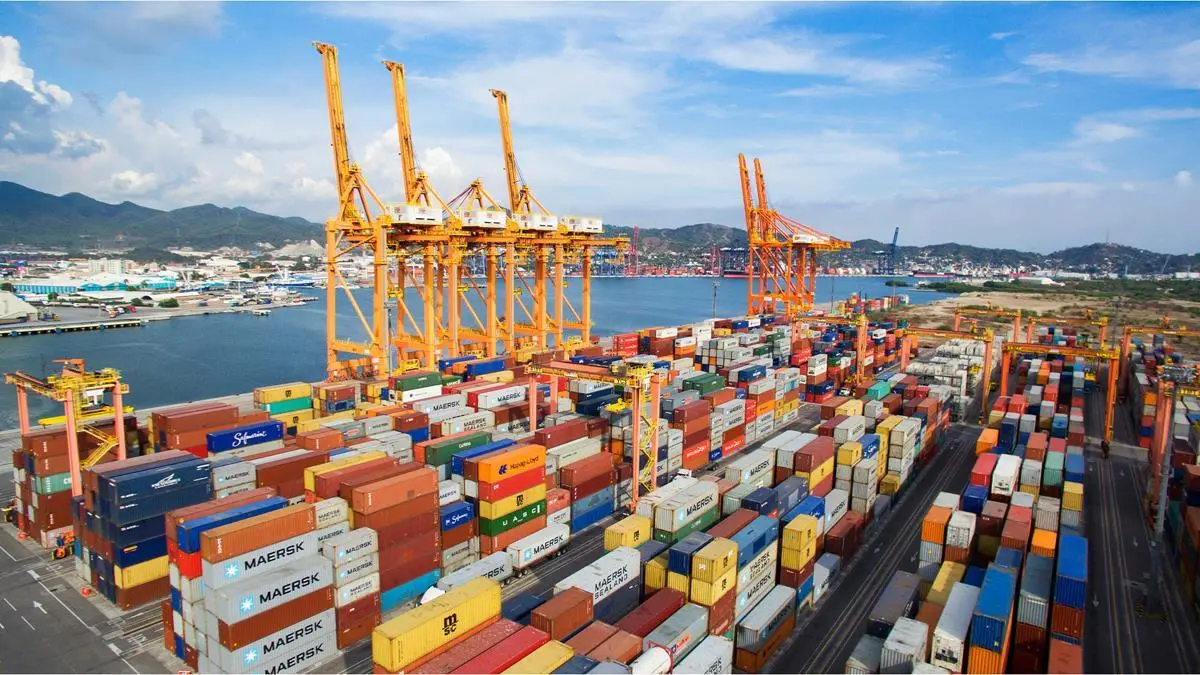
While it is too soon to be able to comment on the impact of any tariffs applied by the new Trump administration in the US, port capacity is not an issue in Mexico, if known port plans come to fruition.
Yet therein lies the issue. Building sufficient port capacity is not the issue, but road and rail capacity from ports, including Manzanillo, is where the can is seemingly being kicked down the road. Mexico has a thriving port industry and a strong manufacturing sector, but time will soon tell if the inland infrastructure is up to the job.
Related Articles
 WORLD
WORLD
 WORLD
WORLD
 PRODUCTS & SERVICES