![PortStrategy[GreenPort]](https://www.portstrategy.com/wp-content/uploads/2026/09/PortStrategyGreenPort.svg)





United by Excess
Korean ports must come together to realise the nations goal of becoming the centre of Asias economic powerhouse
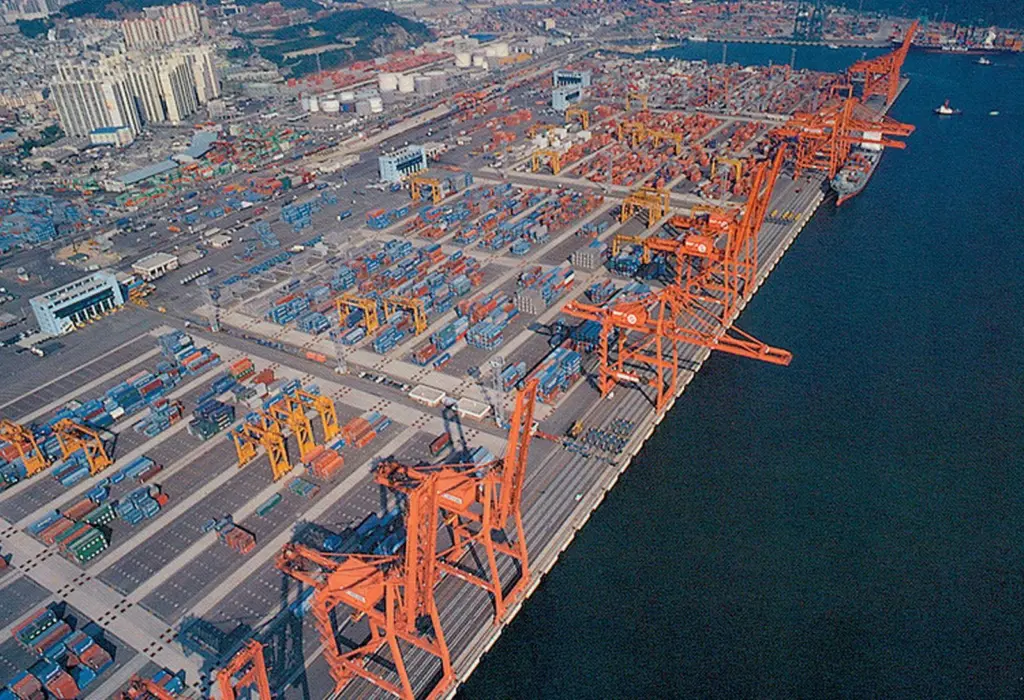
As its neighbours battle to bring port capacity on line, Korea is suffering from quite the reverse problem: finding enough ships to soak up all the planned capacity additions.
The single greatest asset Korean ports have in their battle with their growing Chinese counterparts is price. As all the sudden avalanche of capacity comes on at the same time, the moment has come for Korean ports to unite where possible if they are to fill their berths.As trade between Japan, Korea and China has risen fivefold in the last ten years Korea is desperately trying to position itself as the centre of the world’s most dynamic economic region.
Take Incheon for instance – the air and sea artery to the west of Seoul. Last year container throughput grew 17% to 1.154m teu. Extra capacity in the form of three berths with 1.2m teu annual capability is coming onstream at the South Port to be operated by PSA Corp and Samsung. Another two berths at Songuan across the channel from South Port will add another 400,000 teu, with another smaller berth north of Songuan also under development.
Further outside the city limits, the large South Outer port will see six of the 18 berths due for completion by 2011 for containers,allowing ships of 8,000 teu class to call at Incheon for the first time with a depth alongside at this brand new facility of 16m, giving the port a total container capacity of 5m teu by 2011, and a total cargo throughput goal of 214m tonnes by that time compared with 2005’s 115m tonnes.
Meanwhile, down south, the mayor of Gwangyang, Dr Sung-woong Lee, made the startling announcement at a keynote speech in his hometown this April that the way for his port and nearby Busan to thrive is via cooperation, citing examples such as Hamburg and Bremen who have collaborated successfully since 2000.
Gwangyang and its 12 container berths had a 1.45m teu throughput last year. Against the incredible rise of Chinese ports, the two southern major Korean ports must work together, the mayor reckons, “to enlarge the pie of the whole market by attracting the transhipment cargo traffic against China”. He explained how the likes of old school trunk route ports such as Kaohsiung and Busan had been hit by the changing status of the likes of Dalian,Qingdao and Tianjin which have changed from feeder ports to fully-fledged container destinations in their own right.
“The resultant trunk route was reshuffled,bringing out a multi-hub system in place of the super mega hub port system,” he said. The mayor revealed that unlike cramped, overused Busan, Gwangyang “is suffering from poor use of its facilities compared with capacity”. Just 51% of the port’s capacity is currently utilised with four more berths opening this year.
The ambitious plan for Gwangyang sees a total of 33 berths open by 2011 with a handling capacity of 9.33m teu. But if that is an ambitious goal, then the one Korea’s premier port has set itself is truly bold, going head to head with Shanghai competing for East Asian transhipment volumes. Transhipment accounted for 44% of Busan’s 11.84m teu 2005 throughput.
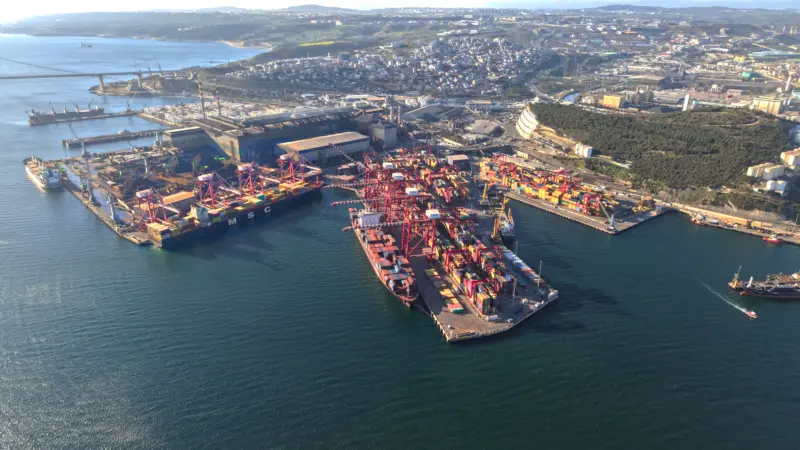
After an inauspicious start – opening without any confirmed customers – Pusan New Port’s first three berths to the west of the city provide much needed breathing space to the city’s overworked handling facilities. A total of 30 berths will open at this gargantuan port complex as old piers in the city centre are redeveloped into property.
MSC became the first line to commit to the new port this March ensuring throughput at the terminal will be above 800,000 teu in the first year. Despite considerable adverse publicity, the Busan Port Authority remains confident that the fight can be taken to Shanghai.
An incentive system has been revitalised whereby shipping companies that handle more than 30,000 teu of transhipment cargo per year or record more than a 3% increase of transhipment cargo compared with the previous year receive generous cash back offers. Furthermore, in 2007 US$5m will be given to shipping companies based on their performance of cargo handling at Busan Port.
Basically, shipping companies handling more than 5,000 teu at Busan are entitled to enjoy the incentive. In addition, $10 per teu will be provided when the shipping companies handle more increased cargoes than those of last year at the largest port in Korea.
In detail, if a shipping line’s handling transhipment cargo at Busan Port increases to 600,000 teu in 2006 from 300,000 teu in 2005 and total transhipment cargo at Busan Port is recorded as 6m teu in 2006, the incentive would be a whopping $3.7m.
Related Articles
 CONCESSIONS & INVESTMENTS
 CONTAINER & CARGO HANDLING
 TERMINAL OPERATIONS