![PortStrategy[GreenPort]](https://www.portstrategy.com/wp-content/uploads/2026/09/PortStrategyGreenPort.svg)





You cannot be serious!
You would think that after at least ten years of full-on port privatisation that countries wishing to attract new investors, and the investors themselves, would know how to get it right. Two recent events, however, suggest otherwise.
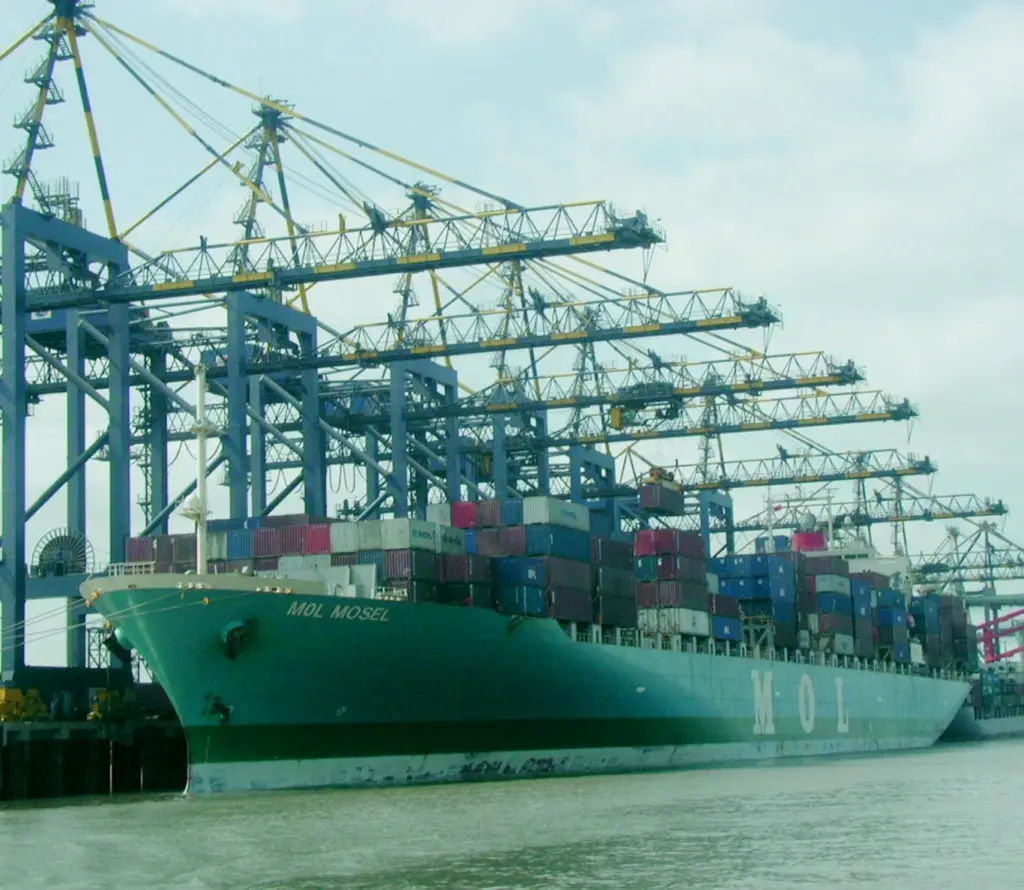
India, in some circles, has been tipped as the next China, the next boom town, with deregulation and a generally more climate underpinning this. Now, though it seems as though the Indian ports system, which in recent years has seen significant foreign investment in its so-called Major Ports, as opposed to the state-run ports, is about to be pushed back into the Dark Ages.
In its infinite wisdom the Tariff Authority for Major Ports, a centralised body, has announced that the revenue earned by concessionaires at the Major Ports has to be brought in line with that earned at the state-run ports. In real terms, this means reduced revenue potential and something of a U-turn within the privatisation culture, i. e. the hand of government is back potentially reaching into the pockets of all those foreign companies who took not inconsiderable risks to invest in the country.
The shining example of this is P&O Ports’ Nhava Sheva International Terminal (NSICT) which stands to lose around US$9m a year based on its projected earnings for the current fiscal year. A big hit, to the extent that it may negatively impact the P&O share price.
The second interesting event is PSA International’s decision to bid up to US$755m to secure the 36-year container handling/break-bulk concession for the Port of Mersin in Turkey.
The famous expression of John McEnroe, the former star tennis player, springs to mind: “You cannot be serious.”
Even without adding the US$70-100m that PSA International and its local partner say they are going to invest, the simplest of financial models tells us that given its size and throughput profile Mersin will never return any profits to the investor if the US$755m price is paid.
It has to be either madness or a ploy to get into the number one negotiating position, so the price can then be driven down.
Don’t worry, though, the solutions are obvious.
In India, terminals like Nhava Sheva should just move away the cranes they don’t need based on their reduced earning capacity – relocate them. Nhava Sheva is operating around a 100% over capacity, but why bother if the profit incentive isn’t there to try and solve a system problem?
Solution number two, for Turkey, is simply make sure the investor pays the price bid – when the world realises the winner isn’t a winner it will soon put a stop to silly games of this sort.
There you go problems solved, no charge!
Related Articles
 OPERATIONS
 INSIGHT & OPINION