![PortStrategy[GreenPort]](https://www.portstrategy.com/wp-content/uploads/2026/09/PortStrategyGreenPort.svg)





Flaws in the jewel
Russia needs to polish its Black Sea port gem before it loses its lustre. Stevie Knight reports
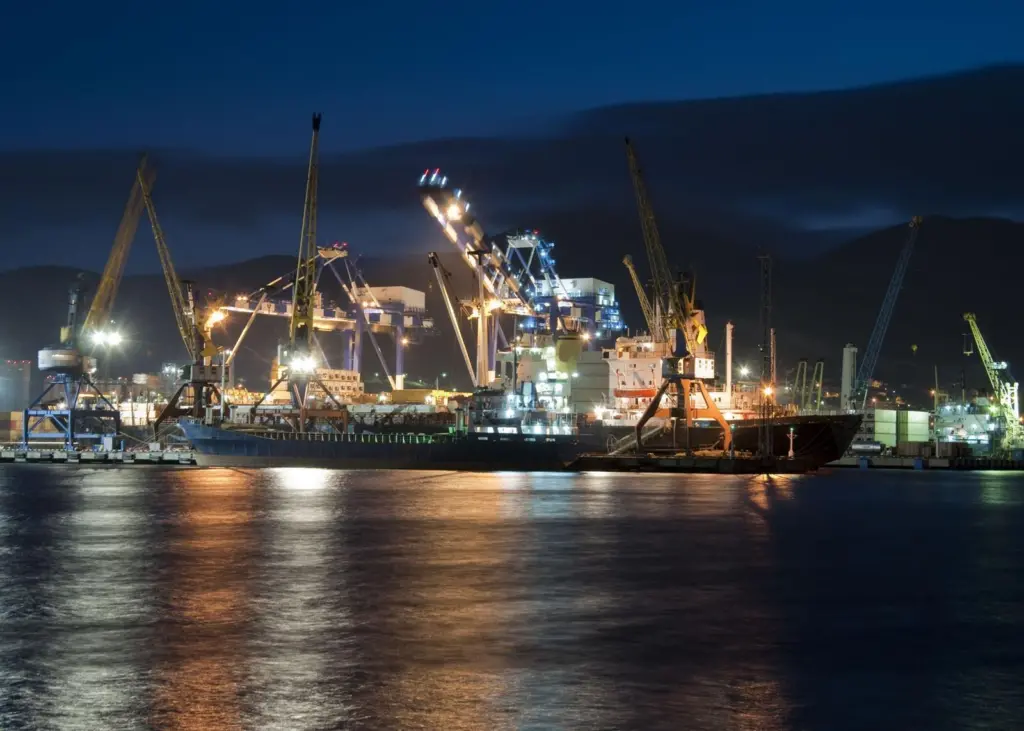
The port of Novorossiysk has for many years been the jewel in Russia’s Black Sea crown: deepwater access, a huge oil throughput and what looked like a more or less captive audience with few competitors.
That is, if you ignored the hard-to-quantify amount of cargo that, according to Alexei Zakharko of Dentons in Moscow, was willing to reroute through Ukraine ports or even go via the Baltic in order to minimise dealings with Russian tariffs and train network: “To transport goods by semitrailer truck is sometimes cheaper than by rail. Even the head of the Russian anti-trust regulator characterised the railway tariffs as ‘crazy’.”
However, the port’s hinterland connections have other issues too: Gordon Rankine of Beckett Rankine explains that while Novorossiysk has benefited from natural protection, the same geology means “its back is right up against the mountains” and it has little room for landside projects.
Frankly, there also may have been some complacency too, linked with its state-owned origins in the old USSR and because the port has a huge oil throughput, exports from Russia and its neighbours. Mr Rankine explains: “For a long time the status quo was perfectly satisfactory for everyone concerned, there was no real driver for bringing in new facilities. However, both the gradually increasing efficiency of containerisation and the increasing penetration into port hinterlands have shown up some gaps in Novorossiysk’s infrastructure. So I’d say over the last five or ten years, Russia has become aware that that they do need more from their ports.”
Further, that oil doesn’t look unshakeable anymore. Although an Azeri pipeline link had become uneconomic a long time beforehand, the rerouting of Azeri oil trade to Ceyhan in Turkey has left the port “vulnerable” says Michelle Berman of Business Monitor International.
Some of the gap may be filled by pouring more oil into the Makhachkala seaport end of a pipeline feed which could transport Turkmen and Kazakh oil says Ms Burman, but she adds that diversification is what’s needed “and more needs to be done if Novorossiysk is to protect itself from throughput declines in the future”.
Container count
While over half of the cargo mix will admittedly remain energy linked in contrast to the tiny 3.4% offered by box traffic, Novorossiysk has already seen some changes. Its container share is growing through the two terminals operated by Novorossiysk Commercial Sea Port (NCSP) and the smaller Novorossiysk Container Terminal (NUTEP). It’s worth understanding that this small percentage still works out to be around 9% of Russia’s total box cargo and it’s going up: “Traditionally the Romanian port of Constanta has functioned as the region’s transhipment hub, but steadily the port of Novorossiysk has been added to direct calls in its own right,” says Ms Berman.
Subsidiary Baltic Stevedore Company (BSC) has a new 400,000 teu container terminal project. An additional 8,000 m2 pier has been leased from Rosmorport: berth and pocket deepening alongside some much needed structural work will allow ship to shore container crane installation; further, there’s a new ro-ro facility being built on the north side of the harbour.
Novorossiysk is already a major player in the country’s grain export supply chain and it stands to grow: last year US-based Cargill bought a stake in Delo’s grain terminal and a new 2m tonne oilseed and grain complex is about to be built in conjunction with state-trader United Grain. However, the frenzy of bureaucracy involved in getting the railroad grain cars into the port rather than action on the quay is a problem plus there is the relative instability of the crop: despite record highs for the last few years, 2010 saw Russia banning grain exports due to low yields.
Further, competition is growing outside the port, in the form of the new development at Taman. “Taman is a very new player,” says Mr Rankine. “Rail connections will be better and it stands to be less choked than Novorossiysk.”
Still, despite the costliness of Novorossiysk’s hinterland, the possibility of a stake looked like juicy pickings for a number of players and only last year a lot of suitors were lining up to get hold of the federal government’s 15% stake, including Rosneft and Summa Group, who with Transneft already own 50.1% of the sea port through Novoport Holding Ltd.
Although there’s been a stay of execution, needless to say there have been some fears that the port’s interests could get tuned to the principal commodity of the dominant player, plus of course this stands in contrast to Ms Berman’s conclusion that “Novorossiysk would be wise to further diversify operations”.
Related Articles
 CONTAINER & CARGO HANDLING
 CONTAINER & CARGO HANDLING
 BULK HANDLING