![PortStrategy[GreenPort]](https://www.portstrategy.com/wp-content/uploads/2026/09/PortStrategyGreenPort.svg)





Ready for gas growth
Rising LNG ambitions mean gas terminals have to up their game. Dave and Iain MacIntyre report
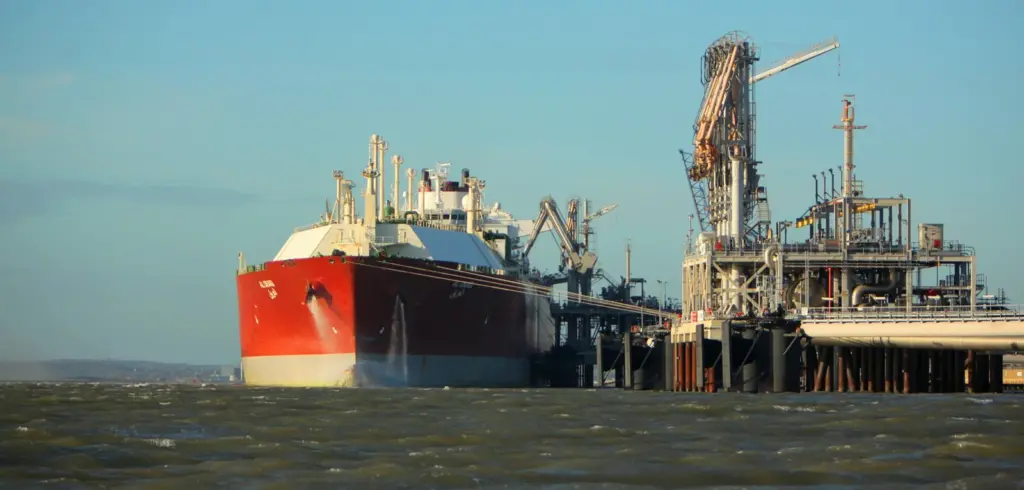
Finding a model for LNG handling
How should a port already placed in the energy sector position for growth in LNG?
New Zealand’s Port Taranaki has 40 years’ such experience and its model is for owners of petrochemical products to provide their own pipelines and conduct their own audits and checks.
Installations are placed on the port’s wharves, so there is integration right from storage and pipelines through to loading arms. Responsibilities are very much sheeted home and defined.
Outgoing chief executive Roy Weaver says his port has responsibilities as the wharf owner, providing pilotage for the vessels and tying them up.
“Our own staff are specially trained in the control of the tanker terminal. That is another set of eyes and ears, and another cross check to ensure that everything that needs to be done according to protocols is being done.”
He says experience with a suite of tricky petrochemical products would be a big plus in moving into the LNG trade.
“We recognise that LNG is going to be a key fuel for the future. It is one of the fastest-growing energy resources in the world.
“We would have very little difficulty in handling that and in fact it may be a little easier than some of the products we currently handle. All of them require different kit and LNG is no exception because it is very cold [about -162oC], but it is one of the better products to handle because it’s not at pressure.”
Mr Weaver says New Zealand is fortunate in being one of the leading nations in health and safety, where the oil and gas industry has played a pivotal role.
Related Articles
 CONTAINER & CARGO HANDLING
 CONTAINER & CARGO HANDLING
 BULK HANDLING