![PortStrategy[GreenPort]](https://www.portstrategy.com/wp-content/uploads/2026/09/PortStrategyGreenPort.svg)





Turning point
Rotterdam is playing a long game with its massive Maasvlakte II development. Felicity Landon reports
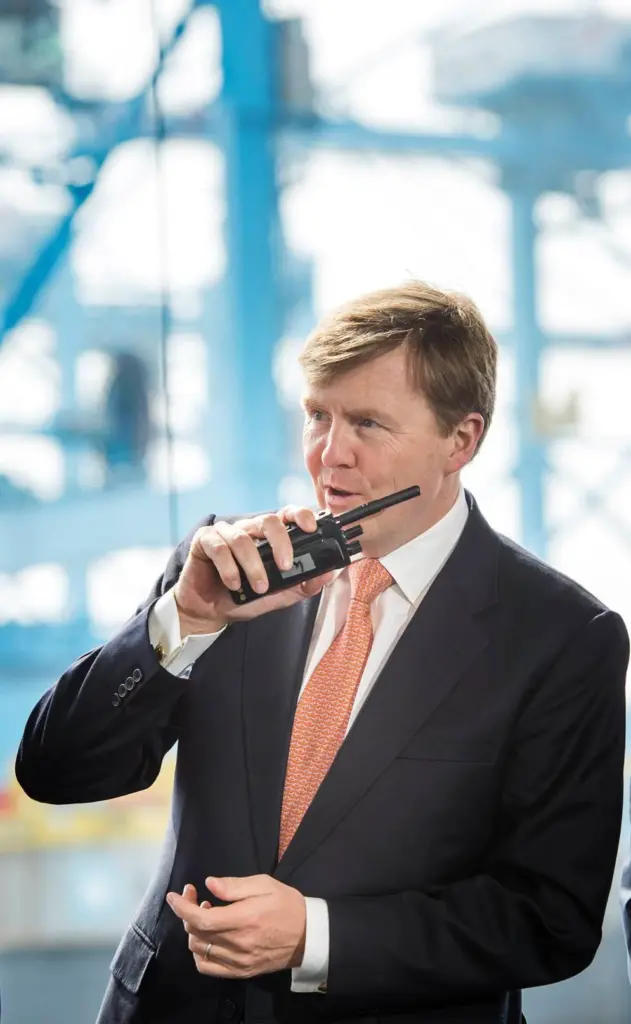
The royal opening ceremony for APM Terminals’ new automated container terminal at Maasvlakte 2 was clearly an important turning point for Rotterdam, Europe’s largest port. Later this year, APMT will be followed by DP World with the opening of Rotterdam World Gateway; together, the two terminals will add more than 5m teu of container capacity to the port.
If that doesn’t knock congestion issues on the head, then nothing will. Port authority spokesman Sjaak Poppe says: “When both terminals are up and running, the congestion problem we have been having should be over.”
However, it’s not a case of millions of containers switching sites overnight: “It is something that is going to happen gradually,” he says. “And what we also expect, and what we have contracted with both terminals, is that they will attract volume from other ports to their new facilities.
“We certainly do not expect to be handling 5m teu at Maasvlakte 2 by next year – the terminals will grow gradually, depending on how the economy is doing and the speed that each terminal comes into operation and is running at full speed.”
So, a clear threat to Rotterdam’s competitors? “I think in the container business, ports and terminals are always on the watch-out for one another and looking at each other’s figures,” says Mr Poppe. However, he points, out, Rotterdam chalked up a 5.8% increase in container throughput last year, to reach a total of 12.29m teu.
Overall, Rotterdam reported a 1% increase in volumes in 2014, to a total 445m tonnes. Within that figure, breakbulk was up by 12.1% but oil products fell by 8.1%, although there was a 4.8% increase in crude oil passing through the port.
The first quarter of 2015 has looked strong, with total volumes up 7.2% year on year. Containers, measured in teu, were up 7.6% and liquid bulks rose 14.7% in the three months, including crude and oil products, but dry bulks were down 5.1%.
The decrease in dry bulks reflected a mild winter, so less demand for coal, while agribulks were down 12.4%, thanks to good harvests and the weak Euro.
“Liquid bulks are doing quite well for two reasons,” says Mr Poppe. “First, more crude oil is being refined because of the low oil price and subsequent higher margins at the refineries – there was an increase of almost 7% in crude. Second, mineral oil products were up by nearly 27%. That has a lot to do with trading activities because prices were low.”
Containers, he emphasises, represent only about 30% of what is being shipped through Rotterdam, while liquid bulks make up 50%.
Offshore options
Rotterdam is also focusing strongly on offshore activities, and the Maasvlakte 2 area will play a big role in this. For the ultimate symbol of Rotterdam’s clout here, Allseas’ Pioneering Spirit, the world’s largest platform installation/decommissioning and pipelay vessel (and biggest vessel in the world), is being completed at the port.
“Offshore activities are increasing with wind turbines in the North Sea but mostly there is a lot of work to be done with old platforms to be demolished over the next decade; we see a lot of companies in the Rotterdam area being active in this kind of business,” says Mr Poppe.
As a port authority, Rotterdam has traditionally focused more on volumes of cargo being handled – “but this offshore activity leads to a lot of work”, he says. “It is innovative, so with the facilities like those we have now for Allseas, it is something we are promoting.”
The advantage of Maasvlakte 2 is the flexibility of its space; the entire area, land and water, covers 2,000 hectares, and only 40% of that total is currently leased into operation.
“So we have a lot of land and water we can use for this kind of offshore activity. The port authority put €1.5bn into Maasvlakte 2 and we have to earn it back.”
It is expected to take 25 years to use the whole area, which will be developed and/or reclaimed according to market demand – care will be taken not to reclaim land where it might turn out that water is needed for a particular activity.
As well as offshore activities, target markets include the chemicals industry, and plans are also being progressed to develop a ‘bio-based cluster’.
Related Articles
 CONTAINER & CARGO HANDLING
 CONTAINER & CARGO HANDLING
 BULK HANDLING