![PortStrategy[GreenPort]](https://www.portstrategy.com/wp-content/uploads/2026/09/PortStrategyGreenPort.svg)






Price wars
Is it time for a radical rethink on container terminal pricing? McKinsey & Co seem to think so. Barry Parker reports
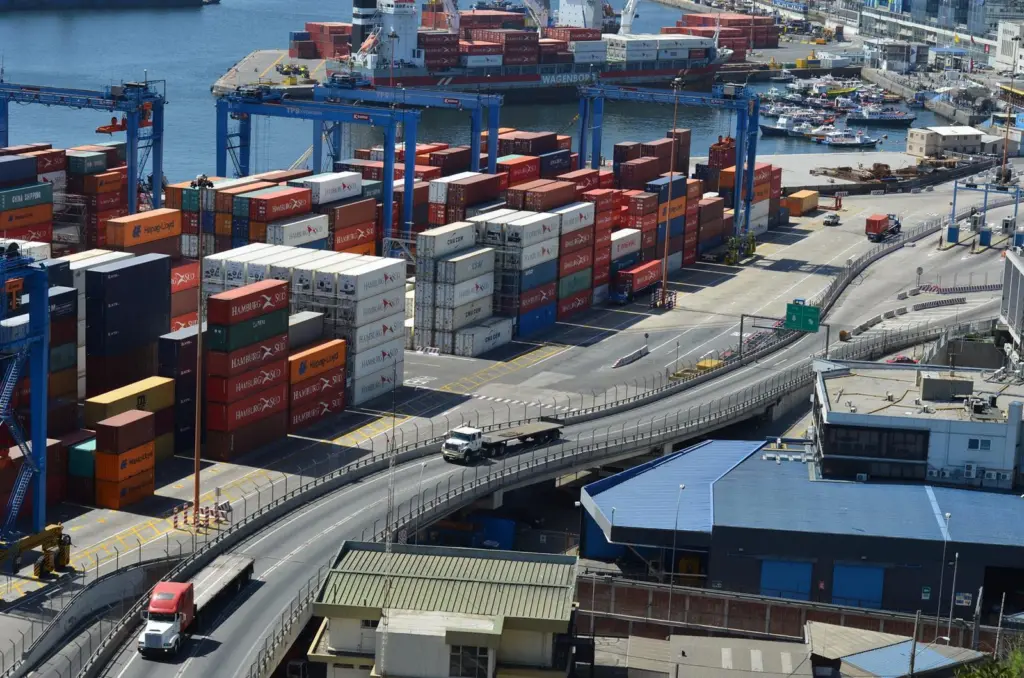
In a chilly time of the year in the northern hemisphere, a lot of heat has been generated by McKinsey & Company’s article urging a rethink of pricing at container terminals.
McKinsey’s How to rethink pricing at container terminals presents a new pricing model with a scenario analysis, aiming to encourage efficiency at terminals. The essence of the report is that “terminals should price to encourage productive behaviour by their customers” which creates a virtuous circle, with the consultant noting the benefits to carriers of reduced port times, lower costs, and more reliable schedules.
One of the authors, Shanghai-based consultant Steve Saxon, explains the thinking behind the report to Port Strategy: “Our proposed new pricing structure was deliberately provocative. By showing an almost crazy target, there’s a chance that it may shift terminals and lines a little way towards this.” Though it’s still early days and only a few months since the article’s publication, Mr Saxon says: “The success is in the debate that’s been stirred up”, adding that one leading global terminal operator is already very interested, and that follow-up conversations are already underway.
One impetus behind McKinsey’s article were the problems emerging from the increase in vessel sizes and the resultant strain on terminals, which – in the views of the consultant – have for the most part continued to charge uniform pricing. The challenge for consultants like McKinsey seeking to encourage pricing innovations is that the interface between terminals and vessels is part of a much larger supply chain dynamic.
Dr Noel Hacegaba, chief commercial officer at the Port of Long Beach, California, explains that as a landlord port, Long Beach cannot evaluate McKinsey’s new pricing model. However, he tells Port Strategy that while price is certainly an important factor for shipping lines and their customers, there are other factors that also weigh heavily when it comes to terminal selection. He cites reliability, predictability, velocity and flexibility, adding: “Our view is that optimising the supply chain, including terminal operations, requires a systems approach that is holistic in nature and comprehensive in scope.”
Pricing tools
Dr Hacegaba’s view of the world comports nicely with McKinsey’s. Pricing is not viewed as an end unto itself; rather the pricing is a tool for the terminals to operate more efficiently. There are precedents elsewhere in the world of liner shipping, most notably at the Panama Canal. Here, it has been have suggested that the Canal will plump for volume-based pricing through a new “loyalty programme” for larger container vessels which would co-incide with the opening of the new locks.
Meanwhile, the McKinsey consultants have been making the rounds, contacting all of the different nodes in the supply matrices, including the carriers. Mr Saxon explains that the most resistance has come from the lines, even those who would benefit from improved turn times and lower port costs. When asked about the nature of the push back, he cites “internal” organisational-type challenges and inertial issues where, as an example, “the terminal procurement team see changes to pricing as a headache for them” in spite of overall benefits for the carrier. He also suggests that internal blame games might ensue, asking rhetorically about penalties for late stowage: “Who would pay; is it the commercial team who accepted late cargo? Or the vessel planning team? Or the terminal’s team?”
Clashes can also be external, ie between different organizations. Andy Lane, partner in the Singapore-based CTI Consultancy, cautions: “Whenever you introduce complexity and/or punitive rigidity into a commercial agreement (contract), you also lose the spirit of collaboration and co-operation – which can often generate far greater results. There is already a complete absence of trust between terminals and lines, and this is resulting in neither party realising mutual benefits which could be unlocked from working closer together as partners.” In some cases, the business processes may impede collaboration, with Mr Lane citing the example of “charging one party (container operator) a varying price for handling dependent on its position on a vessel, when the execution of that process is controlled by a different party (vessel operator).”
McKinsey sees software solutions as pivotal to the successful implementation of its variable pricing, but the consultants are quick to caveat that the pilot of a new charging system could be done manually. “We don’t want systems issues to be an excuse to no try this,” they say.
TOS input
PS asked Jake Kim, sales & marketing for ports and terminals for CyberLogitec, which has implemented its OPUS Terminal packages in over 20 of the industry’s most automated facilities, about the use of sensors as part of implementation of a new pricing system. He comments that his company is receiving “more and more requirements regarding interface with various sensors such as OCR, RFID, DGPS, and intelligent CHE”. Making the terminal operating system work smarter by integrating the TOS with various sensors is one of the big trends in terminal IT, he adds. But Mr Kim notes that there is more than technology at play here: “I think the article of McKinsey is quite interesting. It exactly reflects technology trends in terminals, but applying a new price scheme is whole another story. It will be very difficult.”
Mr Saxon says the pricing strategy is likely to be based on rules looking at the stowage plan, not actual achieved performance and notes that a carrier should not be penalised if, for example, the terminal did not supply enough cranes. “That’s why we suggest metrics such as ‘number of moves per bay’ which can be discerned without the need for physical technology.” He believes modern TOS systems and incorporated billing modules could be adapted to the new pricing model, suggesting that new algorithms (which would be built into, or alongside, TOS systems) will be needed to calculate the most efficient unloading based off a stow.
However, CTI Consulting’s Mr Lane offers another hurdle to the McKinsey scheme, explaining that: “Tariff complexity not only adds to administrative burden – at a time when many are trying to cut these costs to the bone – but it also creates a loss of standardisation which can increase billing discrepancies and result in delays to payments.” He also states that the complexities of variable pricing might bring about additional costs as a loss of total cost transparency and accuracy impacts revenue levels for the terminal, and consequently the line’s ability to pro-actively manage yields.”
McKinsey & Co’s report can be found here: http://www.mckinsey.com/insights/travel_transportation/how_to_rethink_pricing_at_container_terminals.
ELEMENTS OF MCKINSEY’S NEW TERMINAL PRICING POLICY
|
Cost category |
Cost item |
Cost rationale |
|
Ship-based costs |
Berthing fees |
Larger vessel charged more Smaller vessel charged less |
|
Box-based costs |
Base move Far side & Below deck |
Lowest cost per move Supplemental cost for harder to reach boxes |
|
Additional costs |
Twin tandem lifting Stowage plan timing Unproductive stowage plan Delayed vessel arrival |
Supplemental cost Extra cost for late submission Penalties for unproductive stowage Penalties graduated according to length of the delayed arrival |
|
Discounts |
Delays caused by terminals |
Discounts graduated according to length of terminal delay |
Source: adapted from McKinsey & Co’s How to rethink pricing at container terminals
Related Articles
 CONTAINER & CARGO HANDLING
 CONTAINER & CARGO HANDLING
 BULK HANDLING