![PortStrategy[GreenPort]](https://www.portstrategy.com/wp-content/uploads/2026/09/PortStrategyGreenPort.svg)






Drewry: Less money in terminal operations?
Drewry’s latest Container Intelligence Weekly has argued that it becoming increase challenging for terminal operators to maintain their levels of financial return.
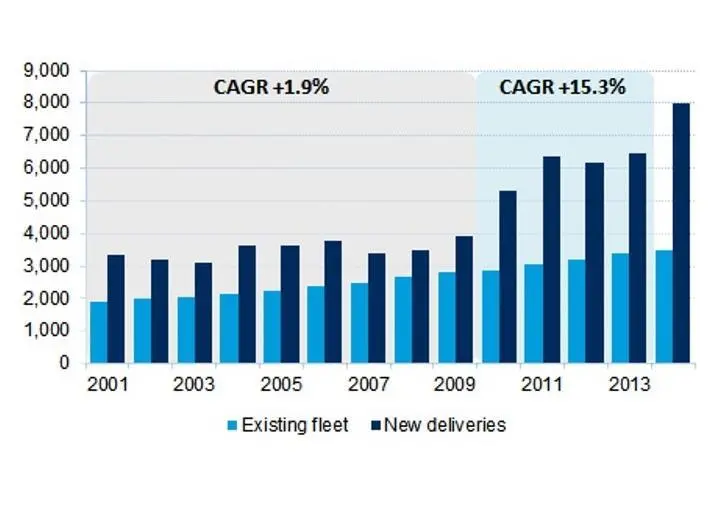
It said that for reasons beyond terminal operators’ control, costs are rising while revenue is not increasing at the same rate.
The global container port industry is said to be entering into a new phase of development, far from the highly profitable and resilient business sector it once was.
Several key variables are now looking increasingly challenging and since the global financial crash in 2008/09, the new normal has been much lower growth in container port throughputs.
There is also a worrying recent hard slowdown in growth triggered by the economic and political changes in China. Last year, global container port growth was only approximately 1%, this is not expected to rise above 2.5% in 2016.
With the industry seeing average and largest ship sizes increasing, ports are seeing a substantial increase in vessel size.
Drewry states that the formation of these larger vessels means that the size and complexity of each customer is increasing for ports and terminals.
Therefore, the new nature of demand is for fewer, but bigger, terminals in each port. But this consolidation is complex and expensive, and may not even be possible.
The shipping consultants compiled possible scenarios for the solution. Firstly, it said that terminal operators and shipping lines should cooperate closely and mitigate the negative impact of larger ships and alliances.
As well as this, significant price hikes could be obtained from shipping lines in order to balance higher costs and maintain margins.
Terminal operators could accept a new era of lower margins and returns, but it argues that some operators and investors may choose to leave the market.
Related Articles
 CONTAINER & CARGO HANDLING
 CONTAINER & CARGO HANDLING
 BULK HANDLING