Ports in Latin America and the Caribbean saw container throughput rise by 7.7% year-on-year in 2018.
According to data from the UN’s Economic Commission for Latin America and the Caribbean (ECLAC), which looked at 118 ports and port areas in the region as well as 31 nations, the sample’s total activity volume surpassed 53.2m teu last year, marking a slight rate increase against the year beforehand.
Sixty-six ports and port areas saw their figures improve in comparison with 2017.
Country-wise, Brazil contributed the most to the total volume of cargo handled based on quantity of teu mobilised. This nation was followed, in descending order, by Mexico, Panama, Colombia, Chile, Peru, Argentina, Ecuador, the Dominican Republic and Jamaica. The 10 countries represented 84.1% of regional movement.
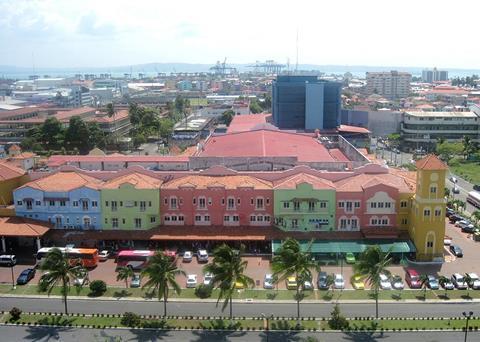
According to ECLAC, the top port zone in Latin America and the Caribbean last year (as regards the cargo volume operated in ports) was Panama’s Colón, with 4.3m teu.
After Colón, in descending order, came Brazil’s Santos, Mexico’s Manzanillo, Colombia’s Cartagena Bay and Panama’s Panama Pacific.
So revealed the ECLAC sampling, the East Coast of South America recorded a 12% rise in the activity of ports and port areas in 2018, measured in terms of volume, while growth in total throughput in the Caribbean was the same percentage.
The Gulf of Mexico region grew 8% against 2017, while the West Coast of South America area grew 7% last year.
Central America (excluding Mexico) also marked 7% growth, but only on the West Coast due to the East Coast essentially maintaining the same activity levels as in 2017.
However, Latin America and the Caribbean has some catching-up to do: the 10 biggest ports worldwide represented 32.2% of global throughput in 2018, while those of Latin America and the Caribbean represented just 3.5%.