

Ports adopting a port community system can create a strong network among its many stakeholders, according to South Korea''s Total Soft Bank, well known for its PLUS (Port Logistics Unifying System).
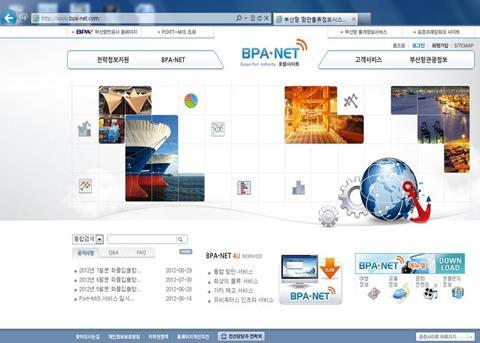
The company's PCS incorporates the handling bills of lading and manifests, as well as electronic data interchange generated by both Customs and terminals, in addition to other government agencies' documents.
According to PLUS team senior manager, Chad Lee, the solution enables a port to establish an effective paperless administration.
“It can distribute required information without additional creation of paper documents for various stakeholders, thereby resulting in increased operational efficiency,” he says.
One of the main reasons to adopt a PCS, he says, is to improve the handling of manifests, customs release notes and ships' discharge reports, since these three areas are perhaps the most heavily used by the port community.
However, in order to successfully implement a PCS, Mr Lee says that it is imperative that all major users are in agreement prior to adopting one system over another.
“Basically, a PCS supports all participants in the logistics chain, helping them to communicate with each other in a fast, accurate and seamless process. Thus, it should not only provide a neutral business environment, but also contain valuable, useful and reliable information, taking into account each user’s requirements, work conditions, and so on. In this respect, the users’ cooperation is a prerequisite for success.”
Gothenburg (Sweden), Johor (Malaysia), Sultan Qaboos (Oman), Mombasa (Kenya) and Busan (Korea) have all adopted PLUS.
Mr Lee lists the benefits of a PCS as threefold. Firstly, they promote increased efficiency through a one-stop service for all port administrative affairs and the move to a paperless work process. Secondly, the creation of a web-based business environment leads to ease of access. And, thirdly, there is a cost saving, since a PCS speeds up work processes, while making them more accurate.
Since PLUS was first launched (in 2007), TSB has been improving system features. Last year, the latest version of PLUS, which is equipped with BPM (Business Process Management), was introduced.
It is different from existing PCS models in that it can standardise work processes by focusing on overall business performance in addition to maintaining an efficient work flow and helping users to meet key performance indicators.