Dave MacIntyre asks the experts how to plan for dry bulk port development.
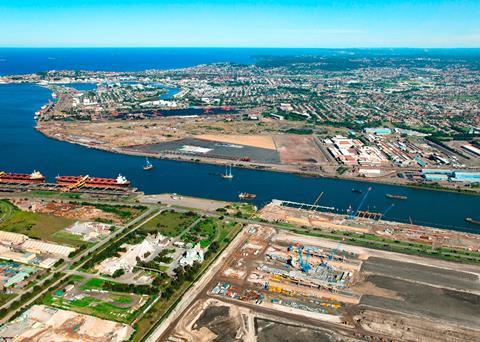
Australia’s domination of the dry bulk handling trades is gathering steam as the demand for ores and minerals continues unabated.
The Australian Bureau of Agriculture and Resource Economics and Sciences predicts that by 2016 Australia’s coal exports will increase by over 50% to 460m tonnes per annum (mtpa).
Such exposure to dry bulk trades gives the country a head start when it comes to the complex issue of planning and designing bulk terminals with their operational, logistical and environmental challenges. Often, these issues are outside the control of the terminal developer.
So what port planning lessons can be learned by any port around the world considering greenfield dry bulk port development or extension/expansion of an existing bulk terminal, based on Australia’s experience?
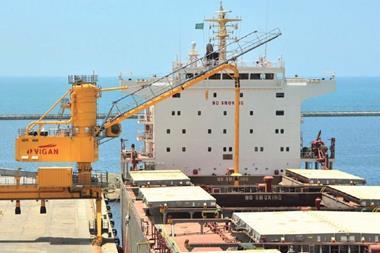
A case study is the greenfield Newcastle Coal Infrastructure Group Coal Export Terminal, for which Aurecon Hatch provided engineering, procurement and construction management services after delivering the concept study, pre-feasibility study and feasibility study.
The first stage, with an export capacity of 30 mtpa, opened in May 2010 and was the largest single-stage development of a new coal terminal in the world.
Innovation abounds
A number of innovative techniques and features were incorporated, including wide-bed stockpile designs using combined stacker reclaimers to provide a 60% increase in coal storage capacity, reducing capital costs by about A$160m (US$168m). Fully automated stacking and reclaiming systems were introduced to reduce operating costs and exceed environmental requirements.
The project was delivered in 26 months, five weeks ahead of schedule and under budget, leading to Aurecon Hatch receiving a gold award for project management at the Consult Australia Awards for Excellence in 2011.
Carsten Varming, competency leader, Ports and Coastal for Aurecon, says the key challenge in the NCIG project was the influence external parties had on the terminal development, with a number of concurrent projects impacting the ability to develop the NCIG project through to commissioning and the ability to load vessels.
“From the onset the project team adopted a proactive approach, providing assistance and sharing information across the parallel projects. This helped these projects progress as fast as possible and assisted NCIG in achieving an early commencement date for coal export.”
A second issue was an overheated global market causing upwards pressure on capital costs and challenging the development timeline. Aurecon was able to establish alternative delivery solutions that provided surety on timelines and reduced capital cost by accepting of a higher level of risk — something the project delivery team then had to manage carefully.
The physical design of the terminal also had to deal with challenging ground conditions.
Joining the dots
Mr Varming says there are a wide range of considerations that need balancing when dealing with a bulk terminal development.
Often these considerations will be non-complementary, preventing the optimisation of them all. It is therefore important to get to the core of the key project drivers, and Mr Varming lists some fundamental considerations that terminal developers should grasp.
“Ensure balance across the entire logistics chain from pit to customer. If one of the links has a significantly-lower capacity, you’re spending capital on capacity in the rest of the chain that you will be unable to access despite the high capital investment … For example, a car dumper will have a certain capacity and you cannot increase this by a further 20%. You have to invest in a second car dumper which will double your capacity whether you need it or not.”
Defining the operating philosophy of the proposed bulk terminal at an early stage will have a significant impact on the design of the terminal elements. Will there be maximum automation for example?
Another important consideration is fully appreciating the impact existing terminal and port operations are going to have on the proposed development.
Make time
The time needed to develop the various elements is also critical in getting the overall project timeline and work sequence right, and optimising the cash flow for the project development, says Mr Varming.
“Project drivers will require regular revisiting as external factors may cause them to change. Assessment criteria will need to change accordingly.”
If dealing with a greenfield bulk terminal, developers must not assume that because a solution worked well elsewhere, it will work well for the project under consideration. “Experience has shown the development of ill-considered terminals under the guise of saving money on the engineering. Frequently the costs of these are so substantial they dwarf the savings achieved in the engineering,” warns Mr Varming.
“Unfortunately these additional costs often materialise during project execution when the contractor finds that the design, which worked in another location, does not work for this location. They then have to wait for a redesign of either entire element packages or components of these.
“The preferred situation is to enter construction knowing exactly what you are going to construct.”
Up and running
If developing an existing operation, it is not possible to shut down existing elements for any great lengths of time without an adverse impact on the revenue of the terminal.
“The expansion of old terminals in particular can be demanding. There is often limited information available about the existing elements. This makes the design of new additions that fit onto the existing elements without major issues a real challenge.
“Fortunately the advances in survey technology enable much better definition of existing elements through 3D surveys, which can significantly reduce issues during construction,” says Mr Varming.
A regular occurrence is an attempt to increase the capacity of one element which forces the replacement of existing terminal elements, with available land being optimised to achieve a target throughput — “It is like opening a can of worms: once open it will be very hard to put the lid back on.”
Green goal
On the environmental side, he says statutory authorities are demanding better definition of the potential impacts of developments. Monitoring data from existing terminals may make this possible but the battery of investigations and modelling needed is considerable to satisfy statutory demands.
Finally, Mr Varming says a proven way to keep the local community onside is to keep them well-informed throughout the project development process.
“Most communities have a natural suspicion about the objectives of a proposed project, mostly founded in a lack of knowledge regarding the purpose of the project and its proposed development. Taking time to explain the key issues and how you intend to manage those, finds most communities becoming supportive of the development.”