


Conveying more than bulk cargoes
Fire incidents involving conveyors highlight the dangers of poorly maintained and closed systems, finds Iain MacIntyre.
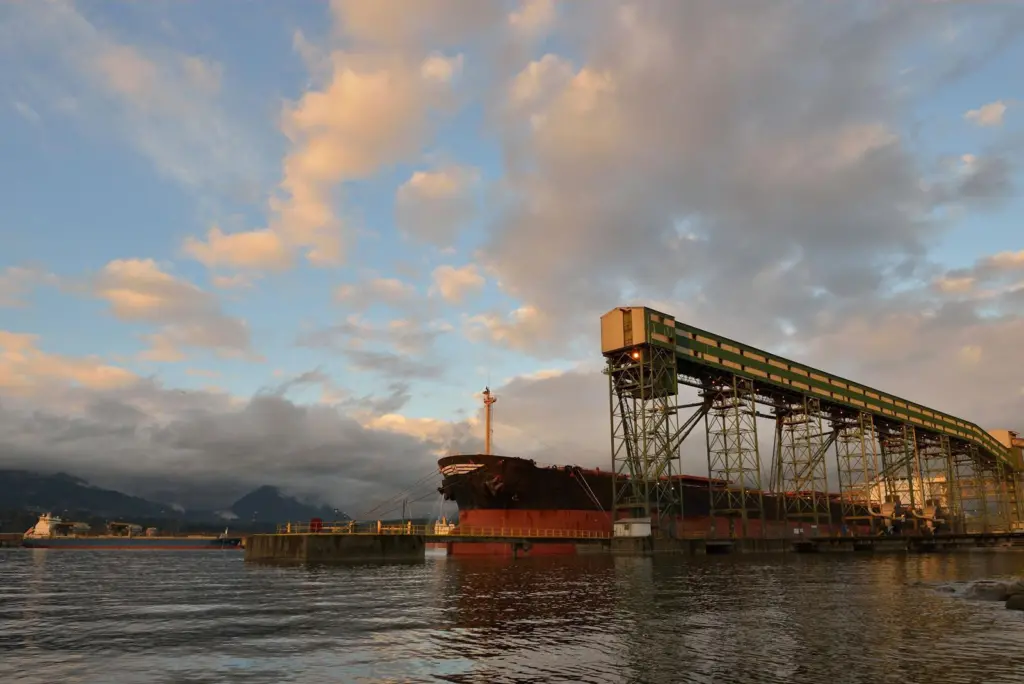
Recent Australian reports of fires involving conveyor systems at both a bulk product-handling port and then onboard a bulk product-carrying vessel have brought home the potential operating hazards in the industry.
In January this year a ‘minor’ fire requiring emergency services about half-an-hour to extinguish was reported at one of the unloading conveyor machines within Gladstone Ports Corporation’s RG Tanna Coal Terminal.
Then in June, a six-day response was reported to extinguish a fire that broke out within the conveyor belts and cargo handling system linings onboard the self-unloading bulker Iron Chieftain while it was discharging a consignment of dolomite at Port Kembla.
Martin Engineering chief technology officer and conveyor products business group director Paul Harrison tells Port Strategy that there are “inherent risks” in the sector.
“If one takes the most simplistic view of the system, it is a multi-tens-of-kilowatt machine – some conveyors even have tens-of-megawatt power,” he says. “At any time that huge amounts of power are introduced into a system, there is risk. For example, belt mistracking can cause the conveyor belt to rub on the steel structure. This causes the rubber to heat up and can eventually catch fire.
“This situation is particularly dangerous as the moving, dripping, burning belt can set fire to items under the belt for the entire belt length. If there is material on the belt that is combustible it could also burn.”
He adds that if the burning material is transferred to another belt, it can also start burning until a cataclysmic fire is raging plant wide. And this could even happen in a well-maintained system where the properties of the material change, causing uneven belt loading, leading to mistracking.
“Another example would be in a poorly-maintained system where the gravity take-up has jammed and there is insufficient tension on the head pulley. The head pulley continues to rotate, but the belt is stationary. The rubber starts burning and a fire is caused,” says Mr Harrison.
Coal handling requires working with a material that is, by its very nature, dangerous because it is flammable. There are numerous cases of coal stockpiles spontaneously combusting and there are guidelines for how to store coal in stockpiles – such as ‘rolling the coal’ and ‘rolling the pile’ to reduce the risk of fire.
Design guidelines
To mitigate such risks, Mr Harrison says the best practice is to “design the conveyor correctly from the beginning” as well as ensuring that regular maintenance work is performed.
“A conveyor is a highly-complex machine and so there is not one best practice, but many, that make a conveyor safer and more productive. As an example, there is no best practice to make a car safe – one can service it regularly, repair damage, do a pre-use check and all of that can be eliminated by texting while one drives.”
Although noting that in general, there are fairly robust fire suppression requirements for conveyors to prevent belt fires from spreading, Mr Harrison observes that “cost is relative” with regard to other safety measures.
“The most expensive part of a conveyor system is the belt, which itself has the least to do with safety – for example, newer belts mistrack much more than older belts. This is because the conveyor system has been adapted over time to prevent mistracking.”
Putting on a new belt means that all of the old tracking fixes will need to be undone to allow the system to normalise. Once that is complete, the new belt will mistrack in its own way, which will need to be corrected. As the belt wears in it will again need to be tracked.
“Operators prefer, for the cost and tracking issues, not to have to replace belts,” says Mr Harrison. “But the safety guarding and other safety devices cost peanuts and so it is not their cost that prohibits conveyor safety.”
Cost can also be a loss of profit: stopping a belt to install equipment to make the system safer means less production and that can be costly.
Fire spread
Describing the subject as “interesting and important”, Neuero Industrietechnik managing director Tomas Kisslinger imagines the reported Australian fires could have evolved from a belt conveyor having a “drum problem that moved along the shaft and rubbed on the side wall”.
“During operation, the belt cooled and the speed did not allow the heat transfer,” he says. “By stopping, the heat is concentrated and even with rubber with retardant characteristics, the rest of the conveying material, paint and grease may also allow fire to progress.”
The use of belt conveyors involves rotating parts like idlers and pulleys and while enclosed conveyors are good at fighting dust emissions, these need specific solutions to identify a part failure before fires ignite.
“It is not always possible to create equipment and systems that can run without consequent supervision,” he warns.
In regard to recommendations on best-operating practices or improvements to the setup/installation of conveyor systems, Mr Kisslinger notes that as problems often occur during the stopping phase, operators should follow a three-point checklist: periodically check the idler; make part replacements when noise is detected; and have access to readily perform checks.
“Of course it is possible to install temperature and/or smoke sensors along the conveyor with sprinklers, but the cost is high,” he says. “And you may invest in control measures like sensors but they will act only after the problem happens.”
Machinery age question
Interestingly, neither party believe that older conveyor systems increase the risk of fires at bulk-handling terminals. In fact, they suggest that the opposite might be true.
Says Mr Kisslinger: “I am not sure that it is a matter of out-dated conveyors – sometimes it seems the full reliance on new equipment without control has the same effect. New equipment is designed to protect against rotating parts and dust emission, but I’m not sure about fire.”
Adds Mr Harrison: “The age of the conveyor has very little to do with the risks associated with conveyors. In fact, the newer the facility, usually the bigger, more powerful the system with the associated risk of bigger problems. The most important contributor to safety risks is poor maintenance of the system.”
Mr Harrison says that he has been involved with conveyors for almost a decade and still learns on every customer site.
Regarding the January incident at Gladstone Ports’ RG Tanna Coal Terminal, Workplace Health and Safety Queensland (WHSQ) says it is aware of the incident and has made inquiries, albeit noting the port authority was “not required to notify WHSQ of the event”.
The Australian Transport Safety Bureau is investigating the June fire onboard the Iron Chieftain at Port Kembla, with the Australian Maritime Safety Authority assisting as required. That investigation is ongoing.
Transport Accident Investigation Commission (TAIC) senior communications advisor Simon Pleasants says it is understood conveyor belts are used at the New Zealand ports of Lyttelton and Tauranga.
“But no accident or incident on a conveyor system has yet triggered a TAIC inquiry,” he says.
SETTING FOUNDATIONS FOR CONVEYOR SAFETY
Over the past almost two decades, Martin Engineering has published its “Foundations” series of books to teach industry personnel to “operate and maintain clean and safe belt conveyors”.
Martin Engineering chief executive Robert Nogaj describes these publications, which can be downloaded free from the firm’s website, as having established themselves as a “bible” to the industry.
According to the company’s promotional material, protecting workers – and by extension, their families – from the inherent dangers in the industry is not only the “right” but also the “financially responsible” thing to do.
“The health and safety of workers is everyone’s highest priority and the risk of injury or death from workers getting caught in rotating equipment or manually dislodging obstructions in material flow is always present,” it states.
“Additionally, dust suspended in the air from bulk solids like coal or cement can be inhaled by your workers, causing serious respiratory problems and other illnesses.
“In a plant where workers are not protected as part of the culture and strategy, the legal liability is much more severe. The potential for lawsuits goes up and the cost of insurance is higher. Plus, you run the risk of being fined by the government for safety violations.”
With Foundations For Conveyor Safety, Martin Engineering states it has collated all of the proven best practices for keeping workers safe into a single textbook.
“That means you can literally talk about safety with the people who ‘wrote the book!’ There’s even a section in the book on how to demonstrate return-on-investment for new safety initiatives.”
Related Articles
 CONTAINER & CARGO HANDLING
 NEWS
NEWS
 CONTAINER & CARGO HANDLING