

Economic upswing lifts STS crane sector
The slight upswing in the global economy is prompting terminal operators to invest again in new equipment. Patrik Wheater reports.
Such was the resurgence in container volume growth across its portfolio in the first half of this year that DP World, which in June reported a 5% increase in revenue, announced it would continue with plans to “invest in operations to improve our service with a number of our terminals benefiting from new cranes and yard equipment”.
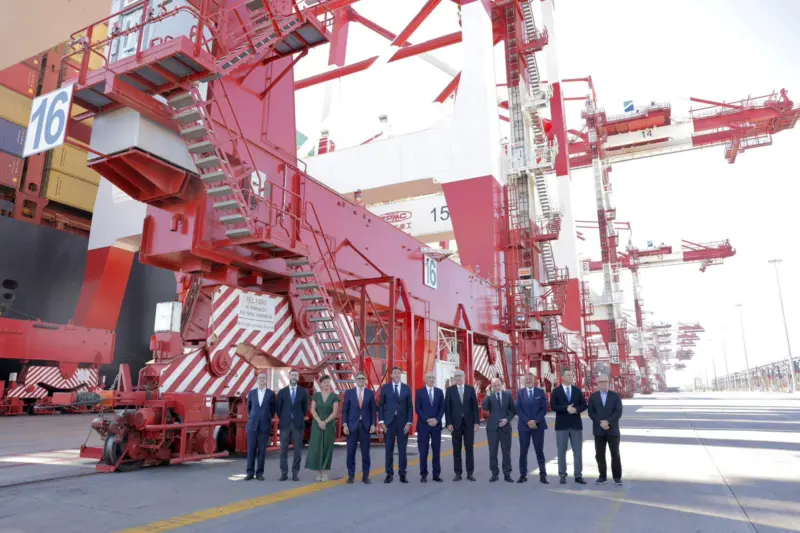
Operations have begun at Callao in Peru, and two further developments – Vallarpadam in India and Karachi in Pakistan – are due to be operational towards the end of the year.
Rising volumes have also prompted International Container Terminals Services (ICTSI) to spend $600m expanding facilities in Latin America over the next two years. Investment is planned for Argentina, Mexico and Colombia, in addition to the $123m already earmarked for upgrading facilities in Manila, Brazil, Ecuador and Madagascar.
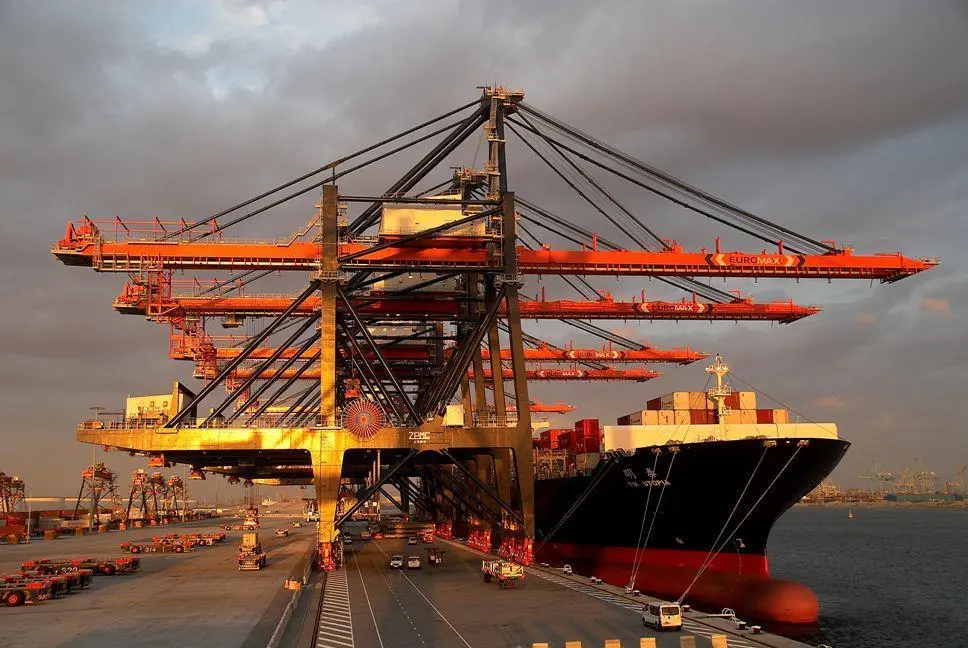
Such confidence is also manifest in the number of enquiries that equipment suppliers are receiving from operators for new – rather than reconditioned – container handling systems, primarily ship-to-shore cranes, as Jorma Tirkkonen, senior vice president of Port Cranes at Cargotec says. “The first indication for us that the market is changing and picking up again is that the enquiry level has gone up,” he says. “We have seen a 20% to 30% increase in the number of quotations we are giving for new units in the last 12 months compared to 18 months ago. The situation will be better for us by the end of the year.”
The optimism of Cargotec’s STS crane sales manager Dick Eichhorn’s goes a step further. He believes that the bounce back will generate new sales of around 200 units a year over the next three years – although this is still only two-thirds of the sales levels registered in 2008. After 2013, though, sales are expected to soar to about 250 units a year.
Konecranes can also see a turn in fortunes as a result of the improved market situation and container handling volumes which, it says, have increased customers’ willingness to invest in new equipment. However the Finnish company’s interim report, published in July, says decision-making remains slow and conditional on the sustainability of economic growth. It also suggests that competitive pricing is likely to remain.
Fluctuations in steel prices and the increased competition from Chinese crane builders are thought to have distorted market prices, making it difficult for European manufacturers to compete. The latter factor is largely synonymous with China’s more cost-effective means of getting its products to European and American markets. As a result, Chinese-manufactured STS cranes are thought to have cost about 20% less than those supplied from European manufacturers, although the economic recovery is expected to bring back prices to more reasonable and sustainable levels.
Juha Aatola, general manager at STS Cranes, told Port Strategy: “We see many more enquiries and there are more discussions going on with customers compared to one or even one-and-a-half years ago. Customers are thinking about investing in new equipment. Six months ago it was only second-hand equipment they were making enquiries about – but now it’s new units again.”
It should be borne in mind, however, that the recent dearth in orders for new units has not improved lead times. Depending on the size of the unit and the location to which it is to be shipped, manufacture could take 18 months or more.
“We have been supplying cranes in the Baltic Sea area from factories in Finland and we have delivery times of about one year for post-panamax units, but this will be longer for super post-panamax units,’ says Mr Aatola.
The way in which the market operates could change as global operators focus more on the “total cost of ownership” and look to invest in more economical solutions. Environmental and energy efficiency, along with cost and maintenance reductions, are the main drivers affecting the terminal operators’ decision-making process, whereas only two years ago the only thing that mattered was initial cost, says Cargotec’s Dick Eichorn.
Over the past five years or so, most operators tended to focus on the initial investment cost, which is really only 1-2% of the whole through-life cost of each unit, he says, adding: “A good quality crane can save a significant amount in operational costs.” Indeed, Mr Eichorn expects the decision-making process will once again become based on technical and operational requirements, rather than the initial cost of the unit and whether finance is available.
Standardisation of terminal equipment is another area in which the market for container handling equipment is expected to change.
Speaking in The Hague earlier in the year, Peder Sondergaard, APM Terminals’ senior vice president and head of new terminals, said that by standardising the types, sizes and specification of ship-to-shore cranes and other related machinery and vehicles, terminal savings could be realised in a number of ways.
“Customers are looking for simplified, reliable and cost-effective service to compete in the market. Our terminal design, development and procurement must reflect this,” he said.
APM Terminals believes that the benefits of equipment standardisation would include the easy transfer of needed assets between facilities as circumstances require, and common standards for benchmarking of optimum yard design, lighting and equipment configurations. Equally important would be the potential to reduce the carbon footprint through greater use of energy-saving equipment.
Cargotec’s vision to “set the standard for sustainability in cargo handling” is indeed indicative in the Finland headquartered company’s commitment to and development of hydraulic-free solutions across its entire product portfolio, including trim/list/skew and snag load devices on ship-to-shore cranes.
Electric-driven machinery needs significantly less maintenance, fewer spares and benefits from low energy consumption, equating to a dramatic reduction in a terminal’s environmental footprint as well as in operational costs.
The benefits are not lost on the smaller operators. Mexico’s Infraestructura Portuaria Mexicana, for example, will soon take delivery of a new electrically powered Kalmar STS crane with 49 m reach. In addition, Cargotec will upgrade two of IPM’s existing quay cranes to include newer, updated DC drives featuring better flexibility, adaptability and driver response. Other improvements include new festoon systems, operator cabs and seats, load cells and PLC systems. The work will be completed in the first quarter of 2011.
In June, new Kalmar STS units were also ordered for the Turkish port of Evyap – which until now has operated with mobile harbour cranes but has a strategy to increase container volumes. The STS cranes will be capable of servicing post-panamax vessels in twin-lift operation with 52 m outreach, 15 m backreach and 39 m hoisting height. The units feature optimised hoisting speeds that deliver accuracy and efficiency with very little energy consumption and operate without hydraulics – requiring less time for maintenance, lowering operating costs and eliminating the potential for oil leakages.
Related Articles
 CONTAINER & CARGO HANDLING
 NEWS
NEWS
 CONTAINER & CARGO HANDLING