



Emerging ASEAN eye trade opportunities ANports
Chinas burgeoning export presence may be of concern to many neighbouring East and Southeast Asian countries, but evidence is mounting that some secondary ports in the ASEAN region are finding opportunities to piggy-back their own trade expansion. Dave and Iain MacIntyre report.
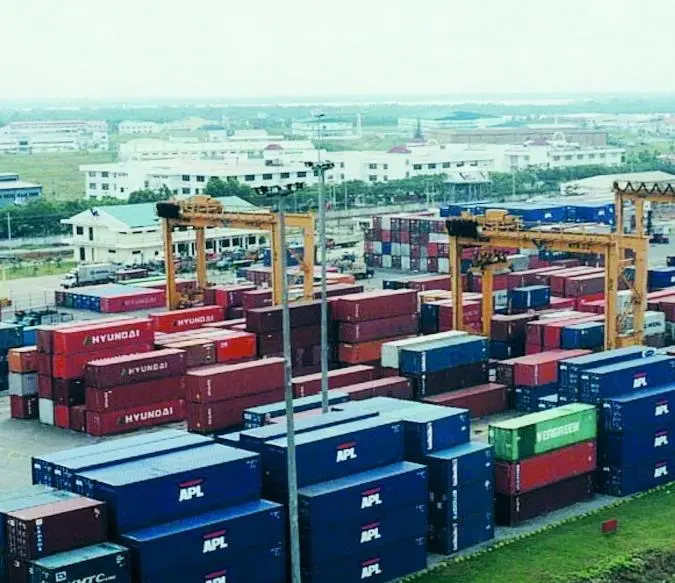
Rather than feeling overshadowed by the phenomenal Chinese trade growth, some of these “lesser lights” have been encouraged by the spin-off effects of increased shipping traffic, allied to flows of foreign direct investment (FDI) moving into the region as a whole.
In the April issue of UNCTAD’s Transnational Corporations journal, authors Professor Sanjaya Lall of Oxford University and Associate Professor Yuping Zhou of Wuhan University of Technology have indeed argued that China’s boom is not depriving its neighbours of FDI.
On the contrary, it is considered to be helping them attract more foreign funds in the integrated production networks that handle most of the technology-based exports. China’s efficient manufacturing base is said to be strengthening rather than weakening the region’s production capacity, allowing it to specialise in different segments of the value chain.
The countries most likely to be negatively affected are outside the region – namely, the established industrialised countries and aspiring exporters in other developing regions.
The authors conducted an econometric analysis to assess whether China’s FDI growth has affected inflows into seven Asian “tiger” economies. It suggests that once other determinants of FDI are taken into account, China has no significant effect on inflows to its Asian neighbours.
In fact, from 1992-2001, China’s FDI was positively related to FDI in other countries. This would indicate that most FDI flows do not compete with each other, and that for potentially competitive (exportoriented) FDI, China is encouraging investment in other countries as a complement to its role within Asian production networks.
Thus, the Asian giant appears to be crowding in rather than crowding out, FDI in the region.
As transnational corporations (TNCs) search for good investment opportunities in productive capacity around the Asian region, the ASEAN ports are also studying the opportunities that may emerge from this wider trade growth. The trend for ports to adopt the strategy of investment and development has been evident even when situated cheek-by-jowl with established superports – Malaysia’s Tanjung Pelepas (see Port Profile), sharing channel approaches with Singapore, being a case in point.
Now, other emerging ports are similarly responding to the challenges of the growing Asian trade, recognising that booming traffic on the linehaul trades also generates more traffic on the regional feeder trades. Plus of course, intra-regional traffic itself is growing as a result of the economic activity.
MINDANAO ASPIRES One such example can be found in the Philippines, where Phividec Industrial Authority (PIA) port operations division acting chief Jose Mari Fernandez predicts the Mindanao Container Terminal (MCT) will soon emerge as a domestic transhipment hub for the region.
“MCT is the only port in Mindanao equipped with sufficient cargo handling equipment – two quayside gantry cranes and four RTGs, ” he told PS. “The cargo handling equipment capability of MCT is a major factor that shipping lines will consider in changing the type of vessel to be deployed. Deployment of gearless vessels is now currently the trend and these can carry more cargoes than self-sustaining vessels.
“We also expect to see possible cargo diversion from Davao and General Santos to be loaded and unloaded at MCT – particularly refrigerated containers. MCT is equipped with about 270 receptacles for refrigerated containers.”
Mindanao is offering a lure to bring new operators to the port.
Fernandez says the port has allocated an area within its terminal complex for lease to prospective port users “at a very minimal rate.
This will be provided by PIA with basic infrastructure facilities such as power, water and a telecommunication system.” Fernandez says medium-term development plans for the currently container-focused port include expansion of facilities for bulk and breakbulk cargoes and the procurement of additional cargo-handling equipment.
“Within the next two years or even earlier than that, we are very optimistic that MCT will be in a position to compete with Cebu or even Manila and Batangas in terms of efficiency, productivity and professionalism in operating a container terminal.”
GLOBAL OPERATORS EYE VIETNAM Terminal operators are also reported to be scrambling to gain a foothold in Vietnam where investment opportunities are opening up at the country’s first deepwater container terminal at Cai Mep. The development is to offer an alternative to vessels which otherwise have to steam 85km up the Saigon River to berth at terminals in Ho Chi Minh City. Severe draught restrictions mean that only vessels of maximum 1,000TEU capacity can be accommodated there. Cai Mep on the other hand will have a more internationally-accepted standard draught of 14 metres and thereby accommodate much larger containerships.
The concept of developing a deeper draught port as opposed to a restricted river port has been a marked success in neighbouring Thailand where in the early 1990s the Thai government promoted the development of Laem Chabang. That is now on east-west calling schedules and Vietnam is hoping that when Cap Mei’s first berths come on stream in 2008-2009, it will share the same heady success.
For that reason, global container terminal operators such as Hutchison Port Holdings, SSA, P&O Ports, PSA International and APM Terminals see the strategic importance of getting in on the ground floor, through direct investment and joint venture companies.
All have been named as potential suitors for the new facility, with memoranda of understandings reportedly struck with APM Terminals and SSA for the development of two 300 metre berths in each case.
Down in Indonesia, the port of Makassar (Ujung Pandang), on the southern tip of Sulawesi Island, is also following the growth and development strategy. PT Makassar Terminal Services (PT MTS) president director Edward Yong says the port believes it can attract shipping companies away from other ports. “With the increase in equipment, efficiency and a competitive tariff, we hope to generate interest in shipping lines to make direct calls from Makassar to Singapore in the near future instead of via Jakarta or Surabaya, ” he told PS.
“Throughput for Makassar for 2004 was around 220,000TEUs. We hope to have an average 10% growth for the next few years.”
Yong says the container-focused port, which is jointly operated by PT MTS (a joint venture between Singapore’s Portek International and shipping line Pelayaran Nusantara Meratus) and Pelindo II, has been making significant infrastructure investment. “PT MTS’s investment has brought in two quay cranes, three RTGs and four HTs (headtrucks). Together with Pelindo II’s equipment, the port of Makassar now has a total of four quay cranes, eight RTGs, 16 HTs and other supporting equipment.”
These Filipino, Vietnamese and Indonesian examples reinforce the perception that the general trade optimism across Southeast Asia is encouraging terminal operators to boost their capacity. The pertinent point however is that in these cases, it is not just the “big boys” who see the potential for development – it is the smaller emerging ports too.
Related Articles
 EQUIPMENT
 PORT & TERMINAL NEWS
 PORT & TERMINAL NEWS