


Emission-free avocados and more
Giles Pettifor, environmental manager at the Port of Hueneme, explains how the Californian port is tackling emissions in its supply chains.
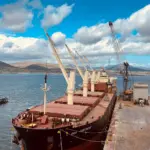
The Port of Hueneme (Port) welcomed its first vessel in 1941, embarking on an ambitious mission to maximise maritime commerce and provide robust economic benefits to the community.
The Port is integral to the supply chain of exports and imports throughout California, and it specialises in the import and export of fresh produce and automobiles. In the fiscal year 2018, about 1.6 million tons of cargo moved through the Port, creating US$9.5 billion in goods movement; US$1.7 billion in economic activity; 15,834 trade-related jobs; US$119 million in state and local taxes; and 3.3 billion bananas imported annually.
As a Special District of the State of California, the small, niche seaport is structured to be financially self-sufficient and thus it does not rely upon a tax or charge of local municipalities. Instead, the Port’s revenue comes from the throughput of cargo paid for by our customers. In that sense, even though it is a public agency, the Port must operate like a business– one that is not in pursuit of profit but instead provides economic vitality to the surrounding community. The Port’s ability to provide this fuel into the local economy and be a source of employment is thus dependent on our customers’ ability to succeed economically despite uncertainty driven by global trade discord and increasing regulatory compliance costs of doing business in California.
During the course of the Port’s 82-year history, it has not only become one of the region’s key economic engines but it also has emerged as leader in implementing environmental excellence and sustainability. It has done this by committing to integrate sustainability into its day-to-day operations and by fostering collaborative relationships with environmental experts, engineers, researchers and community organisations, all while in pursuit of long-term environmental goals.
AN ENVIRONMENTAL LEADER
In recent years, the Port has received international recognition for demonstrating environmental leadership. In 2015 it became the first California port to be certified by the rigorous Green Marine programme. Green Marine is a comprehensive environmental certification programme for the maritime industry that is administered by a third-party organisation.
This transparent eco-accountability programme involves a rigorous-self-assessment of the Port’s overall environmental footprint, including environmental management policies and strategies to help guide the Port to reduce its environmental impacts by undertaking measurable actions.
To receive this certification, the Port benchmarked its annual environmental performance through the programme’s self-evaluation guides, had the results audited by an accredited third-party verifier, and agreed to the publication of individual results to an international audience.
The Port’s sustainability progress was further recognised in 2017 when it received the Greenest US Port award at the 2017 Green Shipping Summit. The Port
consistently raises the bar and never ceases to seek opportunities to reduce its operational impacts and improve the environment for the benefit of the community.
In conjunction with the Green Marine certification, the Port’s Environmental Management Framework (EMF) helps to guide the Port in moving beyond environmental compliance and into a leadership role. The EMF was developed in 2013 as a tool to help steer the Port through the adoption of sustainability goals and into the integration of practices to achieve these goals. The EMF includes numerous plans and policies that were developed around eight key environmental categories, including Community Engagement, Sustainability, Air Quality, Marine Resources, Soil and Sediment, Water Quality, Energy Management, Climate Change and Adaptation.
MITIGATING AIR EMISSIONS
In recent years, air quality has emerged as the most immediate topic for the Port’s environmental initiatives. Air emissions from Port operations can combine with those from regionwide sources in the atmosphere to create air pollution, which can affect the local air quality to the detriment of public health as well as the global environment. To reduce public health risks and air pollutant emissions associated with the Port’s operations, the Port is committed to the development and implementation of short- and long-term air quality management strategies.
To cohesively roll out these strategies aimed at a long-term trajectory of reducing emissions from the Port to zero, we have begun a multi-faceted programme to address immediate concerns and establish a cohesive and comprehensive course of action to ensure progress toward these long-range air quality improvement goals.
Undertaking a transition to low carbon fuels of this scale will require extensive planning to ensure it is done correctly, being informed by lessons learned from industry leaders furthest along in similar efforts, particularly with many of these emissions reductions being achieved via rapidly developing technology solutions.
It also needs to be done efficiently, so as not to impact existing business and cargo operations which keep the Port funded, and as cheaply as possible as the funding sources will largely be competitive grant moneys and other public funding sources. Finally, there is a need for sufficient flexibility to adapt to future technology improvements and ‘future proof’ the equipment currently being installed and reduce the likelihood of needing to replace or move infrastructure in the short term.
This programme will cover several elements, including a comprehensive, proactive clean air plan, called the Port of Hueneme, Reducing Emissions, Supporting Health (PHRESH) Plan. PHRESH will include annual Port emissions inventories, realistic and appropriate air pollutant and GHG reduction goals, assessment of emission reduction strategies, implementation cost and funding source analyses, and community involvement.
Under PHRESH, we will annually track emissions from Port operations, and will be able to assess progress toward established targets and make adjustments needed or pursue new strategies to reach them.
This plan being written in conjunction with our air pollution regulatory agency, the Ventura County Air Pollution Control District and we will seek their input on targets, reduction goals and how the PHRESH can help regional attainment of AQ goals.
The Port will be installing the only regulatory reference grade air quality monitoring equipment in the local community. To help the community understand what air quality in the area looks like the Port will install, operate and make public the air quality data gathered by this set of high-tech instruments.
INFRASTRUCTURE CHALLENGES
Transitioning to less carbon intensive fuels will require the design, engineering, funding and installation of a brand-new fuel storage and delivery system on Port, likely electricity.
This transition from diesel powered cargo movement will be a paradigm shift, requiring the repowering or replacement of nearly all the equipment on Port. It must be planned so that funds can be gathered to pay for it, and the shift can be undertaken with minimal impacts.
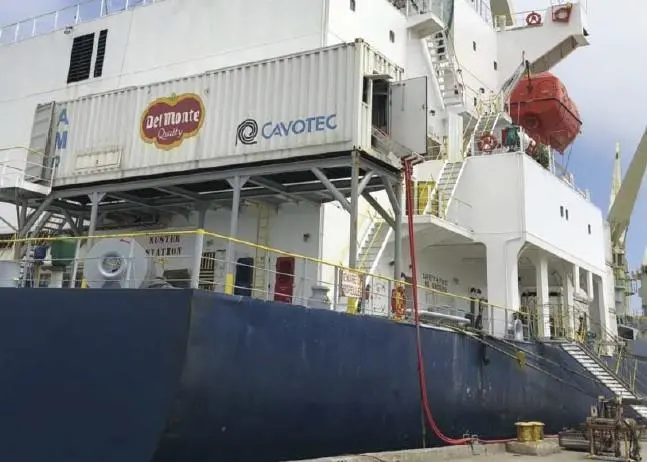
In 2014 the Port installed a US$15 million-dollar, high voltage electrical system to enable ships to plug into shore power when at berth in the Port. This project has enabled significant reduction in emissions from ocean going vessels visiting the Port.
Along with the installation of the shore power system, the Port in collaboration with a major technology firm, installed five 1 megawatt batteries on Port to store purchased energy to help reduce any impacts on the local electrical grid when ships plug in.
This summer the Port began construction of another high-voltage electrical system that will power the next generation of ZE cargo handling equipment. This system will become the foundation upon which future purchases and repowers of existing equipment will be powered and is critical to the Port’s ability to reduce emissions.
As part of a larger regional project in collaboration with the Port of Los Angeles, the Port will be receiving two full electric yard trucks, and will utilise a zero-emission fuel cell long-haul truck to move produce between the Port and the LA Ports.
ENERGY PLANNING
In 2018, the Port began work on an electrical master plan (EMP) which would assess the Port’s current and future electrical power needs. The demands of modifying our electrical infrastructure to power a ZE future are significant, and working with our electrical utility requires the Port to quantify what this future will look like.
The EMP will assess various future scenarios of growth and operational changes to determine what our power needs may look like in five, ten or twenty years.
As its mission statement suggests, the Port is committed to providing ‘…the maximum possible economic and social benefits to the people and communities served by the Port.’
This commitment includes a responsibility to address the environmental impacts of Port operations. The Port will work together with the goods movement industry regulatory agencies and local community partners to achieve a future in which trade-related cargo drives future employment opportunities while simultaneously achieving a cleaner environment.
Related Articles
 ALTERNATIVE FUELS GREENPORT
 ENERGY & TECHNOLOGY GREENPORT
 ENERGY & TECHNOLOGY GREENPORT