Transhipment and being No 1 are not part of Jaxport''s plan, finds Martin Rushmere
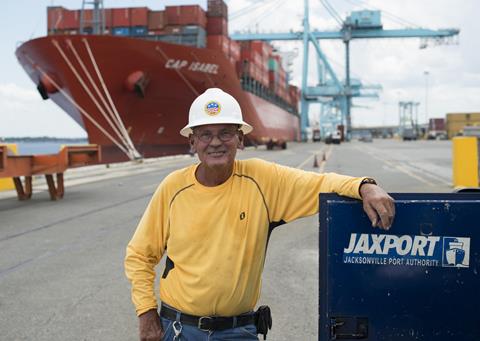
Jacksonville is entering the New Year having to deal with an unexpected setback, but is also pleased with one success. Following a highly publicised visit by President Obama earlier in the year, the port was expecting its main channel deepening project to be included in the Water Resources Development Act.
The proposed law (which has to be passed by both chambers of congress) sets out priority port projects that have to be studied and undertaken by the Army Corps of Engineers (ACE). “There was considerable surprise and disappointment when Jacksonville was left off," says an industry source.
On the plus side, the Mile Point navigation restriction overhaul has been included in the measure, but as this is largely aimed at making the channel safer for shipping it was always considered a certainty.
New port chief executive Brian Taylor says: “We would have been happier if the deepening project had been included. But we are still hopeful that we can get it approved.” A slightly different measure is also being considered, although this mostly deals with matters other than the list of projects.
The port has gained some solace from the measure. The army engineer corps is now allowed to call on regional and state funds when studying projects – until now only federal government money could be used, which meant that projects sometimes took more than 10 years to be authorised. Jacksonville will have the chance to get authorisation for the deepening to 47 feet from 40 feet if it can drum up support.
Brian Taylor sees Jaxport’s growth over the next 10 years as being mostly dependent on containers. “Nonetheless, we will still have a mix with breakbulk and cruise business. The reason we were able to ride out the recession when so many others were going backwards was because of this diversity.”
Alliance assessments
He agrees with the industry’s assessment that the P3 Alliance is set to change the dynamics of port services. “We are not included, but it will more than likely change the makeup of the other alliances – we should see some continued growth from the other alliances. And there is still the opportunity for the P3 to call here.”
Jaxport is not setting a goal to become the biggest port in Florida or the East Coast. “For us it’s all about creating jobs and becoming an economic engine of the region. Our competitors are not other Florida ports but places like Savannah and Charleston.”
A big drive is being made to capture more South American business, with Rick Schiappacasse being appointed director of Latin America Sales.
Mr Taylor disagrees with assessments that the Panama Canal is being left behind and is losing its importance. “More big ships are going to call here and throughout the East Coast, that I can see. It’s not so much that the volume of freight will grow.”
Jaxport is also tapping into the LNG market. Clean Energy Fuels, owned by Texas oilman T. Boone Pickens, is building a 300,000 gallon a day plant at Jaxport. This is touted as the first such facility on the East Coast to supply LNG specifically for the maritime industry.
The project will be developed by Eagle LNG Partners, made up of Clean Energy, GE Ventures, GE Financial Services and Ferus Natural Gas Fuels. Jones Act line, Sea Star, which calls at Jacksonville, has ordered two LNG-powered cargo container ships, expected to be delivered in 2015. Jacksonville-based Crowley Maritime has bought Carib Energy, which has a federal licence to export LNG.
Mr Taylor says the port’s long-term aim is to be the first inbound destination and last outbound port for lines. “I don’t think Jaxport is a true transhipment hub. We are focused on being an economic engine and a transportation and logistics hub, which is what we are uniquely positioned to do.”