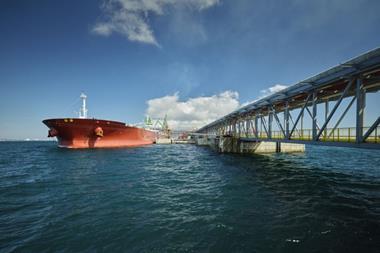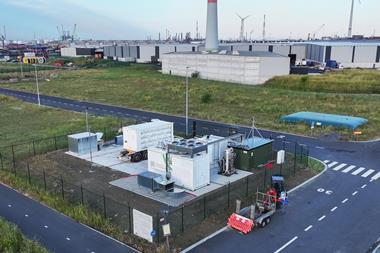



Scotland’s largest maritime decarbonisation project is now operational at Port of Aberdeen, delivering green shore power to eight berths in the North Harbour.
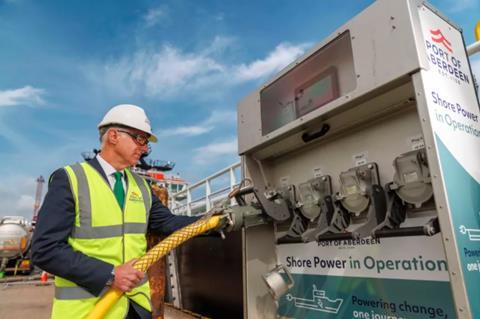
The initiative marks a major step forward in electrification for the port, allowing ships to switch off fossil-fuel engines while at berth and connect to low-carbon power from the national grid.
“Port of Aberdeen’s net zero journey has taken a significant step forward,” said Bob Sanguinetti, CEO of Port of Aberdeen.
“It will be a game-changer for Port of Aberdeen and our valued customers, who will benefit from an 80% reduction in their carbon emissions while at berth. ”
Port electrification
Installed by PowerCon, a leader in shore power technology, the system could cut up to 60,000 tonnes of CO₂ equivalent over 20 years, equivalent to removing 2,140 cars from the road annually.
The first vessel to use the new vessel charging system was NS Iona, one of five retrofitted as part of the wider electrification project.
Backed by GB£4 million in public-private funding through the UK Government’s Zero Emission Vessels and Infrastructure (ZEVI) programme and Innovate UK, the project demonstrates real-world applications of clean maritime technology.
In addition to North Harbour, shore power infrastructure has been installed at Regent Quay for Bibby Marine’s electric Service Operation Vessel (SOV).
Additionally, work is almost complete to install shore power infrastructure for Serco NorthLink’s passenger ferries, funded by Caledonian Maritime Assets Limited.
This adds to the port’s existing shore power facilities which supports operational activities for its renewable energy customers and towage providers.
Port of Aberdeen plans to expand vessel charging capabilities across more of its 7,600m quayside going forward, moving the port closer to its ambition to become the UK’s first net zero port by 2040.