

Baltic ports are setting ambitious goals to become sustainable ports through new roadmaps focused on alternative fuels and port infrastructure.
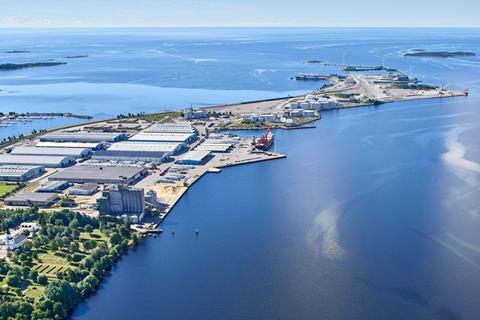
Two strategic documents, developed under the EU-funded Blue Supply Chains project, outline practical pathways to climate-neutral operations across the Baltic Sea region.
They detail how ports, municipalities and industry players can accelerate the use of renewable energy, electrification and zero-emission logistics corridors.
Concrete tools
The idea is that the roadmaps give ports concrete tools to plan, implement and scale up green solutions across the entire value chain and they cover everything from fuel production to port infrastructure and stakeholder cooperation.
For example, the Sweden roadmap focuses on Umeå’s ambition to become a climate-neutral port by 2040.
Plans include large-scale electrofuel production using green hydrogen, delivering up to 110,000 tonnes of electro-methanol annually and expanded onshore power supply for vessels. Shipping operators such as Wasaline and SCA are expected to transition to renewable fuels under the framework.
In Lithuania, the roadmap highlights the Klaipėda-Kaunas corridor with a strong focus on electrification of inland waterway transport.
Electric pushers and barges are set to provide a sustainable alternative to road haulage, easing congestion and reducing CO₂ emissions while strengthening multimodal logistics.
The roadmaps will be showcased at two major Baltic Port Organization (BPO) conferences in Poland this year—the Baltic Ports Conference in Gdańsk and the Baltic Ports for Climate Conference in Gdynia.