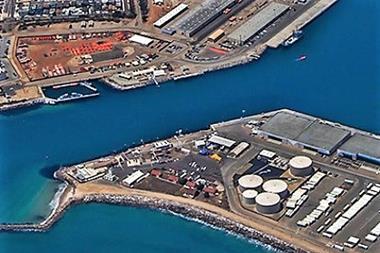


Betio Port in Kiribati is the country’s main international gateway and a vital transport hub, but it’s infrastructure has been in urgent need of a climate resilient upgrade.
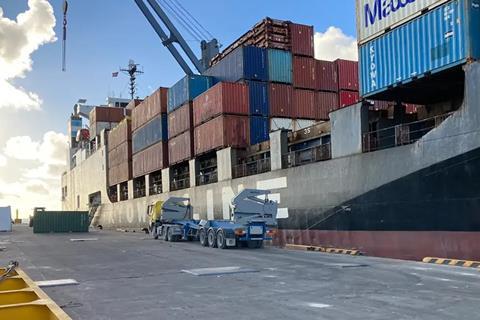
Collaborating closely with the Government of Kiribati, local industry and local communities, Arup has developed a masterplan that prioritises climate resilience and social outcomes and put in place a feasible implementation plan for the next 25 years.
Increased resilience
“Renewing Betio Port will ensure resilience for the people of Kiribati and presents the opportunity to upgrade ageing infrastructure and increase port capacity while simultaneously improving its resilience to climate impacts,” says Ed Rowe, Arup market lead and climate resilience and adaptation lead for the Pacific.
He explains that both climate resilience and social outcomes have been placed at the heart of the design.
Mr Rowe says that to develop an outcome-led masterplan, Arup started with defining the vision for Betio Port – what success would look like – which it did by hosting two half day workshops with government, industry and key port stakeholders.
These workshops culminated in a succinct port vision and investment logic mapping, which defined key performance indicators that were linked to existing government strategies, such as the KV20 (Kiribati 20-year Vision).
“In a place like Betio, which faces climate threats, limited resources, and development constraints, an outcome-led masterplan delivered planning that is purpose-driven, responsive and aligned with the lived priorities and needs of the community,” he explains.
“By focusing on outcomes rather than outputs, masterplans like this drive sustainable development and ensure that infrastructure becomes the engineering expression of strategic social, economic and environmental goals.”
Port vision
The vision established for the Betio Port Masterplan was a port that is safe, secure, inclusive and optimised operationally to support the local economy.
There were three priorities. Firstly, to optimise port capacity and efficiency through an optimised layout, upgraded facilities and modern equipment.
Secondly, to support the local economy by attracting international fishing vessels and providing opportunities for tourism, recreation and local trade.
Lastly, to improve safety, security and inclusivity so that the port can have a diverse range of users, including regulatory agencies, industry, businesses, marginalised groups and the community.
Climate resilience is not specifically called out in the ports vision, but it is a requirement to achieve each of the three priorities.
Betio is within the main atoll of Kiribati, Tarawa. Tarawa has a maximum elevation of ~3m above mean sea level and is consequently extremely vulnerable to sea level rise and coastal inundation.
It was important to holistically consider the future resilience of the port for rising sea levels in conjunction with the adaptation plans for Tarawa and Kiribati. The masterplan design integrates climate resilience in the planning and infrastructure design to withstand impacts from rising sea levels and extreme weather events. This in turn supports the three development priorities for the port.
Stakeholder feedback was instrumental in determining the social outcomes mainly linked to the third masterplan priority of improving safety, security and inclusivity.
The masterplan also aims to support local industry by facilitating logistic improvements and linking port infrastructure development to broader economic and social benefits.
Environmental considerations
Kiribati has unique environmental characteristics and a rich culture that prioritises community.
Arup co-created a masterplan that not only safeguards port functionality and prioritises climate resilience, but also reinforces local identity, economic security and traditional ways of life.
From the outset, Mr Rowe says that the Arup team wanted to ensure that the masterplan embedded a deep understanding of Kiribati’s unique cultural and environmental context and they included four national consultants within the team to best achieve this.
All four of these specialists were involved in engagements, workshops and in developing the design and contributing to delivery.
The local team supported four missions to Kiribati undertaken by Arup’s international team of specialists and enabled deep engagement that prioritised co-design.
“This engagement culminated in a multi-criteria analysis workshop to assess the top four masterplan design options. The preferred design was selected and due to the transparent and inclusive approach to design development, quickly received endorsement by Cabinet,” says Mr Rowe.
Community focused
The most pressing needs of the Kiribati community were identified as strengthening the resilience of essential services (mainly food and energy) and reducing port and road congestion for improved efficiency and safety.
For the port, the top priority investment was to remediate the wharf used for import of fuels – diesel (mainly used for electricity generation), unleaded petrol (mainly used for local transport) and aviation fuel.
The wharf was determined to be unsafe for continued use without additional safety practices and precautions being implemented upon arrival of the fuel import vessel. Remediation of this wharf was identified as the top priority, with upgrade and expansion proposed in the medium term.
Mr Rowe says that the second priority was expansion of the port area to allow for appropriate movement and storage of containers, segregation of port users and elevation of land used for critical functions.
This included the reclamation of additional land for use by the Kiribati Port Authority that would allow for more efficient and resilient port operations, improved port security and would allow empty containers to be moved from public and private land across Tarawa to be stored at the port (a key priority for the Government of Kiribati).
The additional land also enables the widening of roads for movement of two-way traffic removing freight truck movements from areas with high pedestrian activity and domestic passenger ferries.
The third priority was expansion of the main wharf to allow for more efficient import of containerised goods and to meet the projected demand of the port.
This included creating a community market area and preserving a beach where local fishers launched and retrieved their vessels.
With the Masterplan now complete, the design layout has been endorsed by Cabinet and the implementation plan and feasibility design of different port areas have been delivered to the Ministry of Information, Communications and Transport and Kiribati Port Authority.
The next stages of the project will include detailed design, Environmental and Social Impact Assessments that will build on the existing Strategic Environmental and Social Assessment and confirmation of partners, budgets and finances for individual packages.
A holistic approach
“Successful port and terminal masterplanning requires a holistic, future-focused approach that balances operational efficiency, climate resilience and community well-being,” says Mr Rowe.
“None of this is ground-breaking, but parts of it can be overlooked due to timeline pressures, budget constraints, or oversight when in the detail of delivery.
Mr Rowe says that a masterplan needs to begin with a comprehensive needs assessment that integrates demand forecasts, identifies stakeholder priorities and environmental risks. It should establish both a clear vision for the future port and a framework for the prioritisation of investment.
This needs to align with overarching government strategies and policy and consider all stakeholder perspectives that are directly or indirectly impacted by the port. These stakeholders should be a part of establishing the vision for the port and involved in co-design of the port.
Climate resilience should be embedded from the outset through scenario-based planning and adaptive infrastructure design and strengthening climate resilience should prioritise the regeneration of nature and nature-based solutions.
“Nature-based solutions, if relevant, will often need to be implemented years or even decades in advance of when the relevant climate hazards are realised to provide protection and benefit.”
Getting the right balance
To achieve the right balance of progress while considering economic, environmental, and social factors, Mr Rowe’s key advice is to adopt an inclusive and integrated approach from the start.
“Engage stakeholders including the community early and often to understand their priorities and values, ensuring development aligns with both the diverse port stakeholder requirements and the aspirations of the local community,” he says.
Pair this engagement with rigorous environmental assessments for today and for future scenarios so that infrastructure investments are future-proofed, minimise ecological impact and maximise co-benefits for the environment and society.
He says that economically, establishing a clear framework for prioritisation of investments is important.
“Ports play a role in supporting essential services as well as enabling economic opportunities and port development should consider how and when development is required to maintain essential services, while providing flexibility for non-essential opportunities that may stimulate the economy or provide opportunities locally.”
Creating opportunities for local businesses and jobs and identifying assets or key areas that provide value back to the community is of great importance.
Ultimately, Mr Rowe says success lies in treating social wellbeing, environmental stewardship and economic growth as interconnected pillars rather than competing interests so that progress delivers long-term benefits for both people and planet.