


GeelongPort in Australia has embraced recycled asphalt roads as part of its campaign to become Australia’s most sustainable port, writes Dave MacIntyre.
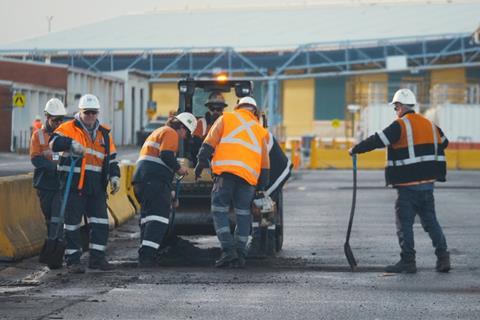
The Victorian port has recently celebrated a five-star rating from international consultancy GRESB, formerly known as the Global Real Estate Sustainability Benchmark giving it a first-rate global ranking for five years in a row.
The port, which is also transitioning to being powered by renewable electricity and entering reconciliation agreements, achieved a perfect score of 100 and ranked number one globally in the 2025 GRESB Infrastructure Asset benchmark for sustainable port and transport infrastructure.
Ground up practicality
GeelongPort’s “From the Ground Up: Practical Path to Sustainability” aims to introduce a cohesive strategy to improve sustainability.
The same practical mindset that underpins safe, efficient trade is being applied to the challenges shaping the next decade, such as lower impact infrastructure, renewable energy logistics and a workplace culture capable of attracting and retaining the talent the sector needs.
What distinguishes GeelongPort’s approach is its insistence on outcomes that hold up in a working port environment – “sustainability that must perform under pressure, not merely read well on paper”.
The strategy is broken into several initiatives, the first of which is Redefining Sustainable Infrastructure in a Working Port. When ports talk about sustainability, the conversation often begins with vessels, fuels and energy transition.
GeelongPort’s starting point was more fundamental: The ground beneath its feet.
Heavy-duty asphalt
High volumes of heavy vehicles, tight turning movements, and continuous activity place extraordinary stress on asphalt surfaces. Over time, that stress translates into recurring maintenance.
“Our existing pavement specifications weren’t delivering the longevity we needed under heavy port traffic,” says Sinead Redmond, general manager of infrastructure delivery, GeelongPort.
“That meant repeated interventions, higher material use and greater disruption to operations.”
Rather than defaulting to thicker pavements or more frequent resurfacing, the port partnered with the National Transport Research Organisation (NTRO) to assess the condition and performance of its pavement network and develop a new asphalt technical specification suited to heavy-duty port operations.
The work involved detailed site inspections, materials testing, historical analysis, and close examination of the loading conditions unique to a working port. From this foundation, NTRO and GeelongPort developed a tailored specification capable of withstanding freight task intensity without locking the port into a maintenance treadmill.
“This wasn’t about adopting an off-the-shelf ‘green’ product,” Ms Redmond says.
“It was about creating a fit-for-purpose solution that works in a heavy-duty environment and genuinely reduces environmental impact over the life of the asset.”
A pivotal shift came in redefining what “green” asphalt should mean in this context. Recycled inputs were rigorously assessed but could not meet the port environment’s technical performance requirements. Rather than forcing a solution that appeared sustainable but failed under load, the project focused on retaining more of the existing pavement structure.
By reusing asphalt from within the port precinct and minimising removal and replacement of pavement layers, the specification reduces excavation, transport and reliance on virgin materials. The result is lower waste, reduced embodied carbon, and fewer emissions from asphalt production and construction, alongside improved durability and fewer operational disruptions.
Wind rollout
If the asphalt initiative shows how sustainability can be embedded in asset management, GeelongPort’s role in Victoria’s onshore wind rollout illustrates how ports underpin the energy transition at scale. As renewable projects grow larger and more complex, they increasingly depend on logistics capability, in the way of heavy lifts, oversized cargo handling, secure laydown areas and reliable intermodal connections.
The Golden Plains Wind Farm is one of Australia’s largest onshore wind developments, comprising 215 turbines and when complete it will supply renewable electricity to around 765,000 homes.
From GeelongPort’s vantage point, Golden Plains is not simply an energy project - “Large-scale renewables don’t happen in isolation,” says Stephanie Pickett, chief legal and sustainability officer, GeelongPort.
“They rely on sophisticated infrastructure, careful coordination and strong regional capability to move enormous components safely and efficiently from global supply chains to local sites.”
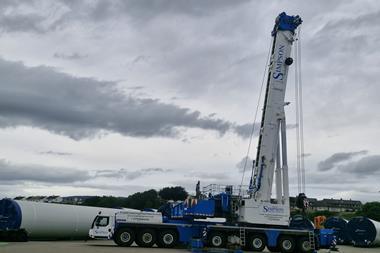
GeelongPort served as a critical gateway for importing blades extending beyond 80 metres, heavy tower sections and high-value nacelles and hubs. Handling cargo of this scale places demands across the entire supply chain, from berth planning and unloading methodology to safe laydown, marshalling and onward transport.
“The success of projects like Golden Plains depends on ports being able to manage oversized and high value cargo with absolute precision,” Ms Pickett says. “That capability protects timelines, budgets and ultimately the delivery of renewable energy to the grid.”
Enabler to participant
GeelongPort’s role in renewables extends beyond logistics. In August 2022, the port entered into a Power Purchase Agreement (PPA) with Barwon Water and Barwon Health to procure 100% of its operational electricity from the Mount Gellibrand Wind Farm, becoming the first port in Australia to be powered entirely by renewable electricity.
“For us, supporting renewable energy infrastructure and sourcing renewable energy ourselves are two sides of the same commitment,” Ms Pickett says. “If ports are going to be enablers of the energy transition, we also need to be willing to transform our own operations.”
By locking in renewable electricity for operations, GeelongPort has reduced operational emissions and embedded sustainability into everyday port activity.
A further initiative is “Reconciliation in Practice”, operating respectfully on Wadawurrung Country and building a partnership that shapes decision-making over time.
That commitment is formalised through a Memorandum of Understanding with the Wadawurrung Traditional Owners Aboriginal Corporation, recognising the Wadawurrung People as the traditional owners of the land and waters on which the port operates. The MoU provides a practical framework grounded in respect for cultural authority, shared learning and accountability.
The final thread in GeelongPort’s future ready story is its people.
In March 2025, GeelongPort was recognised as one of Work180’s Top 101 Workplaces for Women. Through Safe and Respectful Workplace training, flexible work arrangements, enhanced leave entitlements and gender-neutral parental leave, the port has deliberately reshaped how it supports its workforce.