

In the push to make ports cleaner, more efficient and future-ready, Canadian cleantech firm dynaCERT is gaining attention for a deceptively simple innovation: A hydrogen-based technology designed to reduce carbon emissions on diesel engines.
In the push to make ports cleaner, more efficient and future-ready, Canadian cleantech firm dynaCERT is gaining attention for a deceptively simple innovation: A hydrogen-based technology designed to reduce carbon emissions on diesel engines.
In an exclusive interview with GreenPort, Kevin Unrath, chief operating officer and Bernd Krüper, president and director of dynaCERT, share how the company’s HydraGEN technology is delivering immediate, measurable results for port operators - without waiting for large-scale fuel infrastructure or costly fleet overhauls.
From startup to testbed
Mr Unrath says that although it’s more than two decades old, dynaCERT sees itself as a “post-startup” company retaining the agility of a ”young company while experiencing new feedback regarding the technology out of new market segments in demanding environments worldwide.”
The company is headquartered in Toronto, but its applications reach across global industries, from mining and oil and gas to long-distance trucking and now ports and terminals.
Originally, the goal for the company was straightforward: Save fuel.
“Emission reduction was more of a side effect,” Mr Unrath notes. But as global priorities shifted, “emission reduction and sustainability became much more important. Today we focus on three impacts: Significant fuel reduction, significant emission reduction and working with organisations on carbon credit solutions.”
Mr Krüper adds that over the years the company has strengthened its early expertise beyond cell chemistry and hydrogen production to include specialists in combustion and powertrain applications.
“With Kevin and myself and also Dr Ingo Wintruff, a combustion engine specialist with aPhD in thermodynamics, we can look optimise the interaction between the hydrogen unit, the engine and the application as a complete system for our customers.”
The HydraGEN unit
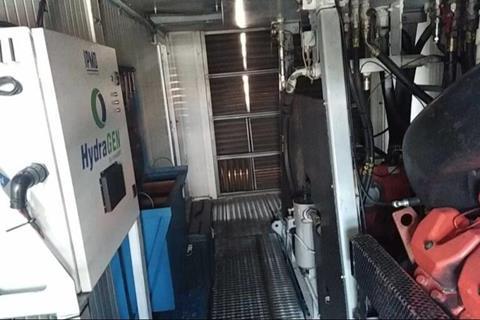
At the heart of dynaCERT’s approach is the HydraGEN onboard electrolysis unit that generates the ideal small amount of hydrogen and oxygen from distilled water.
This gas mixture is fed into the engine’s air intake, between the air filter and turbocharger. The result is more complete combustion from the engine, delivering more power and longer distance from the same amount of fuel while producing fewer pollutants.
A unique selling point, Mr Unrath stresses, is that HydraGEN eliminates the need to transport or store hydrogen because it is made as a by-product of electrolysis.
“We are creating the hydrogen and oxygen onboard the application. The hydrogen reactor produces it on demand - this is really the game changer. We don’t have to store high volumes and we’re not dependent on external hydrogen supply networks.”
Mr Krüper points out that the idea is not to produce a high volume of hydrogen.
“It’s about producing an optimised small amount that will give the best combustion improvement. That’s what has the biggest impact,” he says.
Scalability advantage
Another strength of the HydraGEN system is its scalability – each piece of equipment can be fitted up with the equipment as needed.
“The system is attractive for both small and larger ports,” Mr Unrath explains.
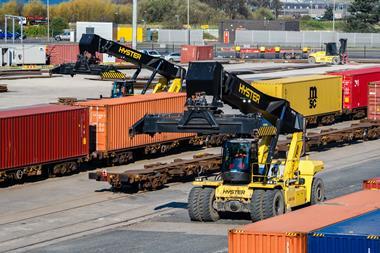
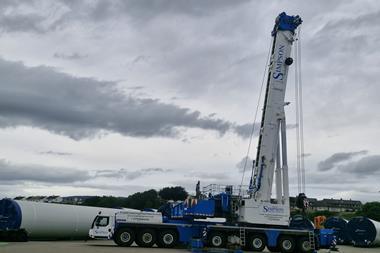
“We can start with forklifts or cranes at a small terminal, then scale from one truck to a hundred trucks, or from one crane to a hundred cranes in a larger port.”
The retrofit process is straight forward and it takes just two to three hours per unit.
“It’s fixing and mounting the unit, connecting the gas output to the air intake and wiring to the alternator for power,” Mr Unrath outlines.
“In ports, we sometimes do custom mounting, but good preparation keeps each installation quick and simple.”
This is key of course for operators, where downtime needs to be kept to a minimum.
“You can install it during routine service or over a weekend,” Mr Krüper says.
He also emphasises that HydraGEN is equally suited to both stationary and mobile equipment.
“It works more or less equally on any application, whether this is cranes, generators, or mobile yard trucks.”
Real-world testing
One of HydraGEN’s most notable port deployments to date is in Charente in France.
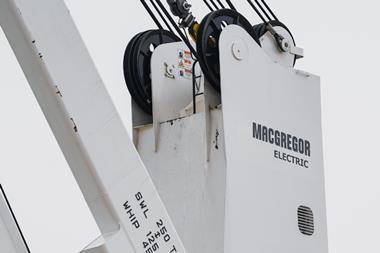
At the Port of Rochefort-Tonnay-Charente, the technology has been trialled on a harbour crane.
According to Mr Unrath, the decision to proceed with permanent installation came only after a rigorous test period.
He explains that for a newly installed HG1 unit operators normally see a fuel reduction potential of five to eight percent.
Although exact figures are under a NDA, Mr Unrath confirms that subsequent emissions savings are significant.
“CO₂ and particulate matter are reduced in every case. NOx reduction depends on the application and the concrete power point in the duty curve, but adding hydrogen and oxygen makes combustion faster and more complete, influencing these emissions as well.”
Mr Krüper adds that reducing particulates also means less wear on after-treatment systems - less regeneration and better catalyst life. And for ports, that means not only cleaner air but lower maintenance costs.
Efficiency and carbon savings
HydraGEN addresses two urgent port priorities simultaneously - operational cost control and environmental responsibility.
More efficient combustion translates directly into reduced fuel bills. “Every drop saved counts,” Mr Unrath says. “With fuel prices where they are, the return on investment is hard to ignore.”
In addition, by integrating the system with dynaCERT’s HydraLytica Telematics platform, operators can monitor baseline and post-installation performance, track fuel savings in real time and generate verifiable carbon credits.
“The bigger the fleet, the more interesting carbon credits become,” Mr Unrath notes.
Mr Krüper sees a wider strategic role for HydraGEN in this area.
“Ports face increasing responsibility for their supply chains. It’s not just about the cranes on the quayside, it’s also the trucks coming in and out, the generators, the reefer containers. This is technology that can touch every part of the chain.”
In ports, where heavy-duty diesel engines often operate close to population centres, cleaner combustion of course delivers tangible local benefits.
“We reduce CO₂ significantly and we reduce particulate matter significantly, every time. With NOx, the impact varies, but we see positive results there also quite regularly,” says Mr Krüper.
Cleaner operation also has other knock-on effects. “With less particulate matter, you have less dust and soot in the engine and after-treatment system,” Mr Unrath explains. “That means less maintenance, fewer filter changes and less downtime.”
A transitional retrofit
Mr Krüper is very clear about where HydraGEN fits in the energy transition.
“We are not a zero-emission product, but we are an emission-reducing solution. Zero emission will often take years or decades, if it happens at all in some sectors. With HydraGEN, you can retrofit in a few hours and start saving fuel and emissions immediately.”
This “bridging technology” approach is appealing to operators uncertain about the pace and direction of electrification or alternative fuels.
“You don’t have to hedge your bets,” Mr Krüper adds. “You can improve what you have now while planning for the future.”
Mr Unrath underscores the importance of readiness: “Our technology is available now. You don’t need to wait for infrastructure changes or equipment replacement cycles. You can start saving tomorrow.”
From cranes to tugboats
Now here’s where things get even more exciting.
While ports are a growing focus for dynaCERT, HydraGEN’s applications extend beyond quay cranes and yard equipment. It works on trucks visiting the port, reefer generators and even some types of inland waterway vessels and tugboats.
In fact, trials in tugboats and other harbour craft have been promising, though offshore deployment will require maritime certification.
“We have test installations on smaller boats,” Mr Unrath confirms. “For larger vessels using bunker fuel, we don’t have a unit today, but technically in future, it’s possible.”
The conversation is changing. As sustainability rises on the port agenda, Mr Unrath and Mr Krüper say they are seeing shifts in purchasing decisions.
“In the past, you convinced engineers by having a technically superior product, then procurement stepped in and tried to cut costs,” Mr Krüper recalls. “Now, sustainability is part of the decision process. It’s not always just about price.”
That change aligns with HydraGEN’s strengths: Measurable operational savings, quantifiable emissions reductions and quick deployment.
The road ahead
From the single-crane trial in Charente to multi-equipment retrofits across continents, HydraGEN is demonstrating that the path to cleaner, more efficient port operations doesn’t have to wait for tomorrow’s fuel infrastructure.
Mr Krüper sums up the technology’s appeal to operators perfectly. “Equally whether you are a small or large port, HydraGEN works for you. It’s easy to install, it uses your existing fleet and it starts delivering benefits for the operator’s wallet and the environment immediately.”
For ports navigating the complex demands of cost efficiency, sustainability and reliability, dynaCERT’s HydraGEN is proving that sometimes, the smartest way forward is to improve the engines you already have - one retrofit at a time.