

In this day and age where change is the only constant in the world of global logistics, staying ahead of regulatory changes is crucial in maintaining compliance and operational efficiency, says Jeffrey Shih, CEO, Dimerco Express Group
Dimerco, a leading logistics and freight forwarding company, exemplifies how proactive monitoring and adaptation can lead to success.
With over 300 operating units in 67 countries, including 150+ company-owned freight forwarding offices and 80 logistics centers, Dimerco ensures compliance by closely monitoring domestic and foreign government policies and regulatory developments that could significantly impact its business and financial operations.
The impact of EU ETS
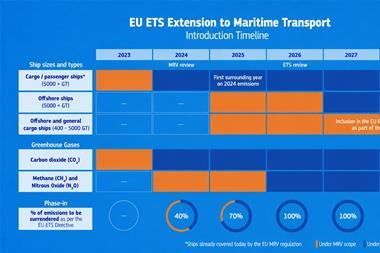
The EU Emissions Trading System (EU ETS), launched in 2005, aims to reduce greenhouse gas (GHG) emissions by at least 55% by 2030 compared to 1990 levels, targeting net-zero emissions by 2050.
From January 1, 2024, the EU ETS expanded to include all large ships (over 5,000 gross tonnage) entering EU ports. This inclusion requires shipping companies to surrender emission allowances for a portion of their CO2 emissions generated during voyages to, from, or within EU ports.
This regulatory shift has sparked a wave of strategic responses within the shipping industry.
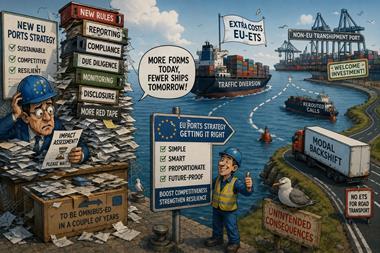
Firstly, increased freight rates and unclear rate levels. Logistics providers can expect rising freight rates as shipping companies factor in the cost of carbon allowances.
This could affect the overall cost of goods and services transported by sea. Additionally, varying calculation methodologies for ETS surcharges might challenge shippers in effectively tracking total ocean freight rates.
Then there’s consumer impact. The financial implications of the ETS may lead to increased costs being passed on to consumers through higher retail prices.
Shippers have also been forced to look at route optimisation. Companies and logistics providers must optimise their routes to minimise emissions and reduce their carbon footprint, potentially leading to changes in shipping schedules and delivery times.
Then there is supply chain adaptation. The increased costs associated with emission allowances might prompt companies to reevaluate global supply chain strategies, reassessing sourcing locations and distribution networks to optimise costs and emissions.
Investing in cleaner technologies
On the other hand, the EU ETS has incentivised shipping companies and logistics providers to invest in cleaner technologies and embrace innovative solutions to meet new regulatory requirements.
The pressure to reduce emissions drives investments in alternative fuels and energy-efficient vessels, leading to long-term cost savings and environmental benefits.
It’s also driving adaptability and innovation. Logistics companies must adapt operations and embrace innovative solutions to navigate the changing maritime transport landscape under the EU ETS. This could result in new business models and partnerships.
Integrating air and ocean freight
Dimerco has deployed the Dimerco Value Plus System since August 1, 2009, to achieve operational and management excellence and market-leading customer service.
This global supply chain management system is built on an open, cloud-based platform that supports collaborative workflows among supply chain partners in a highly secure environment.
Internally, the system integrates sales activities, operations, accounting, and financial management processes on a single global operation system, with mobile networking and seamless integration with external applications.
This virtual office concept allows an anywhere, anytime approach using smart devices, providing real-time visibility for effective business management in supply chains.
A key feature of the Dimerco Value Plus System is the MyDimerco Portal, offering a customisable dashboard for customers to track milestones, set up alerts, and measure KPIs across the supply chain.
The system also includes a Purchase Order Management System (POMS), that enables synchronisation of multiple purchase orders across multiple countries, enhancing performance and productivity.
Using supply chain orientation, the system integrates all key supply chain functions for management efficiency and customer service excellence.
As a cloud-based collaboration, the system eases deployment, connectivity and accessibility. This helps ensure high performance and service reliability and reduces carbon footprint by taking advantage of energy-efficient technology.
Dimerco Value Plus System makes clever use of business intelligence. It centralises the data control mechanism to improve data quality, with dynamic and flexible analysis for customizable reports.
Because it’s automated, it preserves natural resources by reducing paperwork through the automation of integrated workflows and processes across the supply chain.
The MyDimerco Portal is customer-focused. Combined with the system’s strong data integration capabilities, it delivers seamless connectivity with our customers.
Strategic adaptation
The shipping industry faces a multitude of challenges beyond the EU ETS.
Global events such as Wars (Russia-Ukraine, Israel), Trade Tensions (US-China), Trade Strategy (China +1 & Taiwan +1), Trade Agreements (RCEP & CPTPP) and the Red Sea Crisis have forced global businesses to reevaluate their supply chains.
The changing flow of materials is testing the ability of certain trade lanes to handle the volume.
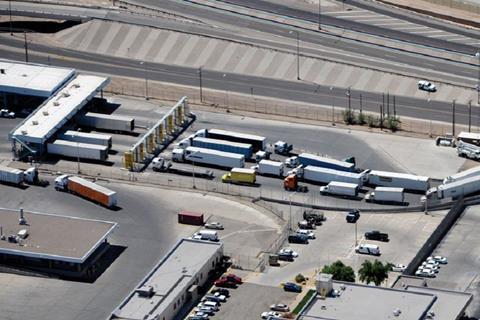
For example, the US-Mexican border has become more congested. In response, carriers are deploying more capacity, while guarding against extreme overcapacity, which can lead to a crash in freight prices.
Carriers have also shown the world how nimble they can be in terms of adjusting capacity and replanning service loops to meet the market.
These reconfigurations in global supply chains have increased demand for import and export routes in Southeast Asia, with Taiwan’s exports rising in proportion to Southeast Asia and China becoming more Europe-oriented. Net-zero commitments by 2050 will drive upcoming regulations, requiring industries to adapt to new standards.
Take-home messages
Dimerco’s strategic adaptation and investment in innovative solutions position it to navigate the evolving regulatory landscape successfully.
By integrating advanced technologies, optimising supply chain operations and embracing cleaner practices, Dimerco is setting a standard for the logistics and shipping industry.
As the industry transitions to a low-carbon future, flexibility and innovation will be crucial for meeting the challenges and opportunities ahead, shaping a sustainable future for the maritime sector.
Staying ahead of regulatory changes is essential for maintaining compliance and operational efficiency in the shipping sector.
The EU ETS has significant impacts on freight rates, consumer costs, route optimisation and supply chain strategies.
Investment in cleaner technologies and innovative solutions is critical for adapting to new regulatory requirements.
Case studies illustrate Dimerco’s successful strategies in cross-border train freight and air + road transport solutions. The industry must prepare for upcoming regulations driven by global events and net-zero commitment.
Case Studies: Cross-border train freight and air + road transport
Cross-border train freight
Dimerco has been a pioneer in promoting the use of rail to improve cost, service and carbon efficiency in the critical China–Europe trade lane.
As an example, Dimerco streamlined the total freight transportation process for delivering crucial components for the aviation fuel pipeline at the new Beijing Daxing International Airport.
By shipping 33 tonnes of valves from Milan, Italy, to Zhengzhou, China, via cross-border train freight, Dimerco saved the customer nearly three weeks in transit time compared to ocean shipments. The parts were delivered on time during a major national holiday in China.
Train freight, being 70% cheaper than air freight and up to 20 days faster than ocean freight, also offers effective GPS tracking.
Utilising the Dimerco Value Plus System and the eRMS - Railway Freight Management System, Dimerco coordinated each leg of the journey, ensuring smooth transitions between road and rail, handling complex customs clearance requirements, and keeping the customer informed at each stage.
For East-West movements, an increasing number of China-based suppliers, particularly in the auto, solar and electronics sectors, are foregoing ports and using rail to move cargo into key Europe markets.
Air + road transport
Dimerco’s Air + Road transport solution addresses the challenges posed by capacity issues and near-sourcing trends. By combining direct freighter service from China to the US with bonded trucking service to Mexico, Dimerco offers a door-to-door solution that defers duty payments until final customs clearance in Mexico.
This solution responds to demand from Chinese component part manufacturers and supports the near-sourcing trend by creating efficient, flexible transport options.