



Weather is no longer a passive backdrop to industrial activity but an active, strategic variable shaping operational resilience, financial outcomes and sustainability performance across global port operations.
As climate volatility intensifies and extreme weather events become more frequent, ports and terminals are under increasing pressure to maintain safe, efficient, and continuous operations.
Against this backdrop, StormGeo, part of Alfa Laval, is positioning weather intelligence as a critical enabler of informed, proactive decision-making across maritime logistics.
“Weather directly affects safety, continuity and cost efficiency in port operations, making it a strategic factor rather than background noise,” says Maria Pedrosa, head of aviation and training services at StormGeo.
“StormGeo’s services help teams reduce weather-related uncertainties, improve planning and make informed decisions, giving clarity on when and where safe conditions will exist.”
She adds that identifying operational weather windows is fundamental to performance: “By identifying accurate operational weather windows, ports can minimise downtime losses and avoid delays, strengthening both resilience and financial performance.”
The move to operational clarity
The shift from traditional forecasting to actionable weather intelligence reflects a broader transformation in how ports interpret and use environmental data. Rather than simply knowing what the weather will be, operators increasingly require insight into how conditions will affect specific activities.
StormGeo addresses this need through what Ms Pedrosa describes as a fully integrated decision-support ecosystem tailored to port and terminal environments. Central to this is the ability to consolidate multiple data streams into a unified operational picture.
“StormGeo provides a complete weather decision-support ecosystem designed specifically for ports, terminals and ferry operations,” Ms Pedrosa says.
Key components include a Weather Risk Dashboard, an intuitive traffic-light style visual that highlights potential operational restrictions based on a customer’s specific thresholds.
The platform is supported by a comprehensive web portal delivering detailed forecasts and environmental data. This provides seven-day forecasts in table and graph formats, atmospheric and ocean data, tides, surge and sea currents, alongside overlays such as wind, waves, radar, satellite and lightning. There is also 24/7 access to duty forecasters.
Integration is also a key element. Email forecast delivery and APIs ensure integration into port systems, creating consistent information flows across departments.
The aim is that these tools help logistics teams, VTS operators and other stakeholders plan activities such as crane work, loading, berthing, pilotage and fuel operations with greater confidence, supported by one shared operational picture.
AI and machine learning
While data availability has improved significantly, the real transformation lies in how that data is interpreted.
Advances in artificial intelligence and machine learning are enabling a shift from generic accuracy metrics to operationally relevant insights.
“AI and machine learning are fundamentally enhancing how weather risk is interpreted and applied in operational environments,” explains Frode Håvik Korneliussen, head of operations – weather intelligence at StormGeo.
“Traditionally, forecasting accuracy has been measured in broad statistical terms such as wind error or wave height deviation, but what matters in ports is whether operations can proceed safely within defined thresholds.”
He emphasises that in port environments, what really matters is not just whether the wind forecast is off by one metre per second, but whether a crane operation can proceed safely within a defined threshold.
Machine learning enables several critical capabilities that improve decision-making precision.
“It enables local bias correction, improving forecast precision at specific terminals where terrain, infrastructure and harbour geometry influence wind and wave behaviour, while also supporting ensemble interpretation to translate probability into clear operational risk indicators,” says Mr Korneliussen.
“Pattern recognition helps identify recurring weather setups that historically led to disruption, and impact-based forecasting shifts the focus from what the weather will be to what the weather will mean operationally.”
Despite these advances, human expertise remains essential though. “It is important to note that AI complements, rather than replaces, experienced meteorologists,” Mr Korneliussen adds. “The combination of machine intelligence and expert human interpretation provides the highest value in safety-critical port operations.”
Embedding intelligence into operations
Of course, the real value of weather intelligence emerges when it is embedded directly into operational workflows rather than treated as an external advisory function. This shift enables ports to move from reactive responses to proactive planning.
“Weather intelligence enables ports to operate proactively rather than reactively. In short, ports that embed weather intelligence deeply into their operations improve safety, efficiency and overall operational resilience,” says Ms Pedrosa.
This integration is increasingly critical as ports balance efficiency with sustainability objectives. Reducing downtime, avoiding unnecessary delays and optimising vessel movements all contribute to lower emissions and improved resource utilisation.
The broader industry context reinforces this shift. According to StormGeo, extreme weather is among the fastest-growing threats to business continuity, with economic losses from climate-related events reaching hundreds of billions of dollars annually.
For ports, these impacts are felt through disruptions to cargo flows, infrastructure strain, and cascading supply chain delays.
Real-world scenarios
Although StormGeo’s examples are illustrative rather than tied to specific named projects, they demonstrate how weather intelligence can be operationalised across different terminal types.
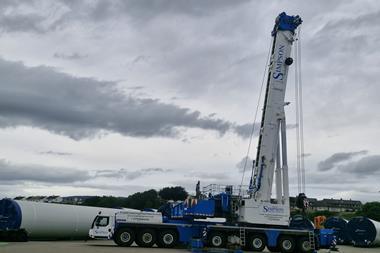
“At major container terminals exposed to strong crosswinds, integrating operational wind thresholds into a Weather Risk Dashboard allows crane teams to plan shifts with greater predictability, identifying restriction periods several days ahead and reducing costly last-minute disruptions,” says Mr Korneliussen.
In ferry and RoRo operations, the benefits are equally clear he says. “For ferry operators in narrow straits and exposed approaches, high-resolution wind and wave guidance, combined with surge and current data, improves departure planning and berth allocation, reducing cancellations and optimising fuel usage by avoiding unnecessary speed adjustments.
Mr Korneliussen says that bulk and energy terminals also stand to gain.
“By integrating weather APIs directly into terminal management systems, weather triggers become visible within operational dashboards, creating shared situational awareness between marine coordinators, safety officers and logistics planners, improving both safety margins and throughput continuity,” he says.
He emphasises that in each case, the key lesson is to integrate weather intelligence into structured operational decision processes rather than simply accessing forecasts.
Future-proofing ports
As climate uncertainty increases, it’s clear that ports must adopt a more systematic approach to managing weather-related risk. This requires not only better data but also clearer operational frameworks and decision-making processes.
Mr Korneliussen outlines a structured approach for port operators.
“Future-proofing begins with recognising that weather variability is increasing and operational margins are tightening. Operators must define operational thresholds clearly, integrate weather into decision workflows, adopt a probabilistic mindset, combine technology with expertise, and measure impact rather than just forecast accuracy.”
He emphasises the importance of measurable outcomes noting that by tracking reductions in downtime, improved planning stability and emissions savings allows ports to quantify the return on investment and demonstrate the value of weather intelligence as a core operational capability.
Crucially, this represents a cultural as well as technological shift. “Ports that treat weather intelligence as a core operational discipline, rather than an external advisory, will strengthen resilience, protect revenue and support sustainability objectives simultaneously,” Mr Korneliussen adds.
A strategic advantage
The transition from forecasting to weather intelligence clearly marks a significant evolution in how ports manage environmental risk.
By combining high-quality meteorological data, AI-driven analytics and expert interpretation, StormGEO says that operators can move beyond uncertainty towards informed, proactive decision-making.
Weather should no longer be an uncontrollable external factor but become a manageable business variable. For ports navigating increasing climate volatility, embedding weather intelligence into daily operations is becoming not just advantageous, but essential.
As Ms Pedrosa summarises, the ability to identify safe operational windows, reduce uncertainty and align planning with real-world conditions ultimately defines modern port performance.
In an industry where margins are tight and disruption costly, turning weather data into actionable intelligence may prove to be one of the most important strategic shifts underway.