

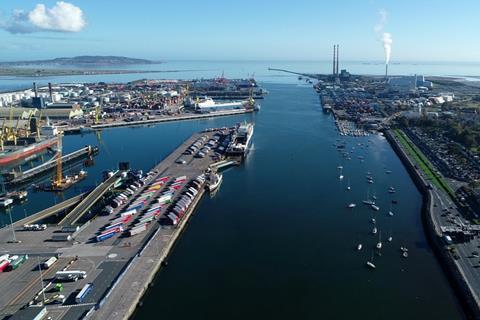
The Dublin-Holyhead shortsea shipping route has been identified as a leading candidate for an alternative fuels green corridor trial to reduce port emissions and decarbonise ferry transport.
A new feasibility study, Greening the Irish Sea – The Central Corridor, highlights methanol ferries as the most practical solution for cutting emissions along this vital trade and passenger link.
The report found e-methanol could reduce greenhouse gas emissions on the corridor by between 71% and 80%.
“This study shows that the Holyhead to Dublin corridor offers strong potential as an early green shipping route in Europe,” said Matthew Moss, maritime sustainable Transport principal consultant, Ricardo.
“Methanol offers a pathway that can be enabled in the near term through vessel retrofits and established handling practices.”
Near-term solution
Backed by Ricardo, Irish Ferries, Stena Line, Dublin Port, the Port of Holyhead, EDF UK R&D and Maynooth University, the study positions methanol ferries as a near-term solution compared with hydrogen, ammonia or battery-electric options.
Dublin-Holyhead is the busiest roll-on/roll-off route between Ireland and the UK, with more than 6,000 sailings last year moving nearly 1.6 million passengers.
Both the ports and the ferry operators have both emphasised the need for infrastructure and policy support to make alternative fuels cost-competitive and scalable.
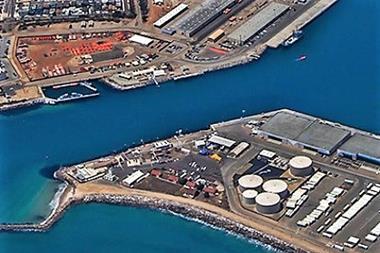
”One of the major challenges for critical infrastructure providers such as Dublin Port is the emergence of multiple possible alternative fuel options. Focusing on green methanol as one of these options gives us and the project partners a clear, realistic potential option to reducing emissions on this critical sea route,” said Ken Rooney, head of engineering & sustainability, Dublin Port Company.
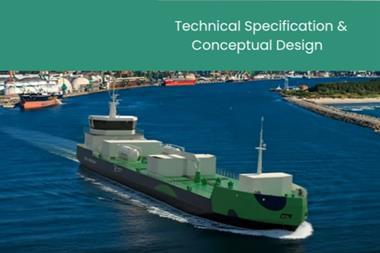
Stena Line in particular and as part of our long-term vision for a greener future. It has commissioned two new freight ships for the Irish sea – both equipped to operate on methanol fuel. These ships have been purpose-built for the Belfast – Heysham route with the first due to enter service on 22 September 2025.
Other alternatives
In addition to methanol, Ricardo is also looking into the feasibility of ammonia as a future fuel for the maritime sector.
Working with Brunel University of London and the Port of Cromarty Firth, it is working to conduct a feasibility study that aims understand how the fuel could support the decarbonisation of the sector and a concept for a next-generation ammonia combustion engine.
The feasibility study, Project FASTMOVE, is part of a UK Department of Transport funded initiative, UK SHORE, which aims to drive the shift towards a more sustainable maritime sector, while also supporting economic growth across the UK.
As part of Project FASTMOVE, the partnership, led by Ricardo, a world leading engineering and environmental consultancy, will evaluate the feasibility of four-stroke ammonia-fuelled marine engines in offshore support vessels, as a route to emission reduction targets.