Through the imposition of unequal tolls on the River Parana Argentina has sparked a storm of protest from other user countries while the new dredging concession is still pending. Rob Ward reports
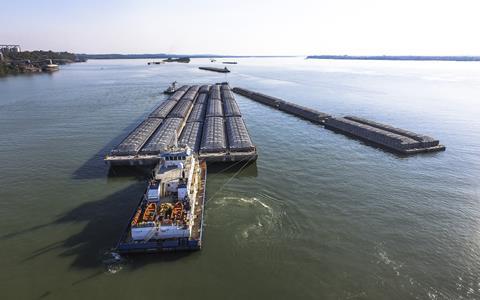
A unilateral and “illegal” decision by Argentina to impose an “onerous” toll on the main river gateway to land-locked Paraguay has created a storm of protest from feeder operators and shippers alike, prompting fears of a backlash from Asuncion and other countries in the region.
The toll, which Paraguayan sources say has never been charged previously, is US$1.47 per net registered ton of vessel (mostly barge systems) for Paraguayan flagged and international flagged vessels and just Argentine Pesos1.47 for Argentine flag carriers – somewhere between 212 x and 394 x cheaper! (the difference is whether you use the official rate for dollar conversion or the black market rate).
It is estimated it could cost ship and barge owners an extra US$35 million (annually) to operate their vessels and this would have to be passed on to shippers and, ultimately, to consumers; mainly in Paraguay and Argentina, but also in Brazil, Bolivia and Uruguay.
“This is grossly unfair and it is illegal,” says Esteban dos Santos, who is the President of the Paraguay River and Maritime Shipowners Association (Centro de Armadores Fluviales y Maritimos del Paraguay, or CAFyM). “We are telling our members to reject the invoices for these tolls until such time as the two governments [in Buenos Aires and Asuncion, Paraguay] have come to an agreement on the issue. They have to be rejected in a formalised way within 10 days of arrival, to be resolved at a future date.”
It is not known yet what the Argentine authorities will do if Paraguayan vessel owners continue to not pay the fees. “We do not know what to expect from the pilots and coast guards in this respect,” cautions Dos Santos.
Representatives of the four affected governments are having high-level, ongoing talks with Argentina, some at the Uruguayan embassy in Buenos Aires, to try and resolve the “bitter dispute”.
The toll, introduced at the end of January, is being charged for the 700 km leg of the River Parana from the Argentine port of Santa Fe right up to what is called the Confluencia (Converging of the Rivers Paraguay and Parana, near Resistencia and Corrientes) and it is all within the Argentine border.
Despite signing up to the Paraguay-Parana River Transport Agreement (PPTA) back in 1993 (whereby the signatories, including Bolivia, Brazil and Uruguay as well as the two conflicted countries, agreed to various protocols concerning the two waterways), the Argentine government says that as the section of the River Parana is within its borders it can impose a toll if it wishes and it could leave the PPTA . It adds, the money will be spent on dredging, signalisation and “other works”.
BLATANT BREACH
The other members of the PPTA say this is a “blatant breach” of the agreement and that this stretch of waterway needs very little dredging [during normal years without drought] anyway. If any changes were agreed, argue politicians and business groups in all those countries apart from Argentina, then 180 days advance warning should be given, not the 60 or so given by the Alberto Fernandez government on this occasion.
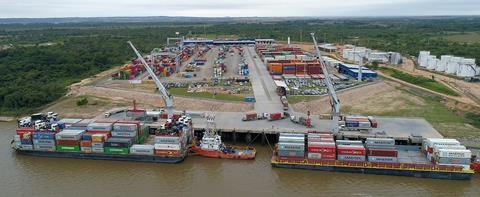
The CAFyM, which has 33 members and provides vessels for more than 90 per cent of all Parana River transits, says that free or cheap passage through this waterway is “absolutely essential” to countries like Paraguay, and Bolivia for that matter. Some 23 million tons of cargo is moved through this channel every year: 14 million tonnes to/from Paraguay (large volumes of grains as well as containerised cargoes); three million tonnes to Bolivia and six million tonnes to/from Brazil, via the Parana River for onward shipments towards Foz do Iguacu [the famous waterfalls that marks the three-way border between Paraguay, Argentina and Brazil] from the Confluencia.
The Centro de Navegacion (CN, which represents the interests of shipping agencies and the shipping and port communities), in Argentina, takes the position that this “rumpus on the River Paraguay” is part of a wider dredging and River Plate conundrum that includes a new long-term contract for an international dredging contractor – to replace the expired one between the Argentine government and Jan de Nul, the Belgian dredging outfit (see Port Strategy June 2022). Potentially, contract arrangements could also be put in place for a new dredging project for the Magdelena Channel, which would open up huge possibilities for box terminal TecPlata and other terminals in the port of La Plata, some 80km southeast of Buenos Aires.
CONTRACT CONTENDERS
“In principle we believe in more and improved infrastructure but only after proper research and studies have been carried out,” says Alfonso Jozami, General Manager, CN. “We also believe that this section of the river [Santa Fe to the Confluencia] must be included as part of a dredging and maintenance project for the whole Hidrovia system, thereby also including Santa Fe to Rosario and Buenos Aires and out to the ocean as well as an extra plan for the Magdalena Channel from the ocean to La Plata.” He adds that the overall contract would be for US$300+ million and extend over 20 years, and suggests that the Magdalena part of it should be less of a priority.
Jan de Nul has made no secret of its interest in taking on the new contract but it is not alone in this aspiration with well-known international dredging contractors Van Oord, Boskalis, Dredging International and Chinese CCCC Shanghai Dredging all expressing interest in the long-term dredging contract for the River Plate region.
Another source suggests that the “unilateral imposition of the toll” is partially to try and placate Jan de Nul who, he alleges, is still owed around US$30 million for works carried out in the region in the past.

“There is something going on behind the scenes which we can’t quite put our finger on,” adds Dos Santos, who is also Operations Manager at Navemar, an Asuncion based shipping company, which additionally operates two key box terminals in the region (Terport Villetta and Terport San Antonio). “But we are following due process and are hoping for a resolution as soon as possible and for the Treaty to be adhered to.”
Critics of the Toll imbroglio in both countries and in Uruguay believe that the left-wing government in Buenos Aires, under Alberto Fernandez (but also under the influence of radical firebrand Cristina Kirchner), has imposed the levy – via the Administracion General de Puertos (AGP) in Buenos Aires and the Argentine Transport Ministry – as a sop to its trade union powerbase. The underlying thinking is apparently that the new toll arrangements will provide a catalyst to the growth of Argentine-flagged barges and other vessels which have traditionally accounted for only around a 10 per cent market share. The effective subsidisation of Argentine-flag operations will, the argument goes, facilitate an enlarged market share. Not everyone, however, buys this line of thought.
“The problem with this view is that it is a complete myth,” says one BA-based shipping consultant. “There is no chance of the Argentine flag being revived as costs are too high, the fleet was and still is moribund and there is no sign of newbuilds [the BA shipyard Tandanor is now mainly for ship repair] plus the Paraguayan operators are cheaper and more efficient. It seems, therefore, that this manoeuvre is a blatant election move pandering to the maritime and other unions and their supporters.
“Sadly Argentina is a mess right now, inflation and exchange rates are out of control and therefore the government is looking for distractions to make it look better in the eyes of voters, and this Toll mess is one of them.”
Argentina goes to the polls for its Presidential Elections in October of this year with a right of centre candidate expected to win this time. The winner will take power in December and the Hidrovia will have to be one of the key infrastructure projects pursued – already the award of the new dredging contract has dragged on far too long in the opinion of diverse parties but particularly those of river users.