!["[A drop in container volumes] provided an opportunity for the port to market the vacated terminal area for other cargoes," Roy Weaver, Port of Taranaki](https://d245ovzhixo1a2.cloudfront.net/Pictures/480x320fitpad[0]/4/6/0/97460_Roy-Weaver.JPG)
What happens when trade patterns change and a port must switch quickly from a container focus to a bulk trade?
That’s exactly what faced Port Taranaki on New Zealand’s North island west coast, which had to show flexibility and give a quick response to the changing market, taking advantage of an opportunity to focus on logs when declining container numbers threatened its revenue streams.
Chief executive Roy Weaver says the trend toward hubbing of containers on rail to specialist container ports has meant a change in trade patterns for several NZ regional ports. For Port Taranaki it meant a 65% drop in container throughput over the last two years.
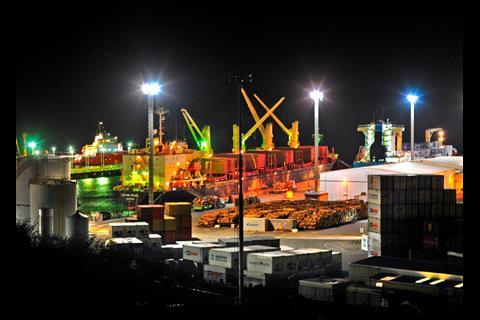
“This has provided an opportunity for the port to market the vacated terminal area for other cargoes. Export logs were targeted as they were plentiful on the margins of the port’s economic cartage zone. They also required special storage and loading features typical for container yards which could be priced competitively for the log trade.
“It was relatively easy to reconfigure the terminal into a log berth and a container berth. The most serious issue was traffic management, with the introduction of 100-tonne log stackers and log trucks into a container yard.
“Another issue to be managed is log dust, particularly around reefer container stacks.
“The existing container pavements were perfect for the heavy axles of the log loaders. Having the logs stored adjacent to the export wharf saved the customer significant rehandling costs being experienced at competitor ports and extended the economic cartage zone around Port Taranaki,” says Mr Weaver.
“The new layout is ideal for log vessels. Should container trade hubbing continue to affect the port then an extra log berth will be introduced in place of the container berth. This will trigger a new weighbridge and log scaling/receival facility on the terminal.”
No new plant was required except some vertical stands at each end of the log rows, making the switch an economical investment.
As a result of its flexibility, Port Taranaki is enjoying a log boom. Log export tonnages have increased tenfold and now stand at 300,000 JAS [the export log standard Japanese Agricultural Standard Cubic Metre] per annum and rising.