





Getting to know you
Internships can be valuable to both ports and young people, finds Felicity Landon.
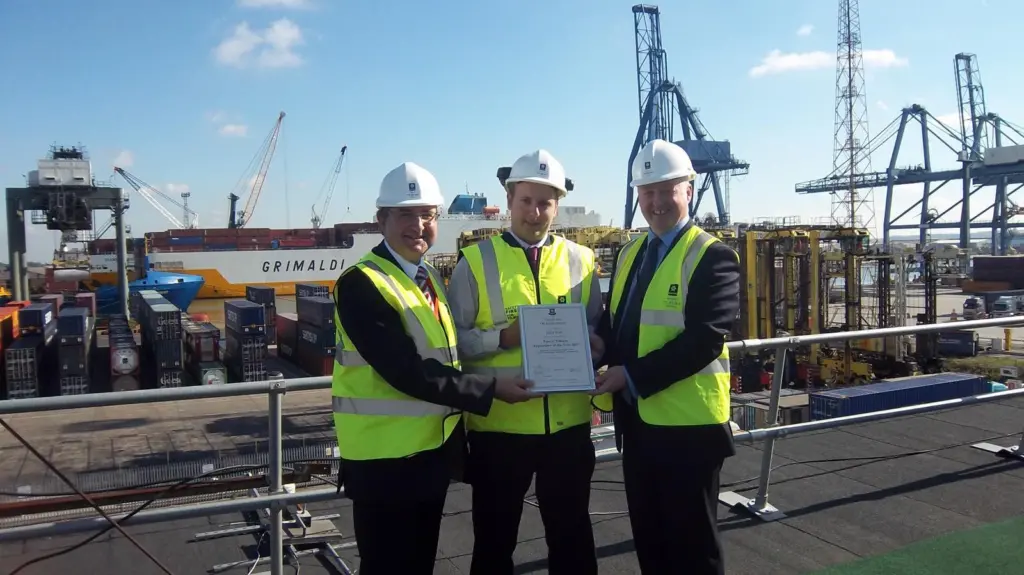
Former interns can be found in almost every department at APM Terminals’ Port of Salalah – most predominantly in the IT and engineering departments, but also several in the HR, operations and PDI (projects development and implementation) departments. This reflects the significant success of a highly structured internship programme at the port. Since 2002, Salalah has trained about 350 interns up to 2013 – 160 of them in its summer internship programme, and 190 in its on-job training (OTJ) programme.
“The highest place intern is now the operations manager at the port’s container terminal, where the bulk of the port’s throughput, infrastructure, human resource and revenue has been historically focused,” says Ali Kashoob, senior manager training at the Port of Salalah. “But even the interns that have come and gone have left behind a visible footprint in terms of their projects being visible until today. Universities and colleges have consistently contacted us for internships and even department visits, so the impact of the internship programmes on the community is clearly tangible and useful.”
Salalah offers internships in all areas of specialisation at the port, including engineering, management, operations, HR, marine, finance and IT. Both OTJ and summer internships last eight weeks – they offer the opportunity for students and, in some cases, recent graduates to acquire knowledge through doing, says Mr Kashoob.
“It is a key component of the learning and skill development process to spend considerable time producing work that is specifically targeted to job-related instruction,” he says. “Coordination of the internships involves matching the requirements of the individual departments with the relevant coursework and degree of the student.”
One of the team
During the internship, the student is treated as an employee of the port – they are given life insurance, a company ID card, and computer and desk and are expected to abide by all the rules of the port – “here we stress on attendance especially”, says Mr Kashoob – and they are paid for their work.
A mentor assigned for each intern fills in a weekly progress report while the intern is required to submit their assignments as required.
“We’ve seen a lot of success by incorporating a competition around presenting their learning at the end of the internship. As the Port of Salalah is a global and multicultural company, there is a strong requirement for English language skills, and we’ve found that the interns with good communication to round out their technical skills are those who have the most success in securing job offers.”
The port, which started operations in the late 1990s, clearly benefits from the internship concept, says Mr Kashoob. “In previous years, when the company was growing by leaps and bounds, such as from handling half a million teu to triple that number within three years, there was an urgent need to recruit local talent in large numbers, and this resulted in a high number of interns being offered job positions at the port. In a few cases we found that managers would wait until the student graduated and poach them right away! Today, about 10% of interns are offered job positions upon completion of their internship.”
Limited drawbacks
So much for the benefits – but what are the drawbacks? Mr Kashoob immediately responds that the benefits of the internship programmes are worth every hassle. There are sometimes, he says, minor irritations in coordination beyond the usual follow-up from poorly organised colleges or departments, where sometimes a college will not have covered some material well, and the students lack some of the skills expected of them.
In fact, geography has been a greater challenge. “While the capital’s larger universities are in the north of the country, Salalah is in Dhofar in the south, where the exceptional weather during summer attracts large numbers of tourists. “Therefore, the greatest hassle has been the limited availability of rent accommodation during the programme.”
The port’s solution has been to focus on recruiting students from Dhofar who are studying in Muscat and would typically come home for the holidays. “Otherwise it would be nearly impossible for a student to afford the rent prices that are seen in the summer season here in Dhofar,” says Mr Kashoob.”
Win-win
In the UK, the Port of Tilbury’s approach to internships is very different – but the enthusiasm for the concept is definitely shared.
“We don’t have a structured programme but we do take on interns,” says training and development manager Simon Harper. “Probably the most structured was in 2010 when we took on two interns for six months’ internship, and within the year they were both employed full-time – and they are still with us. We needed someone for the paper [import] side of the business and it was very successful.”
Other success stories have included a marketing student who spent a year at the port as part of a degree ‘sandwich’ course; she returned to university to finish her degree, “and we have said we have a very open door for her”, says Mr Harper. “She did an excellent job with us.”
Another youngster came for a summer internship on the civil engineering side – he did so well that he was taken on as an apprentice, he was subsequently named apprentice of the year, and he is now a very successful member of the port’s civils team, says Mr Harber.
“Internship can be interpreted broadly – we certainly use it widely from young school leavers through to graduates. In the six years I have been at the port, it has been a positive thing and no hassle.”
Commitment claim
Unsurprisingly, he says interns seem keener than others to impress. “They want to demonstrate how much they want to do the job, how committed they are and how they want to learn. Often they say ‘I am not looking to be paid, I just want the experience’ – but we do tend to pay them.”
Internships can help both parties decide whether they are well suited to each other, he points out. “For the intern, they might find they don’t really fit into the organisation, but there is no long-term commitment on either side which could end in tears. So it’s a very good way of both parties to get an idea of how they fit together.
“People have this vision that young people know what they want to do – go to a careers fair, and parents will say their child hasn’t picked the subjects they need for the future. But the majority of people don’t really know what they want to do right up to the age of 30. Internships help with the decision-making process – giving them an opportunity to test it out.”
Similarly, Tilbury is supporting the UK’s Traineeships programme – launched in 2013, the programme is designed to help prepare unemployed 16-23-year-olds for the world of work, via training and work placements, so that they can get an apprenticeship or other job. The port has announced that it will triple the number of trainees it takes on, from 20 in 2013 to at least 60 this year.
Related Articles
 CONCESSIONS & INVESTMENTS
 PORT & TERMINAL NEWS
 INSIGHT & OPINION