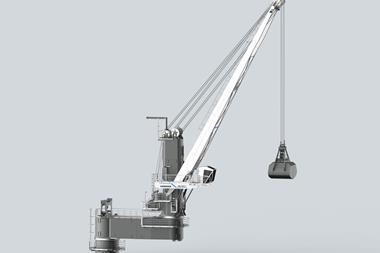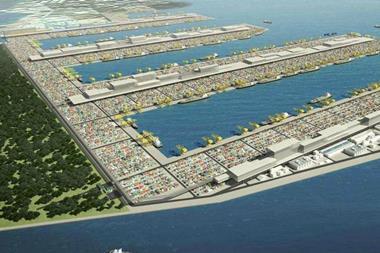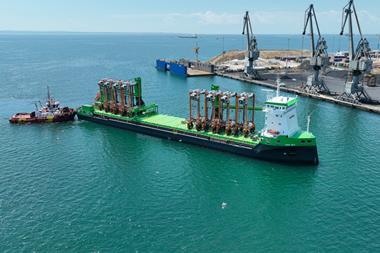
The idea of skipping a few steps between mine and ship could prove attractive if the output promises to be large enough, and there are ‘high in the sky’ possibilities with lightweight rope-bridge style conveyors.
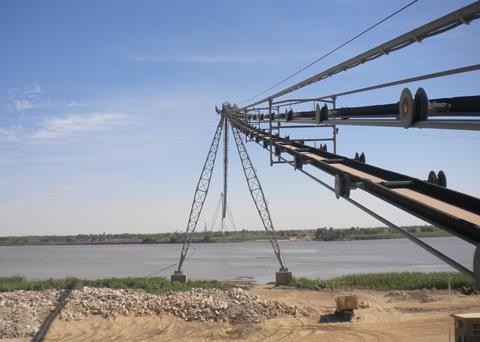
RopeCon has already found a home in industries where stable, continuous feeds are a necessity explains Professor Khanindra Pathak of the Department of Mining Engineering at IIT Kharagpur. The belt is supported by wheel sets running on track ropes, guided over towers and anchored at either end, which results in lengths traversing up to 20km with supports often only needed kilometres apart. An inspection trolley travels on the upper pair of ropes but as most moving elements are attached to the belt a lot of maintenance can simply take place at the terminal stations.
It has a 25,000 tonne per hour capacity, but the cost effectiveness of it largely depends on topography. Stefanie Reis of Doppelmayr Transport Technology explains there is no typical system to point to, but if other transport systems require long and costly detours “then RopeCon with its ability to span obstacles and take a direct route would prove to be the cheaper solution”.
Prof Pathak sees this kind of technology being especially helpful in enabling iron ore to avoid congested or unreliable roads such as those between the mining area of Barbil and Paradip port “with the potential for an integrated ship loader” loosening any quayside bottlenecks, he adds.