Africa Report recently carried a story citing the downturn in container transshipment cargo in South Africa and identifying this as a negative. But this does not tell the whole story, writes Mike Mundy.
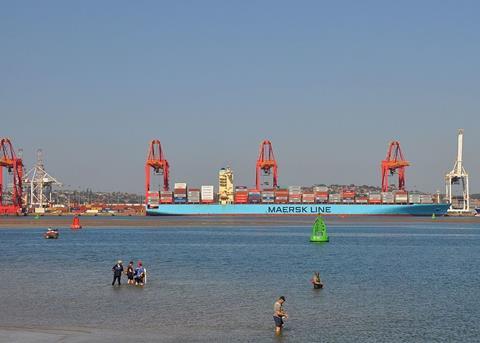
The argument put was that the drop off in transshipment traffic in South Africa – from 23% of volume in 2016 to 13% last year – is indicative of a loss of competitive power. Further, the author suggests that a solution to correcting this is via appointing a shipping line to operate Durban Container Terminal 2 (DC2). Again, it’s not quite that simple – this option can have serious penalties associated with it.
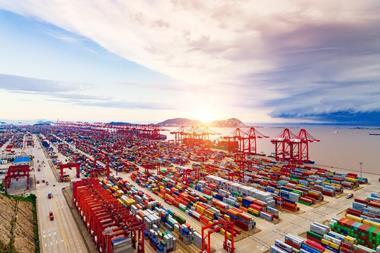
Transshipment in this context involves the use of a port as a hub where containers are relayed between mother vessels and feeder vessels. Typically, the feeder vessels service smaller ports that cannot offer access to the larger vessels.
Transshipment cargo, however, has a number of inherent differences to gateway cargo – import and export movements. The key points are:
- The per unit handling cost is significantly lower than gateway cargo and with no land transport and other related activities involved its positive economic impact is minimal.
- Invariably, the revenue generated by transshipment cargo does not offer a sufficient return on investment to justify adding new capacity to handle it. It is, at core, a high volume, low margin business – with high volume being a prerequisite of financial success.
- This is why at terminals like Durban Container Terminal 2 (DC2) transshipment volumes go up and down. Terminals that largely handle gateway cargo will sensibly reduce the volume of transshipment cargo handled when capacity gets tight in favour of much more revenue generative gateway cargo – which also offers positive economic impact.
- The other big difference is that transshipment volumes generally have a higher risk factor because of the portability of this cargo – i.e. it does not owe allegiance to a particular port and can quickly be removed, never a good thing if you have invested to handle it!
There are other negative nuances that can come into play. One example is in Cape Town, where in the past the high volume of boxes being transshiped for Angola played a major part in making the export of fruit exports problematic – i.e. low revenue traffic endangering high value fruit exports. This had an added twist to it in that a good portion of this transshipment volume was comprised of empty containers, offering even lower revenues for handling.
Add into the idea of pursuing transshipment traffic appointing a shipping line or a shipping line affiliated terminal operator as the terminal operator for DC2, then the risk factor increases. Aside from such a party being able to control berthing slots in its favour, and via this means reducing competition (it is known that at DC2 major liner operators, in addition to the existing principal callers, would like more access), another tactic that can be employed is to flood the terminal with transshipment cargo.
The net effect is one that shipping lines increasingly strive to achieve nowadays – i.e. exerting more control over the supply chain with all the pricing advantages this offers.
For years parties such as South Africa’s Citrus Fruit Exports Board have striven to achieve efficient, cost-effective export capability in Durban and Cape Town. The distance to market for these products is significant, a competitive challenge, it is plain to them and other key parties such as the importers of auto parts that getting gateway cargo capacity right is a key component of building competitiveness. Handling transshipment cargo is less of a priority – and as undertaken elsewhere in ports worldwide is handled on an opportunity basis – alongside gateway cargo only when available capacity permits.
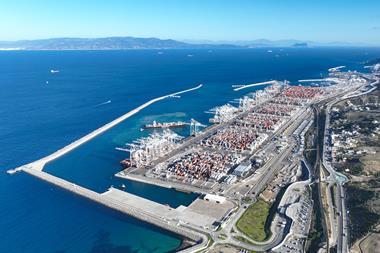
If any further evidence is required of the negative aspects of transshipment cargo then consider the case of the port of Nquara, where Transnet offered a transshipment terminal concession at the same time as it called for tenders for DC2. There were zero takers for this opportunity, reflecting the overall view of the reduced opportunities for transshipment in a southern African location. It is ports like Singapore, Tanger Med – Morocco and Colombo – Sri Lanka, that can capitalise on a crossroads style strategic location that in a high-volume environment can make a successful business out of transshipment. Not terminals like DC2.