![PortStrategy[GreenPort]](https://www.portstrategy.com/wp-content/uploads/2026/09/PortStrategyGreenPort.svg)


Tanger Med Engineering building Africa’s infrastructure future from the ground up
Across Africa’s rapidly evolving port and industrial landscape, Tanger Med Engineering (TME) has established itself as a reference in infrastructure engineering, distinguished not only by its technical expertise, but by the operational depth it brings to every project it undertakes.
Unlike conventional design consultancies, TME operates as an engineering firm with direct roots in port operations, giving it a unique vantage point that translates into more practical, more resilient, and more performance-driven infrastructure solutions.
A different kind engineering partner
Founded on the legacy of Africa’s mosy ambitious port developments – Tanger Med Port complex – TME has built its identity around a simple but powerful idea: infrastructure should be designed with operations in mind from day one. While many firms can produce technically sound blueprints, TME brings something more to the table: a close understanding of what it actually means to run a port at scale.
The company combines high-level engineering expertise with real, hands-on experience from one of the largest port complexes in the world. The result is infrastructure that doesn’t just look right on paper, it performs in the demanding, unpredictable reality of international trade.
This philosophy underpins everything TME does, from early-stage feasibility studies to construction supervision, asset management, and operational optimization. Clients aren’t handed a design and left to figure out the rest. TME walks with them across the entire project lifecycle.
Multidisciplinary by design
With a team of over 250 experts, TME operates across five strategic pillars: consulting and feasibility studies, engineering and design, project coordination and technical assistance, and long-term maintenance and performance optimization. Together, these capabilities allow TME to serve as a one-stop partner for complex, large-scale infrastructure projects, particularly across Africa and the Middle East, where demand for modern, efficient logistics infrastructure is growing rapidly.
TME is currently present in more than 20 African countries, having contributed to the development of 40 ports and over 20 industrial zones and special economic zones across the continent. That footprint reflects a genuine commitment to Africa’s economic development.
Innovation in the face of complexity
One of the most telling examples of TME’s approach is how it handles the inherent complexity of port expansion projects. Rather than separating the engineering and operational phases, TME integrates them from the start. Teams use simulation tools, traffic forecasting models, and digital modeling to stress-test designs before a single foundation is laid anticipating bottlenecks, optimizing layouts, and reducing the risk of costly surprises during construction or operation.
In the realm of equipment and asset management, TME has embraced IoT-based monitoring systems that track the health of port machinery in real time. The shift from reactive to predictive maintenance has delivered measurable improvements in reliability, and in the bottom line for port operators who can’t afford unplanned downtime.
This is what TME calls its “proactive and agile” approach: not waiting for problems to emerge, but engineering resilience into the solution from the outset.
A pan-African footprint, built project by project
TME’s work spans the continent, with flagship projects that have shaped some of Africa’s most strategically important port and industrial hubs.
Recent landmark projects illustrate the breadth and depth of TME’s expertise:
- Benin (Cotonou): Supervision and technical assistance for the extension of the container terminal and port basin, including the successful completion of the first phase with the rehabilitation of the North and South quays.
- Djibouti (Doraleh): Oversight of reinforcement works for the container terminal, helping safeguard one of East Africa’s most strategic maritime gateways and ensuring the long-term resilience and performance of critical port infrastructure.
- Côte d’Ivoire (San Pedro): Development of the port’s 2050 Master Plan, providing a forward-looking strategic roadmap that integrates traffic forecasts, competitiveness analysis, sustainability considerations, and phased investment planning.
- Madagascar (Toamasina): Engineering study for the installation of a mobile bulk unloading hopper designed to optimise cargo handling operations, improve productivity, and enhance the efficiency of bulk logistics flows.
Each project is a cornerstone of regional economic development, a contribution not just to a client’s balance sheet, but to the broader fabric of trade, employment, and growth across the continent.
Investing in people, not just projects
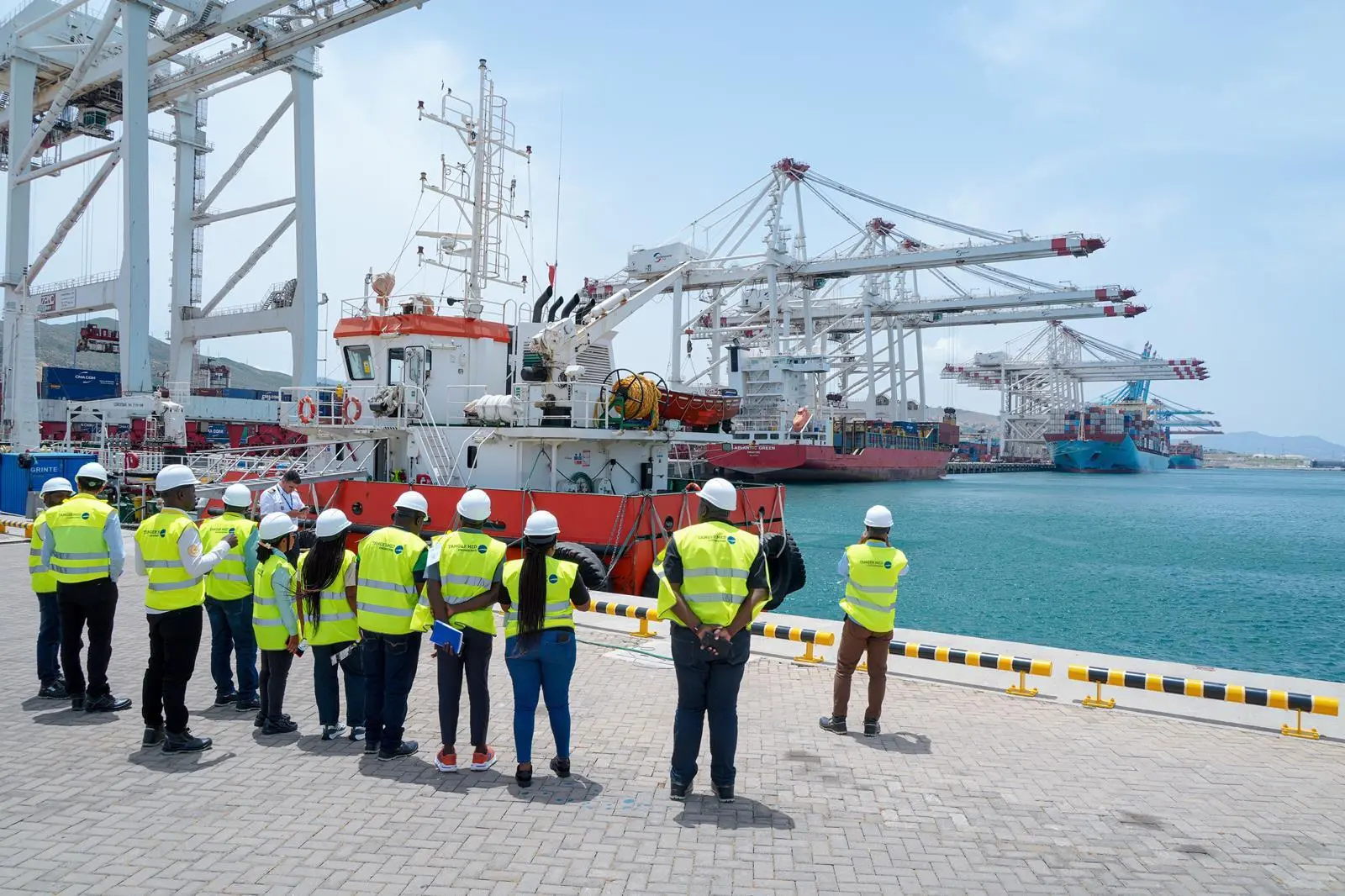
Behind every successful project is a team capable of delivering it. TME’s approach to talent is as considered as its approach to engineering. The company recruits multidisciplinary profiles, engineers and consultants who combine technical depth with practical operational understanding, and offers them something many firms cannot: early exposure to genuinely complex, high-impact projects.
Retention is driven by the work itself. Engineers are given real responsibilities from the start, work in collaborative cross-functional teams, and benefit from a culture of knowledge transfer between senior experts and younger professionals. Continuous learning is built into the fabric of the organization, through advanced engineering tools, simulation-based training programs, and ongoing professional development.
Looking ahead: smarter, greener, more connected
The future TME envisions for itself is one of deeper integration and greater impact. The company is positioning itself as a fully integrated infrastructure partner, moving beyond design and construction into digital operations, sustainability consulting, and lifecycle asset management.
Digital transformation is at the heart of this evolution. TME is investing in data-driven tools, digital twins, and predictive analytics that will allow ports and industrial facilities to operate more efficiently, adapt more quickly, and plan more intelligently.
Alongside this, sustainability is becoming a defining priority: energy efficiency, electrification, and decarbonization are no longer optional considerations, they are central to the infrastructure TME is helping to build.
Geographically, the company intends to deepen its presence across Africa and the Middle East, regions where the infrastructure gap represents both a significant challenge and a profound opportunity.
From concept to operations, TME is building the African infrastructure of tomorrow, contributing to sustainable and inclusive development.
Related Articles
 WORLD
WORLD
 WORLD
WORLD
 PRODUCTS & SERVICES