

Thinking beyond dali
There are two clichés that go along with any discussion of ports- something to the effect of “You’ve seen one- you’ve seen one,” and then another along the lines of “Ports are invisible (along with the rest of shipping) until something bad happens.”
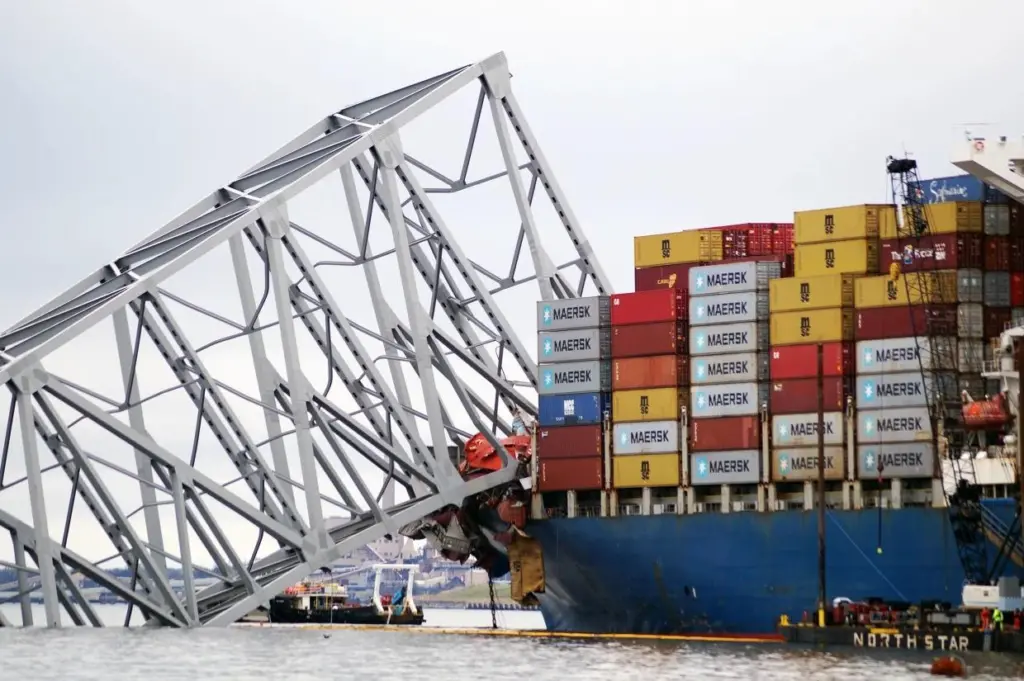
Late March, in Baltimore, it was certainly bad; quick actions as the ship lost its power undoubtedly saved lives on the bridge. Sadly, one group of roadway repair workers did not survive.
Every port will have unique circumstances, but clearly the DALI tragedy is a wake-up call for everyone to review their situation and engage in contingency planning. We’ll leave the nuts and bolts of this to the professionals, but a re-visit of bridge logistics should be paramount – starting at the fenders and dolphins (or lack thereof) at their bases. The naval architects and physicists will certainly argue that this is largely irrelevant in the case of the DALI – they are only a first line of defense and clearly the force with which the DALI hit the bridge was considerable. It does raise the thought, however, that line-haul containerships have evolved considerably in size since the time that much of the United States roadway infrastructure, including bridges, was put in place and going on from this what steps are taken, if any, to upgrade bridge protection in line with shipping system changes?
Allied to this question are policies surrounding the use of assist or tailing tugs. In this case, such an assist vessel (either directly “at the hip”- alongside the vessel, or just behind it) might have been able to spring into action and nudge the containership towards the center of the channel. Both of these ideas, however, have cost implications.
There is a case for individual ports to work with regulators such as the U.S. Coast Guard to implement updated rules for safe navigation, although objections from those directly impacted would doubtless be loud. As the government focusses on “infrastructure” generally, maybe- just maybe, funding (for physical works, as well as marginal costs of harbor transits) could be diverted from other areas. For example, offshore wind is moving along more slowly than had been anticipated only a few years ago. Arguably, there is a “green” angle here- diversions of truck and auto traffic (in a Baltimore example, to the beltway on the west side of the city) cause more fuel consumption. Good physical planning (recognising the uniqueness of each port), and ship assist, are some of the ways to get ahead of potential calamities.
And then, there is good old fashioned contingency planning. In Baltimore, alternative maritime routings (albeit not to the deepest drafts) were put into effect quickly, enabling the port to return partially to an operational status. Presumably, roadway planners were also quick to gird into action.
Hopefully, the DALI situation will never be repeated, but clearly port planners need to stay a step ahead in these uncertain times.
Related Articles
 INSIGHT & OPINION
 INSIGHT & OPINION
 INSIGHT & OPINION