

Under the microscope
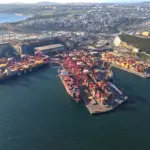
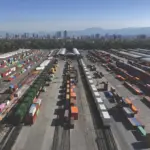
Australia has traditionally had a strong interest in putting its waterfront industry under the microscope and considering how it can raise port performance.
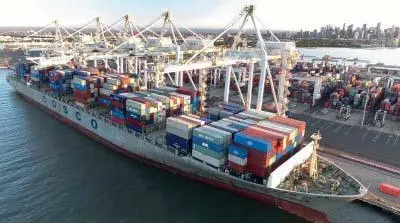
In the past much of the incentive to do this has flowed out of the troubled history of industrial relations on the waterfront and a recently released report, Lifting productivity at Australia’s container ports: between water, wharf and warehouse, issued by the Productivity Commission, does cite this as an area still worthy of attention but it also brings into focus a number of other key issues.
The general view is taken that higher productivity is achievable at Australia’s container ports and would deliver “significant benefits.” Variations in performance between the different container terminals is noted – a conclusion that is perhaps not that remarkable given that this is a common facet of container terminal operations and one that can stem from a myriad of local factors plus the reality that all facilities are not in the same age bracket.
In assessing container port performance, the report draws upon the World Bank’s Container Port Performance Index 2021 – it finds that compared with overseas ports, especially Asian ports, Australia’s major container ports, except for Brisbane, ranked among the worst performing 20 per cent of ports, and Brisbane ranked in the bottom 30 per cent. The report notes, however, that this performance measurement is based largely on just one criteria – vessel turnround times. It further notes that in many cases overseas where a better performance is achieved this is due to the deployment of a larger number of cranes to work a vessel which is not necessarily a capital efficient move in the case of Australian ports. Its also fair to say that the CPPI Index 2021 is not a document viewed by many experienced parties as one that is entirely fit for purpose.
Nevertheless, it is the Commission’s view that: “Inefficiencies at Australia’s major container ports directly cost the Australian economy about A$600 million a year.”
This is where workplace arrangements come into the frame.
The report details the view of employers that waterfront unions wield too much power and that Enterprise Agreements (EA) invariably take much too long to negotiate, that protected industrial action can lead to significant and extended periods of disruption. Looking to the future the point is additionally made that:… “four of the five container terminal operators’ EAs expire between March and December 2025” and that as a result, “overlap in bargaining activity is likely to be more common in the next round, bringing with it a number of risks.”
Cutting to the chase, the Commission recommends that, “In line with its 2015 report Workplace Relations Framework, that the Fair Work Act is amended in the following respects to:
- ”Clarify that ‘significant’ should be interpreted as ‘important or of consequence.
- “Allow the Fair Work Commission (FWC) to suspend or terminate protectedsuspend or terminate protected industrial action when it is causing, or threatening to cause, significant economic harm to one party under the EA rather than both (as is currently the case).
- “Include options other than lockouts for employer protected industrial action
- “Enable employers to choose either to deduct wages or continue to pay employees for protected industrial action which lasts for less than 15 minutes.”
There are also various other port specific recommendations regarding proposed amendments and a number of structural recommendations concerning applications to the FWC and its decision making processes/inputs to these.
THORNY ISSUE
The thorny issue of landside fees also comes in for detailed scrutiny with the Commission coming out firmly on the side of more regulation covering this area.
It has long been the contention of industry representative bodies that container terminal operators place too much emphasis on increasing revenues from landside operators, via what are dubbed landside fees, as opposed to seeking to achieve increases from their respective shipping line clients. It is perhaps an irony that at least in part this has come about due to the increased competition in the terminal sector.
Furthermore, that a change of emphasis in this area is likely to see increased shipping line charges passed back to importers and exporters!
The general conclusion on landside fees is that: the Treasury should develop a mandatory container terminal operator code that would be administered and enforced by the Australian Competition and Consumer Commission (ACCC).
To end on a positive note, the Commission additionally found that infrastructure needs in the maritime logistics sector are being addressed and that the adoption of technology at Australia’s container ports is broadly in line with international practice.
Note: The full Inquiry report: Lifting productivity at Australia’s container ports: between water, wharf and warehouse can be obtained from the Productivity Commission – Media Publications
Email: publications@pc.gov.au
Related Articles
 INSIGHT & OPINION
 INSIGHT & OPINION
 INSIGHT & OPINION