



Lesson in the importance of hinterland competition
There is not a day that passes without a senior industry executive warning of the dangers of congestion and lack of terminal capacity. I have come to the conclusion that this is usually tied to the acquisition of subsidised state funding andor permissions from state authorities to go ahead with an expansion plan.
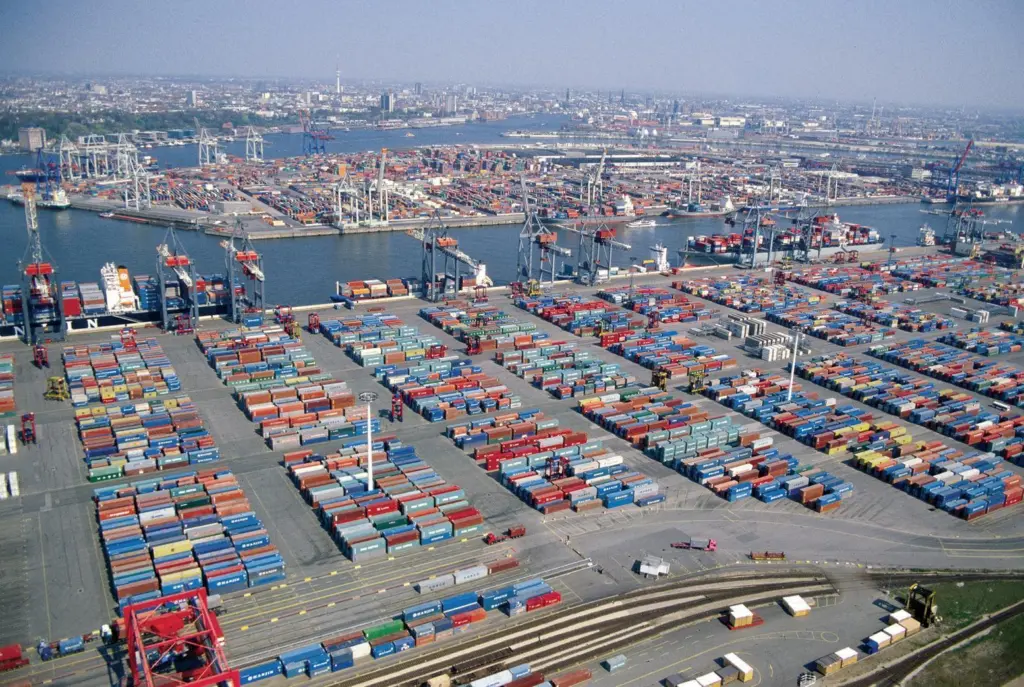
Maasvlakte 2 just received permission for state aid and DP World is waiting for the UK Government to sign off on the London Gateway project. Both have been in the news recently with dire warnings of capacity. What does all this have to do with hinterland competition? Everything. Ports and terminals around the world are expanding their capacity with a fierce determination. Part of this expansion is a direct result of new land facilities, and part due to innovative changes in technology, existing land use, labour agreements and 24\7 gate openings.
In Europe, the North Range ports handled some 17m deep sea teu, including deep sea transhipment in 2005. This does not include the movement of empties and short sea containers which would add at least another 3m teu. Projections of this deep sea traffic to 2010 are around 23m teu.
Capacity expansion at Rotterdam’s Maasvlakte 2 will add “at least 16m teu” capacity according to their website. Hamburg’s HHLA is reporting an increase of 5m over the next eight years and JaderWeserPort (Wilhelmshaven) will have an additional 2.7m teu capacity when completed. Antwerp, Zeebrugge, Amsterdam and Le Havre expansions are also under way,resulting in additional new capacity of around 25 teu. This excludes UK expansion activities.
All this adds up to the need for increased volumes to the hinterland, with better rail connections, improved highways and easy access to the Rhine and inland distribution centres.
As the ports expand they look for their “natural” markets. On the water side, these are the liner shipping companies, but aside from pricing,how does one attract them? The answer, beyond the issue of efficiency, is location and access to the hinterland.
And here we come to core of the hinterland market. Ports such as Hamburg, Antwerpen and Rotterdam have competed for German cargo for centuries, but in addition we see Hamburg with a natural market of size to the East and Rotterdam and Antwerp also look to the UK. We see container block trains with 70 teu each on average, moving to Central and Eastern Europe in growing numbers.
Existing hub ports in the European North Range (Le Havre-Hamburg) are conscious of the fact that they need to protect their business investments against new ports developing outside the range as volumes increase to a level where direct services might become a cheaper option to transhipment.
Hinterland competition is therefore fierce and it is also coming from the south. Barcelona will soon have a standard gauge rail link into France, and with its new capacity coming on stream, it is eying not only southern France, but looking over the horizon as far as southern Germany and Austria. Eurogate, through its Mediterranean terminal interests has a foot in both camps.
Here we come back to the issue of port capacities. Have you noticed how reticent most of the ports, and particularly the terminals, are about divulging their existing capacities?
Mainly they do not really know. We are seeing significant investments in existing ports with expansion taking place within existing space. Hamburg is a good example of this, with the Buchardkai expanding from an estimated 2.9m teu to 5.2m teu within existing boundaries.
The hinterland is the key to maintaining the volumes necessary to fill the space and to pay for the huge sums of investments being made.
Relying on the lines alone is not enough to ensure long term throughput. They are fickle customers and ever cost conscious. A strategy of working with 3PLs and the hinterland customers provides a future with less risk.
In short, port capacity expansion will have to rely on the hinterland to ensure the continued growPth in volumes to pay for the expansion.
BEN HACKETT
Related Articles
 INSIGHT & OPINION
 INSIGHT & OPINION
 INSIGHT & OPINION