

LNG projects gather momentum
Discussion at this year’s Gas Fuelled Ships conference in Hamburg suggested that the tide is turning for LNG as a marine fuel, with increasing numbers of projects turning from concept to reality.
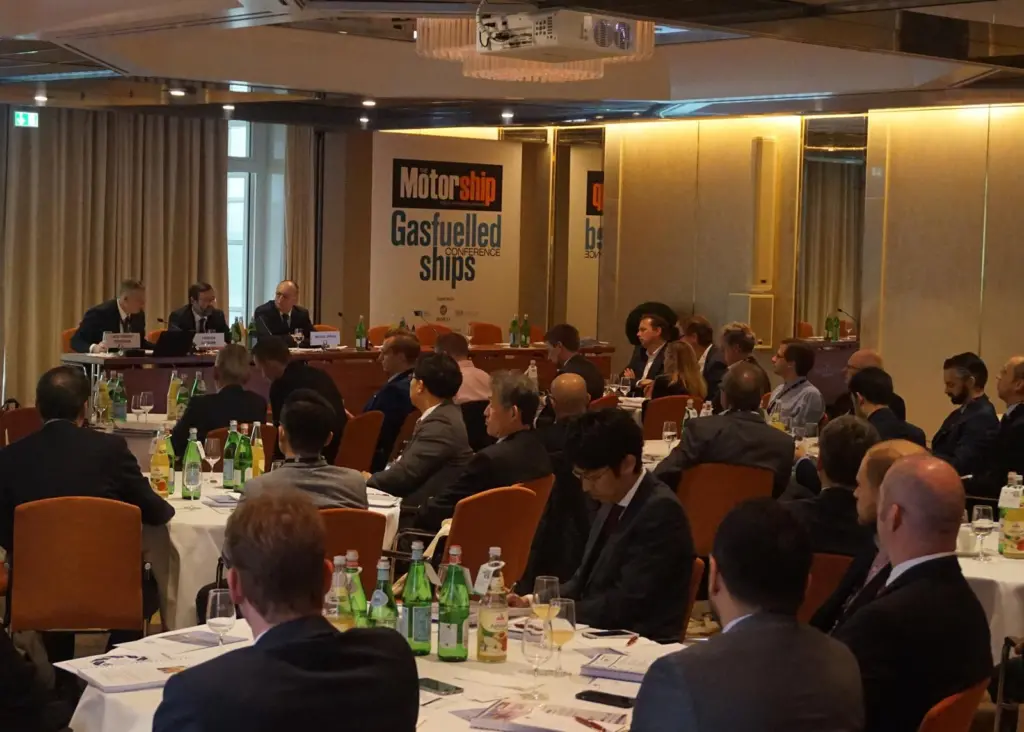
The Motorship writes that while the low oil prices of the last two years have derailed some of the wilder projections for uptake of LNG, new regulatory drivers are offering an incentive for ship owners to look more closely at gas. These include the MEPC decision to impose a global sulphur cap in 2020 and the consensus to reduce emissions embodied by the Paris Agreement.
Opening the first day of the conference, Lars Robert Pedersen, deputy secretary general of BIMCO, pondered whether those factors would be enough to accelerate the uptake of LNG, or whether financial and regulatory obstacles would continue to hinder development. DNV GL’s Torsten Schramm argued that the spread of LNG into new sectors – notably the cruise market, with 11 LNG-fuelled vessels ordered in the past 18 months – was an important sign of progress.
But small to medium-sized ship owners will still require government incentives if they are to cover the costs of environmental compliance under tough market conditions, explained Michael Ippich, managing director of Hartmann Reederei and chair of the nautical-technical committee of German ship owner association VDR.
Mr Ippich looked at some of the impending regulatory measures that would encourage further uptake of alternative fuels – including a plan for clean energy that could require ships at German ports to be emission free by 2050 – and touched upon Hartmann’s own exploration of low-flashpoint fuels, with the recent delivery of an ethane-powered gas carrier.
Jan Schubert, sales and business development manager Bomin Linde gave an overview of some major bunkering projects in Europe, highlighting that, while bunkering may not exist everywhere yet, options for establishing fuel supply are not necessarily far away. By 2018 there will be five LNG bunker barges operating in northern Europe. “Where there LNG import terminals there are ways to get gas,” he said – even where bunkering direct from terminals is not available, fuel supply by truck or by barge is increasingly widely available.
Related Articles
 ALTERNATIVE FUELS GREENPORT
 ALTERNATIVE FUELS GREENPORT
 ALTERNATIVE FUELS GREENPORT