



Locking on to labour
Buoyed by booming throughput,Antwerp has set its targets on modernising work practices. Felicity Landon reports
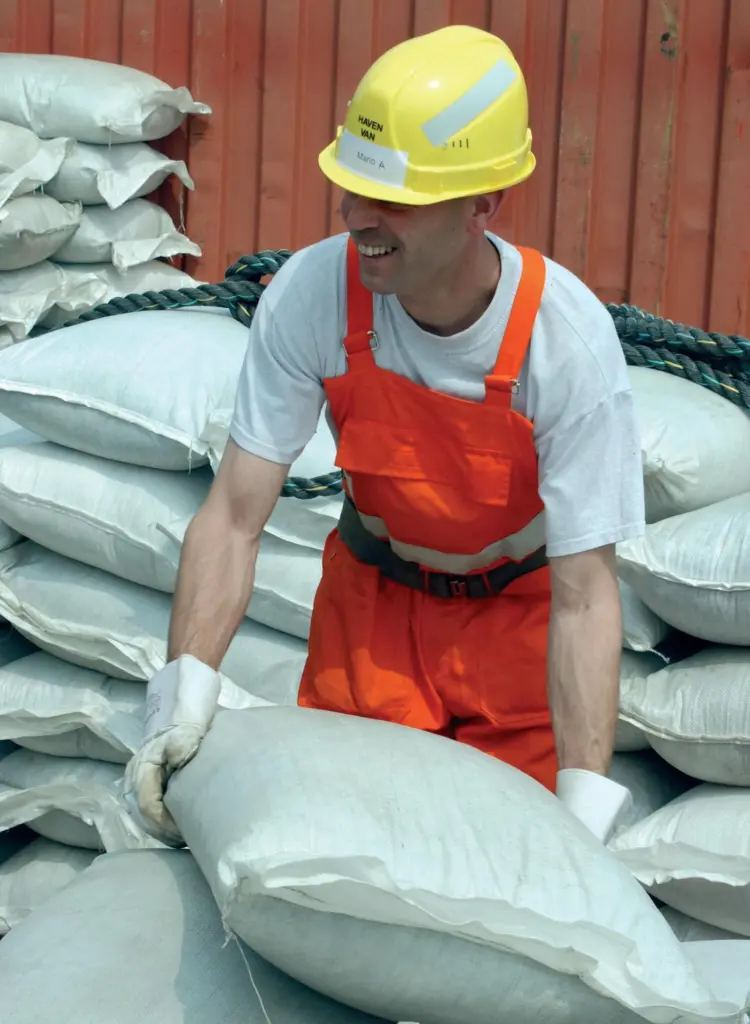
It’s a familiar picture for many ports across Europe: throughput is up, sometimes by astonishing amounts,with container growth leading the charge. And the Port of Antwerp is more than happy to follow that pattern with reported growth of more than 4% in overall volumes in 2006, to a total 167.3m tonnes.
Within this, container throughput grew at twice that rate – up by 8% to around 7m teu. Conventional/ breakbulk was up 3% to 18.5m tonnes, and ro-ro was up by 5.7%, to 3.87m tonnes, with a key feature being the growth of Grimaldi’s business in the port. The car trade was positive too, increasing by 11% to 575,000 units.
“The overall picture in 2006 was very good,” says Eddy Bruyninckx, chief executive of Antwerp Port Authority. “We are not a port that is characterised by growth one year and a decrease the year after.We have a record of regular growth over the past ten years.” Importantly, last year’s growth was across the board, not just in containers – “and sometimes we have to apologise to the people of Antwerp because we are talking about containers all the time”, says Mr Bruyninckx.
“We have been the first conventional cargo port in Europe for a long period and we consider this important because of the creation of added value in those kinds of business, and therefore employment of people,” he says.”We are a public port and we are very concerned about employment – not just tonnes, but added value and jobs.”
At the end of December, plans for a new all-weather steel handling terminal were announced – the start of a “new era” which shows that the evolution of Antwerp’s conventional general cargo has further to go, says Mr Bruyninckx.
For Antwerp, 2006 was remarkable not only for its figures but also for the fact that the first moves were made towards modernisation of labour practices within the port, a major step forward.
“The trade unions started to realise that modernisation of labour practices is really necessary, and that is a turning point,” says Mr Bruyninckx.”There is still a long way to go but I expect discussions over the next few months.” Issues such as the number of people in working gangs are now up for discussion, he says.
The port is well aware that it has lost some “very interesting contracts, some services”, to its neighbours because of working practices:”We are fully aware of the fact that shipping lines can switch from one port to another overnight. The port community lives with that,”says Mr Bruyninckx.
“After feeling the victory after the [EU] Ports Package, they [the unions] were living in the clouds – but they started to realise they were losing jobs because of the rigidity of the working practices.”
Related Articles
 CONTAINER & CARGO HANDLING
 NEWS
NEWS
 CONTAINER & CARGO HANDLING