![PortStrategy[GreenPort]](https://www.portstrategy.com/wp-content/uploads/2026/09/PortStrategyGreenPort.svg)

Coastlink: The RoRo sector faces a transformative shift
March’s Coastlink webinar spotlighted critical challenges and opportunities shaping shortsea shipping, RoRo shipping and port logistics ahead of May’s Hull UK conference.
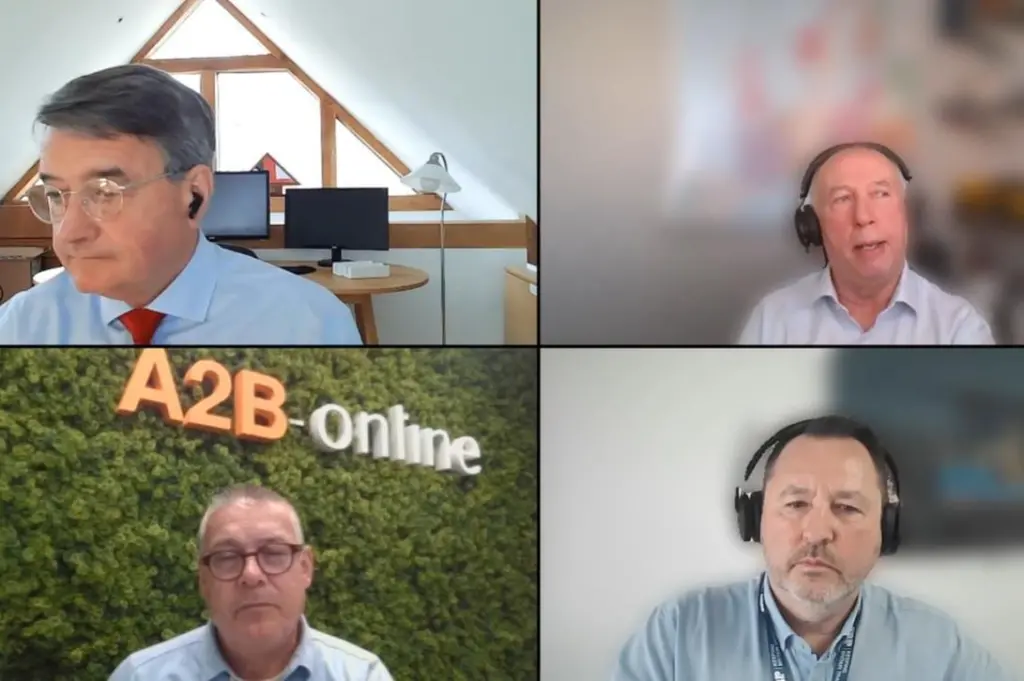
The short session introduced key themes to be explored in greater depth at the main Coastlink Conference in Hull, where stakeholders across ports, shipping lines and logistics will assess market transformation and the challenges and opportunitie arising from it.
Featuring speakers from Clarksons Port Services, Associated British Ports (ABP) and A2B-online, the webinar previewed discussions on evolving service models, infrastructure demands and operational pressures impacting shortsea shipping and RoRo shipping today, including at the Humber.
Iain Barnett, commercial manager, lead unitised cargo development, ABP, told Port Strategy: “The beauty of the Humber is in terms of RoRo, we have more than 80 sailings every week, offering huge flexibility to shift cargo between the UK and Northern Europe.”
“We also have the agility to respond when things go wrong, with multiple RoRo berths, container terminals and operator flexibility.”
”The location is incredible, yet we still see cargo routed inefficiently through southern ports like Southampton and moved by road to northern cities. Greater collaboration between shippers, forwarders and operators is essential to unlock more efficient, lower-carbon solutions and support continued growth in the shortsea sector.”
Structural shifts
Panellists highlighted how structural shifts, driven by geopolitical disruption, rising fuel costs and decarbonisation, are forcing rapid adaptation across port logistics networks.
The Humber region, handling 25% of UK port traffic and contributing GB£15 billion to the economy, was identified as a key case study in managing scale, flexibility and growth.
The discussion also underscored the blurring lines between RoRo and LoLo operations, as operators adopt hybrid models to improve efficiency and resilience.
A2B-online’s continued expansion reflects this trend, with the shortsea shipping operator reporting €150 million in annual revenue and 200,000 shipments, alongside investment in new vessels powered by green methanol and biodiesel.
The company is prioritising smaller, flexible vessels with high frequency and rapid turnaround to meet evolving customer demands.
However, the sector faces mounting cost pressures, particularly from fuel price volatility. Bunkering costs have surged due to geopolitical instability, accelerating the urgency around alternative fuels, though timelines remain uncertain.
Infrastructure and hinterland connectivity also remain critical. André Mast, commercial director, A2B-online pointed to untapped growth potential in the Humber but stressed the need for stronger inland links, particularly rail connectivity to key distribution hubs in the UK such as Manchester.
Similarly, Graham Cross, business development manager, Clarksons Port Services, highlighted the growing importance of integrated rail-road solutions to enable sustainable port logistics, particularly as electric heavy goods vehicle deployment remains constrained by range limitations.
As the industry prepares for further debate in Hull, the Coastlink platform is expected to play a central role in aligning stakeholders around the future of shortsea shipping, RoRo shipping and the next phase of port logistics evolution.
For more information, book your attendance for Coastlink online or contact our delegate team at sales@coastlink.co.uk
Related Articles
 COASTLINK
 COASTLINK
 OPERATIONS