There are uncertainties surrounding the bid process for Durban Container Terminal 2 (DCT2);and the Ngqura Container Terminal. Government should do more to build investor confidence
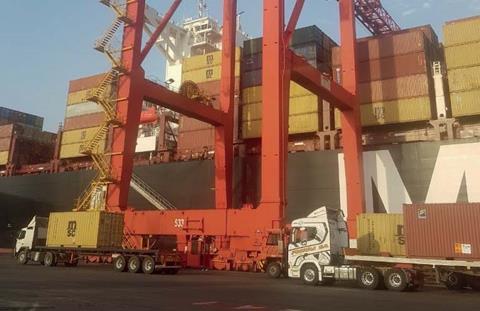
The technical component of the bids for Durban Container Terminal – Pier 2 (DCT2) have now been submitted and the bidders – 10 companies – await results, basically a pass or fail. After this the second bid component submitted by those bidders that have “passed,” the financial envelope, will be opened and if conforming to normal practice it is expected that the bidder with the highest financial offer will enter into detailed negotiations regarding its participation as a 49 per cent stakeholder in DC2.
Straightforward? Seemingly so, but in reality there are many considerations around the process that present cause for concern.
A seemingly innocuous but nevertheless key point is the use of the word privatisation in conjunction with the DCT2 opportunity. This is a factor that has led to the increasing politicisation of the bid process, both for DCT2 and the Ngqura Container Terminal, a specialist transshipment hub at Port Elizabeth for which an investor is also being sought.
There has recently been criticism from the South Africa Transport and Allied Workers Union (Satawu) - one of the biggest unions active within Transnet, the government owned operator of the two facilities and the party that implemented and is overseeing the bid process – that the port of Durban is being privatised by stealth. Not a positive, but also not an entirely surprising reaction from the union side of the fence. More concerning are some of the ‘noises’ coming out of the ruling African National Congress (ANC) party, which of course, has substantial union support.
In mid-February, South African media reported what amounted to an attack on Portia Derby, CEO of the Transnet Group, by ANC and Economic Freedom Fighters (EFF) MPs participating in the Public Enterprises Portfolio Committee, they accused her of “doing nothing” to stop the company’s slide into disarray and reprimanded her for privatising parts of its operations which they said was not government policy.
The word “privatisation” is, to use an English expression, something of a “red rag to a bull.” The route Transnet appears to be taking with DCT2 could perhaps more accurately be described as a commercialisation – with just 49 per cent of the equity of DCT2 on offer it is by no means a complete transfer of the business from the public to private sector.
Seasoned observers suggest that the word privatisation is essentially a weapon deployed by those in government, and others, who, bottom line, are fundamentally opposed to private sector participation in Transnet’s port business. Certainly, it has to be acknowledged that strong resistance to the idea does exist – as has in fact been the case ever since the ANC came to power.
It also true to say that as key public sector businesses have experienced more and more problems – South African Airways, Eskom the power provider and Transnet Rail – more proposals about introducing private sector expertise, to a greater or lesser extent, have been forthcoming, in turn stimulating greater opposition to the idea. The net result is what amounts to a for and against camp in government and at a wider level. This has also reached the stage where it is becoming manifestly visible to potential investors which is raising cause for concern.
While nobody cares to admit it publicly, the initial launch of the DCT2 process raised some eyebrows and notably in terms of the demanding performance criteria that had to be achieved to qualify to participate in the process – much higher than is normally the case. It gave rise to the suspicion that setting the bar high was, in part or totally, a tactic that could be used to make the process fail.
The fact that this latter scenario has in fact been seen recently in conjunction with Transnet Freight Rail further fans the flames of unease among investors. Transnet announced last year that 16 slots would be opened for auction to give third party access to South Africa’s rail freight infrastructure. Only one bidder, Traxtion Sheltham, successfully completed the first phase of the bid process and out of the 18 companies that showed interest in bidding only two participated because of the nature of the bid conditions. As stated by Mesela Nhlapo, CEO, African Rail Industry Association, Transnet’s onerous terms and conditions are not appealing to private sector investors.
GET BEHIND THE PROCESS
The DCT2 bid process is underway and there are interested parties. It is very clear that the port sector would benefit immensely from private sector input. Government should make every effort to keep the process on track, to get behind it and not allow negative interests to pervade it. A key fundamental of a healthy bid process is investor confidence and this will ultimately deliver the best return for the country as a whole.
There is also the reality that given the deteriorating state of the South African economy greater participation by the private sector in what have hitherto been public sector enterprises is not an option but an absolute must.