![PortStrategy[GreenPort]](https://www.portstrategy.com/wp-content/uploads/2026/09/PortStrategyGreenPort.svg)





MPV prospects assessed
Demand for multipurpose vessel (MPV) capacity is expected to grow, even against a background of lower economic activity, according to Drewry. Felicity Landon reports
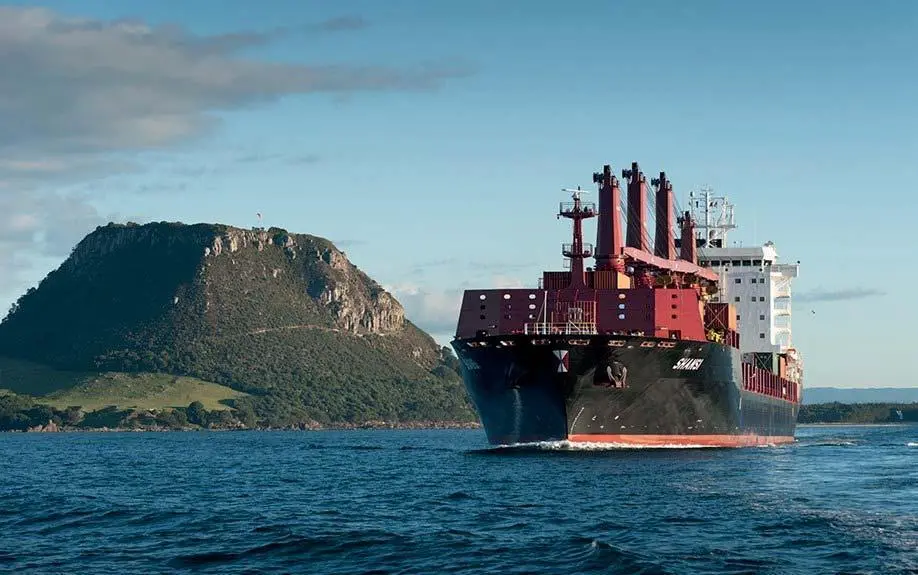
Volatility is the name of the game across the shipping industry – but the MPV sector, untied from fast-moving consumer goods trends but very much tied to long-term projects, doesn’t reflect the same ups and downs. Overall, the prospects for the MPV sector are positive, according to Ferenc Pasztor, Deputy Head of Research, Drewry.
Unpacking the trends at a recent webinar, he noted that containership and dry bulk day rates were now stabilising after a big fall and MPVs were still seeing some downward pressure. However, to put that in context, the container sector saw day rates settling at about 20 per cent of what they were this time last year and handysize bulk carriers were at about 50 per cent. “MPVs have weathered the situation better and saw a reduction of just 15 per cent, with the caveat that some sectors have seen further volatility,” said Pasztor. “We expect MPV rates to fall again this year, but not even close to the fall we saw with the other two sectors, especially containerships.”
MPV demand is forecast to be relatively stable in 2023 and 2024, he said, although competition for cargoes from the other two sectors will keep a downward pressure on rates even with fairly heavy levels of utilisation.
“Despite a weakening market, day rates are also expected to remain robust from a historical perspective, and we expect [MPV] rates to remain above pre-COVID-19 levels even in our downside scenario.”
ENERGY SECTOR BOOST
The keys to this are the positive outlook in the energy sector, an ageing fleet and a small orderbook, with investment appetite in the sector still limited, said Pasztor.
Energy industry projects are expected to go ahead despite uncertainties. Renewable energy projects that do not require the ongoing import of commodities are being looked at as a strategic option in many countries – but that does not discount oil & gas investment, according to Drewry.
“In oil & gas, any forecasts are highly uncertain. We expect activity in the sector to increase steadily in the next few years, due to strategic interest in energy security gaining appreciation in the de-globalising political environment.”
Despite the volatility, drilling activity has increased, leading to significant levels of import of materials and equipment, said Pasztor. Meanwhile, LNG projects continue to increase and while drilling activity is much more sensitive to oil & gas prices, projects like liquefaction are expected to go ahead regardless.
“As for renewables, and wind energy more precisely, we can see that installation activity is expected to increase even further in our forecast period.”
While oil & gas and renewables are the main drivers for MPV demand, other projects related to energy production and energy storage, and also those related to the midstream, will be key, said Pasztor. Some of this depends on the form in which energy will be transported in the future.
“We see a really strong current increase in projects related to green hydrogen production and other fuels. It is not only the ship fuels that need a solution going forward for decarbonisation but also the wider energy storage and energy flows that will need to be sorted out – whether in the form of ammonia or green methanol or another, and obviously there will be a lot of new infrastructure required to handle all this production. So, we expect a really strong increase, especially post-2030, in large pieces of equipment for these plants that will need to be carried from point of production to final location.”
Overall, the key ‘takeaway’ from the webinar and analysis was that the MPV sector is expected to remain profitable despite the uncertainties, said Drewry.
“It was cargoes other than dry bulks and containers that kept the overall dry cargo level steady in 2022. An interesting phenomenon was the lack of cargo growth while global GDP growth was still at a fairly high level. We are going through some rebalancing, of growth of services versus goods consumption, with the latter absolutely skyrocketing in 2021.
“We think the likelihood of recession in 2023 has been significantly lowered, at least according to various forecast reports, with GDP growth revised upwards from a few months ago.”
Having said that, most of the risk factors are still out there, he said, with the instability initiated by the pandemic now compounded by the war in Ukraine.
Many experts have seen the end of the zero Covid policy in China as a boost to the global economy this year, but Drewry was hesitant on this: “Growth in China is not expected to lead to substantial growth in seaborne demand. Additional to this, there is the long-term slowing in the Chinese economy with an ageing population, and stagnation in the construction sector will create some headwinds for the Chinese economy.”
Pasztor said last year’s four per cent fall in global steel production could be attributed to lower construction activity, especially in China. He said that while there had been an uptick in dry and liquid cargoes to China, probably preparing for manufacturing more goods, “we also see demand for these goods getting weaker”.
“So what we can see so far, and what we can expect, is a fairly mild effect, especially for the MPV sector.”
In summary, he said: “Inflation leading to lower consumer demand and higher interest rates are the biggest risks in the global economy currently.”
Related Articles
 CONTAINER & CARGO HANDLING
 CONTAINER & CARGO HANDLING
 EQUIPMENT