

In modern port environments, access control is no longer a standalone security function, writes David Rock, CNI Team (Transport Sector) at Abloy UK.
It plays a central role alongside security, operational efficiency and compliance, where even small inefficiencies can have significant knock-on effects.
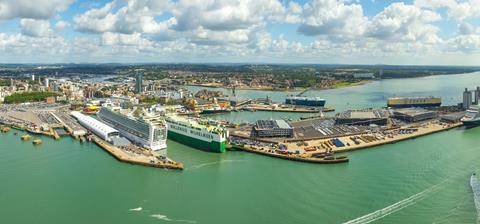
Whether it’s a delayed gate entry, difficulty managing contractor access, or the disruption caused by lost keys, access control decisions can significantly impact the flow of goods and services through a port. This is particularly true as port estates continue to expand in both size and complexity.
Port estate challenges
Ports are, by nature, geographically spread and operationally diverse. A single site may include remote perimeter gates, waterside access points, substations, storage compounds and mixed-use buildings, many of which are isolated and lack power or network connectivity.
This creates a challenge of how to maintain consistent, high-level security across widely dispersed assets without introducing friction into daily operations.
At the same time, regulatory and compliance pressures are increasing, with operators expected to demonstrate clear control over restricted areas, with verifiable audit trails and accountability for access events. Traditional mechanical locking systems, while robust, often fall short in providing this level of visibility.
The limitations of traditional systems
Several persistent issues continue to affect port perimeter and remote asset security, with dozens, or even hundreds, of access points to manage. Without central oversight, inconsistencies can occur, creating potential vulnerabilities.
Contractor access is another pressure point, as temporary permissions can be difficult to track, particularly when they are not time-bound or centrally administered. This increases the risk of unauthorised access remaining active longer than intended.
Lost keys present a further operational burden and with purely mechanical systems, a misplaced key can trigger costly and time-consuming rekeying programmes, often disrupting operations in the process.
The environmental demands of coastal locations also present issues, as salt air, moisture and temperature fluctuations can quickly degrade equipment that is not specifically designed for harsh conditions.
Smarter, flexible access
To address these challenges, ports are increasingly adopting access control systems that combine flexibility with accountability.
A key requirement is the ability to update permissions quickly and without disruption. Time-limited credentials for contractors, for example, can ensure access is automatically revoked when no longer needed, reducing administrative overhead and improving security.
Auditability is another critical factor, as access events need to be recorded and easily retrievable, supporting both compliance requirements and incident investigations.
Solutions must also work in remote environments or where there is little or no supporting physical or digital infrastructure in place. Wireless and battery-powered technologies are enabling secure access control at isolated gates and compounds without the need for extensive cabling or network installation.
Electromechanical systems offer an additional advantage by bridging the gap between traditional mechanical locking and fully digital solutions. They allow ports to retain existing hardware while introducing features such as remote permission updates and electronic key management.
Integrating security with operations
Rather than relying on a single system, many ports are moving towards a layered approach. Different technologies are installed according to the specific needs of each area, whether that’s high-traffic operational zones, administrative buildings or remote infrastructure.
Centralised management platforms are increasingly important in this model. By providing a unified view of access permissions and activity across the estate, they help reduce administrative complexity and support consistent governance.
Integration with wider operational systems is also becoming more common, as linking access control with HR platforms, contractor databases or permit-to-work systems can ensure permissions are aligned automatically with real-world roles and responsibilities.
Supporting resilience
Ultimately, the goal for port operators is to strike a balance of maintaining robust security while enabling efficient, uninterrupted operations.
Modern access control systems contribute to this by reducing the administrative burden associated with keys and permissions, improving audit readiness and enabling faster response to incidents. At the same time, durable, purpose-built hardware ensures reliable performance in challenging coastal conditions.
As ports continue to evolve, access control is becoming an integral part of operational resilience, supporting not just security, but the smooth and efficient movement of goods through critical maritime infrastructure.