![PortStrategy[GreenPort]](https://www.portstrategy.com/wp-content/uploads/2026/09/PortStrategyGreenPort.svg)


Market overcomes safety fears
A few years ago public unease about new LNG terminals looked set to limit the aspirations of the US, the biggest potential market for LNG imports. But things are changing as Mike Corkhill, editor of LNG World Shipping, reports.
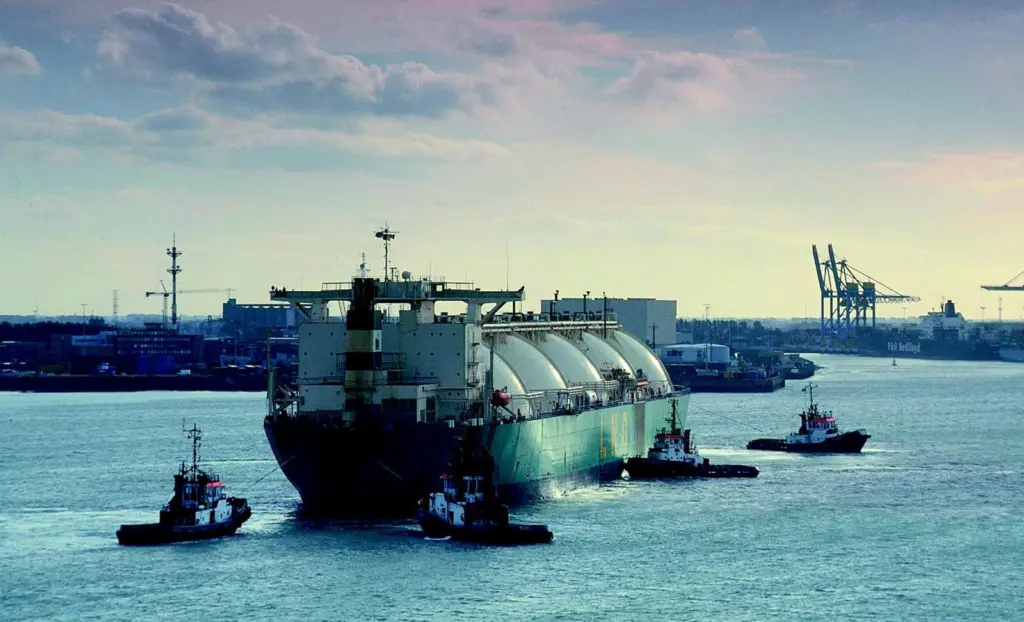
Spiralling gas prices have become the main determinant in decisions on new LNG facilities. A measure of the extent to which the US is the fastest growing market for LNG imports is given by the fact that a spot cargo of LNG currently enroute to one of the country’s four import terminals is valued at approximately $40m, almost twice that of a cargo destined for Europe or Asia.
US natural gas prices have skyrocketed in recent months, even more so than they have in other countries, due to a combination of factors. Not only are dwindling domestic supplies unable to keep up with surging demand, but also Canadian pipeline exports to the US have peaked. On top of that, the devastating effects of Hurricanes Katrina and Rita in recent months have damaged numerous offshore facilities and shut in a substantial amount of US Gulf gas production for an extended period.
LNG imports are seen as essential in order to bring some measure of stability to US gas prices. Although increased purchases of LNG are deemed to be only one of a number of measures that the US must take in order to provide the supplies necessary to meet customer demand, they are regarded as one of the most effective remedies, in both the short and the long term.
US LNG imports totaled around 14m tonnes in 2004, approximately 10% of total global movements. This figure is expected to reach 50m tonnes per annum (mta) by 2010, a volume that should represent about 20% of the world LNG trade at that date.
PORT CONUNDRUM While Americans were aware in the early part of this decade that they would eventually need additional LNG supplies, gas prices at the time were low and the need for LNG did not seem so pressing. There was also heated opposition by local community action groups to any proposal for a new LNG import terminal anywhere in their vicinity.
Unfounded fears about the “explosiveness” of LNG cargoes and the devastation that could be caused if an LNG carrier cargo tank was breached ensured widespread support for the “not-in-mybackyard” (NIMBY) protest groups that sprang up to contest every proposed new LNG import terminal. The events of September 11 only served to strengthen the resolve of the NIMBY campaigners who see LNG carriers primarily in terms of their perceived security risk.
More recently however, the gas supply shortfall has begun to bite around the globe. Not only have gas prices increased in all the major markets, along with those for oil, but also competition for LNG supplies, both available and planned, has been stepped up. The US, with its high demand for gas, dwindling production and desire for additional supplies, has been the prime cause of the new energy scenario.
Against this changing backdrop, the US authorities, in the form of the Federal Energy Regulatory Commission (FERC), have so far approved the construction of six new LNG terminals and the expansion of three of the four existing US import facilities – at Cove Point, Maryland, Elba Island, Georgia and Lake Charles, Louisiana.
PRAGMATIC VIEW The citizens’ action groups opposing a number of the US import terminals under consideration have also given ground. While some members may have been swayed by an appreciation of the rigorous vetting procedure utilised by FERC to assess proposed new terminals, the primary cause for the new, more relaxed stance adopted by some groups is the spiralling price of gas. In agreeing to the need for this new source of gas, the hope is that incoming LNG will help meet the supply shortfall and return the market to some degree of normalcy.
The other key consideration is the fact that five of the six approved LNG terminals are planned for relatively remote locations on the US Gulf coasts of Texas and Louisiana. The NIMBY brigade can condone such terminals because they are to be built at sites unlikely to encroach on anybody’s backyard. Several of these facilities, not least the Cheniere Sabine Pass LNG and Sempra Cameron LNG projects, are already under construction. Both terminals will be located in Cameron, Louisiana’s largest but least populated parish.
PRECEDENT SETTING From the point of view of the environmentalists, the most controversial FERC final approval is that issued in July this year for the proposed Weaver’s Cove LNG import terminal at Fall River, Massachusetts. There has been a great deal of public concern at the various proposals for new onshore terminals in New England, particularly with respect to the safety and security risks posed by large volumes of LNG in ships in port waters and by terminal operations in relative proximity to sizeable coastal communities. In fact, at the same time FERC approved Weaver’s Cove, it rejected a proposal by Keyspan for an LNG terminal in nearby Providence, Rhode Island, on the grounds that the intended facility did not meet the necessary safety requirements.
Despite the FERC decision in favour of the facility, local groups and politicians still vociferously oppose Weaver’s Cove. Whether or not construction of the facility proceeds remains a moot point. FERC points out that the Weaver’s Cove review process was the most extensive it has ever performed prior to authorisation of an LNG import project. Furthermore, it will serve as a blueprint for evaluating future proposals. The Commission’s 66-page final order for Weaver’s Cove points to the number of “extraordinary steps that have been taken to assure detailed consideration of the safety and security issues surrounding both the proposed LNG import terminal and related LNG carrier operations”.
GOOD RECORD Following the September 11 attacks, LNG shipments to the Everett terminal in Boston, one of the country’s four existing facilities, were temporarily halted while the US Coast Guard asked for an independent assessment of the risks associated with LNG carriers transiting the port. Although security measures were tightened further in the aftermath, the Boston study found that the LNG shipments to the port did not pose an unacceptable level of risk.
Government, in the form of agencies such as FERC and the US Coast Guard, and industry have the unenviable task of explaining the robust safety regime that is now in place for LNG carriers to a wide, mostly unappreciative audience. It is a regime that has ensured the safe delivery of over 45,000 cargoes without one incident of a cargo containment system being breached in the 41 years of commercial LNG ship operations.
The outreach effort also needs to convey to this same audience the true nature of the risks posed by LNG cargoes, not least that LNG is not “explosive” and that it is flammable only within a limited range of gas/air mixes.
CALIFORNIA DREAMING Such assessments of both LNG hazards and the risk mitigation measures in place for LNG ship operations have prompted FERC to approve a proposed LNG import terminal in Long Beach, California in a draft environmental impact report issued in recent weeks. Although the FERC decision is not yet a fully-fledged approval, the prognosis for Long Beach, in terms of achieving the necessary clearance, is good.
Only a few years ago the thought of an LNG terminal in California would have seemed ludicrous in the extreme. Now, the idea is not quite so far-fetched. If Long Beach does come to pass, the reasoned arguments of FERC will no doubt have won a few converts to the LNG cause. However, it will be the promise of some relief from rocketing gas prices that will have won the day.
Related Articles
 EXPANSION & DEVELOPMENT
 PORT & TERMINAL NEWS
 PORT & TERMINAL NEWS