![PortStrategy[GreenPort]](https://www.portstrategy.com/wp-content/uploads/2026/09/PortStrategyGreenPort.svg)


South America pics
Opinions are mixed in Brazil over government plans to privatise the port authorities of all but the leading ports in the South American country, as Rob Ward finds out
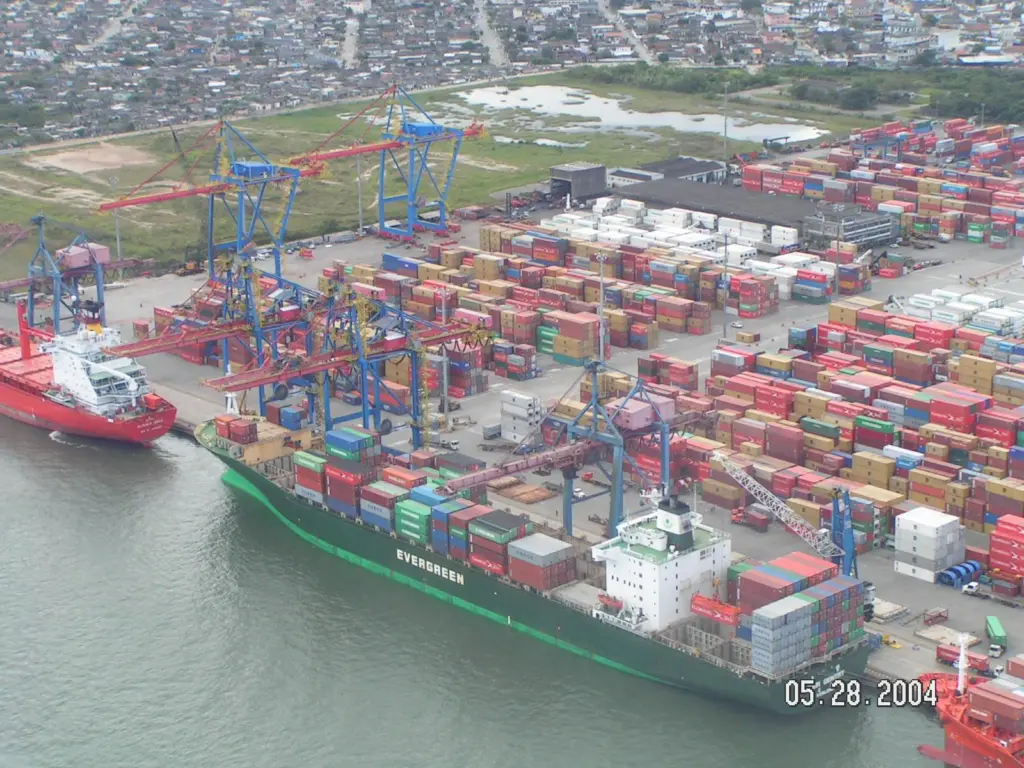
An initiative to privatise Brazil’s ports was launched last year by the Confederacao Nacional de Industrias (CNI) with the support of all the major shipping lines operating in the country.
But Roberto Requiao, the powerful governor of the Brazilian state of Parana, has come out firmly against the move, saying that it will lead to “private enterprises” with no stake in Brazil “controlling the main gateways into and out of our country”.
And Mr Requiao, a confirmed nationalist and sometime supporter of the Chavez socialist revolution in neighbouring Venezuela, praised the federal government of President Luiz Inacio Lula da Silva (Lula) for leaving eight port authorities, including the two ports in Parana – leading grain port Paranagua and reefer specialist Antonina – out of the hands of private concerns.
Mr Requiao, whose brother Eduardo was appointed by the governor to run APPA (the port authority for both ports), said that the decision by President Lula and his Ports Minister, Pedro Brito, to leave APPA, and seven other port administrations, including the powerful Codesp of Santos, out of the privatisation move, was “a bold one”.
He said: “We applaud the move to keep our ports out of the hands of private interests. It is better, for the sake of the country and state of Parana, to keep the port authority away from the hands of a particular economic interest group.”
Other ports which will be kept away from private hands, at least for the first two or three years of the “experiment” are Santos, Rio de Janeiro, Sepetiba, Paranagua, Salvador, Fortaleza, Pecem and Vitoria. Of the major ports that will be handed over to private interests Rio Grande and Itajai, both in the more industrialised south of ths country, stand out.
Mr Brito and President Lula are shaking up the Brazilian ports system because, despite record cargo movement, many of the Companhias Docas (local port authorities) have been losing money hand over fist, and overall Brazilian port authorities are Reais1.5BN ($848m) in debt.
The worst offender has been the country’s leading port of Santos, which is Reais810m ($485.2m) in debt, and it lost $50m in 2006 (the latest figures available), although there have been reports that it may have returned a small profit for 2007. Next comes Rio de Janeiro, which is Reais440m ($263.6m) in debt.
“The ports are clearly not working the way they should be, so we are going to try a brand new approach,” said Mr Brito.
However, with the (nominally) Socialist President Lula in power and a long history of government intervention in the ports sector, many in Brazil prefer their ports to be in government hands and some others are not sure.
Roberto Galli, the executive vice president of Syndarma, which represents Brazilian flag shipowners in Brazil, says: “We want our ports to be efficient and with low costs, and we are not worried whether they are in private or public hands.”
He backs moves by Mr Brito and President Lula to appoint “technicos” (technical people with port experience) as presidents of the Companhias Docas instead of “politicos” (politicians with political agendas) as a great step in the right direction. Mr Galli says that in the past Brazil has many good examples of well-run public ports.
And Sergio Salomao, the president of Abratec (the Brazilian Association of private Container Terminal Operators), adds that the mixed system that President Lula is likely to set up this year, is a great opportunity to see which system is best suited to Brazil’s needs.
He tells Port Strategy: “Abratec respects CNI and its aspirations but I think it will be good to have two systems for a period as we will be able to compare them both directly and then be able to better determine which is the most efficient system, private or public. This is most certainly a step in the right direction.”
Related Articles
 EXPANSION & DEVELOPMENT
 PORT & TERMINAL NEWS
 PORT & TERMINAL NEWS