![PortStrategy[GreenPort]](https://www.portstrategy.com/wp-content/uploads/2026/09/PortStrategyGreenPort.svg)




CHINESE DEMAND BEHIND THE ARMADA CRISIS
The bulk carrier log-jam off the Australian east coast has finally dissipated to manageable levels following drastic action at the countrys major coal port. Chris Taylor reports on the reasons behind the chronic congestion, and whats being done to correct the situation.
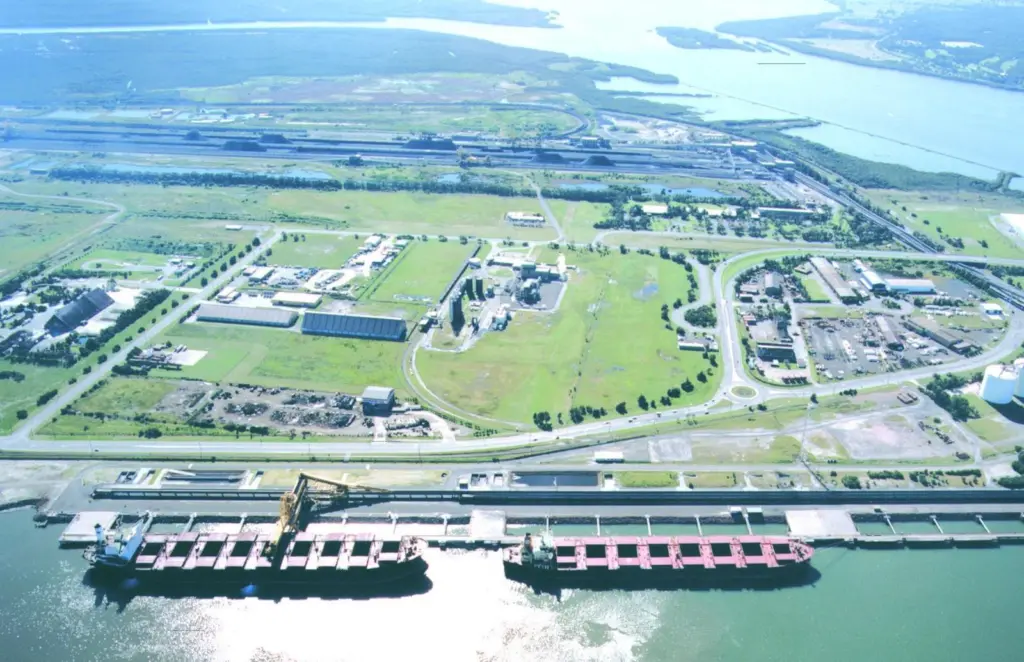
Earlier this year scores of coal vessels were left idling off the NSW and Queensland coast for weeks at a time following an unfortunate combination of freak weather, mechanical failure, supply chain bottlenecks and (surprise, surprise) the steep climb in demand from China.
The situation – which coincided with steepening bulk charter rates – left the industry red-faced and looking down the barrel of an increase on already massive demurrage costs.
At Newcastle, where the problem was the worst, Port Waratah Coal Services (PWCS) approached the Australian Competition and Consumer Commission (ACCC) for the right to introduce a vessel booking (capacity distribution) system that effectively restricted the forward nomination of ships.
Rail bottlenecks in the Hunter Valley supply chain have prevented the PWCS from reaching its 89m ton nominal capacity, despite promises from the network owner, the NSW government, three years ago of substantial investment to match that capacity on rail.
PWCS estimated that demand for 2004 would run at 84m tons but the Hunter Valley network could only deliver coal to the port at 80m tons a year.
With a bulker queue that had remained firmly entrenched at the 40-plus vessel mark since the end of 2003, PWCS feared the queue would top 80 vessels by Christmas 2004 – not to mention associated demurrage costs of A$200m.
It went to the ACCC as a last resort to do something about Newcastle’s queue, already known in industry circles as the “armada”, and to protect the reputation of the port. The ACCC granted interim authorisation for the booking system to start in April as a stopgap measure.
The queue has now dropped from a peak of 56 coal vessels on 14 March to the current level of about 10 vessels. “Waiting time has fallen from a peak of three weeks in March to a few days now, ” PWCS chairwoman Eileen Doyle says. “At this working queue level, waiting time and demurrage are minimal.” PWCS estimates that demurrage savings for the current quarter will be more than $30m.
Even though the queue has diminished the port’s capacity distribution system continues to attract criticism from a number of disgruntled coal producers, including BHP Billiton, and unions. They are concerned about the effects on competition and coal production limitations and have dismissed the booking system as a way of sweeping the problem under the carpet.
“We find it amazing that PWCS is proposing to turn ships away so that it looks better, ” MUA northern NSW branch secretary Jim Boyle said recently. The ACCC is set to make a final decision on the capacity distribution system later this year. In the meantime PWCS will wait for the benefits of $145m worth of improvements to the Hunter Valley network that are finally getting under way.
IMPROVEMENTS FURTHER NORTH Further north, congestion has also eased at Queensland’s major coal ports of Gladstone and Dalrymple Bay. The coal ship queue at Gladstone’s RG Tanna coal facility reached 18 vessels at the end of March but this has since declined to a level of between six and 10 vessels.
The port says its congestion problems stemmed from flooding at a number of mines earlier this year which had a big impact on production levels, coupled with the sudden China-driven increase in demand for more coal.
In June the Queensland Government, which owns the port of Gladstone, announced funding for a third ship loader and another rail unloading station that will take the coal terminal’s capacity from 40m to 54m tons a year.
Dalrymple Bay Coal Terminal also suffered from the same mine production problems as Gladstone but had the added headache of a reclaimer collapse in February. The collapse, which investigators attributed to the “severing of an internal fatigue crack”, damaged both the reclaimer and associated conveyor belts and blocked other reclaimers. This led to a significant dip in capacity during March and the terminal’s vessel queue blew out to the 10-vessel mark.
DBCT’s leaseholders, Prime Infrastructure, said the queue was now back to its “ideal” level of around three vessels – one vessel waiting for each shiploading berth. It is still to replace or repair the damaged reclaimer but is back to near full capacity, Prime says.
Related Articles
 WORLD
WORLD
 PORT & TERMINAL NEWS
 PORT & TERMINAL NEWS