![PortStrategy[GreenPort]](https://www.portstrategy.com/wp-content/uploads/2026/09/PortStrategyGreenPort.svg)

Time for change
Tauranga boss Mark Cairns talks candidly to Dave MacIntyre about why he believes there is a pressing need for an overhaul in New Zealand port ownership.

Is local body ownership hindering the natural development of a ports hierarchy in New Zealand?
All ports in New Zealand are majority-owned by regional councils or local bodies, with seven wholly-owned by such councils. Objectives for a number of ports are often openly of a non-commercial nature, where ports are seen more as facilitators of regional economic development and fulfilling social objectives such as increasing local employment.
This has led to a situation where a country similar in geographical area and population to The Australian state of Victoria has a very high port density with 13 commercial ports. In turn, there is a body of opinion that this perpetuates inefficiencies and over-capitalisation in New Zealand ports.
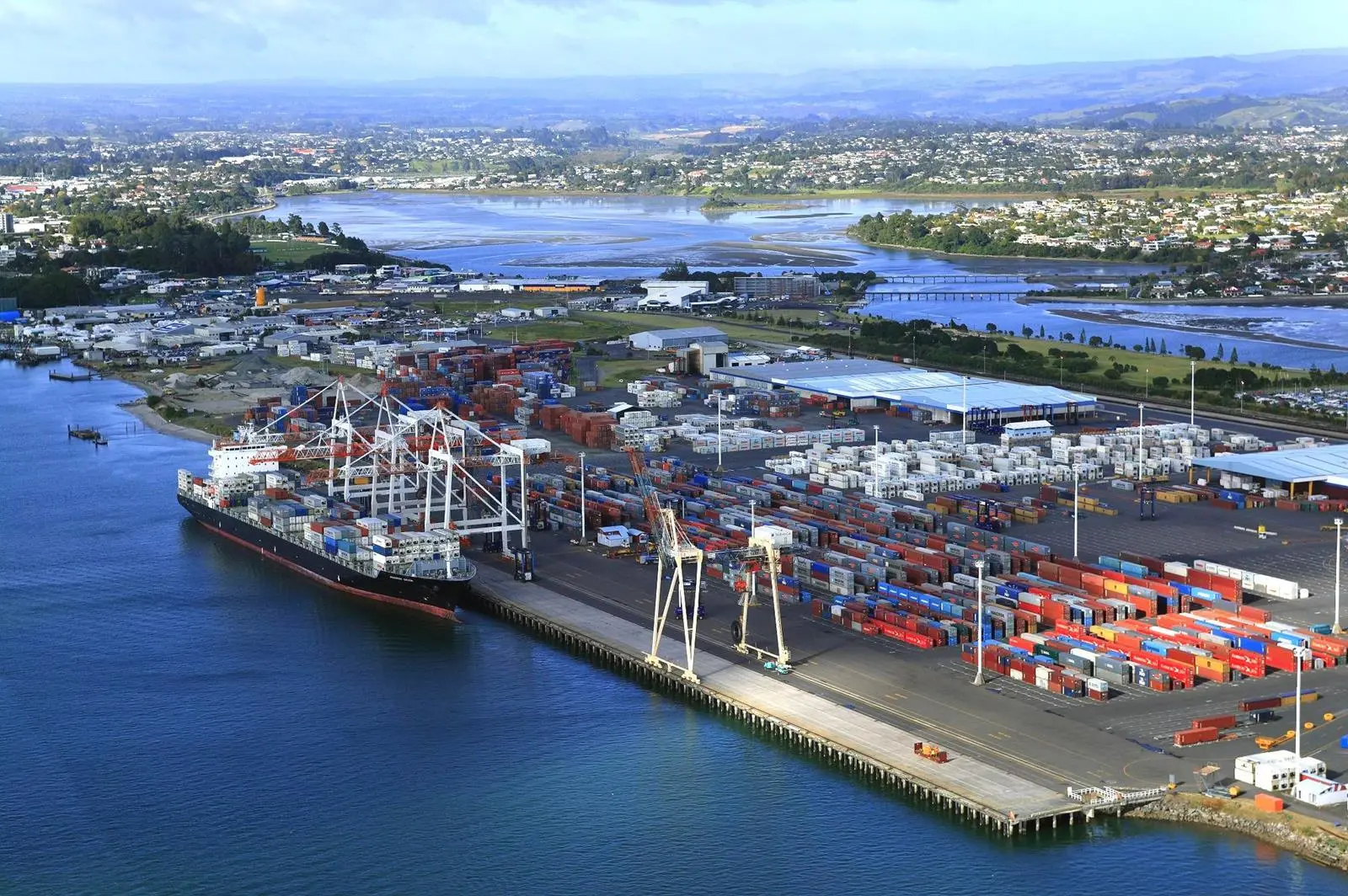
One who feels the time is ripe for change is Mark Cairns, chief executive of the Port of Tauranga, one of the country’s top two container ports which also has large exposure to bulk and breakbulk cargoes.
He says the fundamental purpose of the New Zealand Port Companies Act 1988 is “to promote and improve the efficiency, economy, and performance in the management and commercial aspects of ports”.
While port sector reform, and the resulting competition since 1988, has lifted New Zealand port productivity from the bottom quartile to the upper quartile in the world, he feels that competition has been underwritten by considerable over-investment, which has driven returns to well below the cost of capital.
“We believe the essence of any future port reform is already embodied in Section 5 of the current Port Companies Act, which provides ‘the principal objective of every port company shall be to operate as a successful business’. Clearly this objective is not being met from a financial performance perspective, with most ports not achieving their current cost of capital, with some even having returns as low as 2%,” he says.
“This not only perpetuates the over-capitalisation within ports, but perhaps more importantly, also suboptimal investment in our road and rail networks.”
What, however, can be done about this?
There are a couple of options says Mr Cairns.
“The most simple would be for the Minister of Transport to take a stronger surveillance role in ensuring ports operate as successful businesses. If a port company is simply ignoring its statutory principal objective to be a successful business, and its shareholders do not care, and third parties cannot take steps, one is left with the situation where the Minister must initiate some examination unless she is content for the law to be ignored.
“This would not require any legislative amendment as Section 16 of the Port Companies Act already requires ports to submit half yearly reports to the Minister, including: consolidated financial statements, performance against Statement of Corporate Intent and even dividend recommendations.
“Whilst there is no definition in the Port Companies Act of what the words ‘successful business’ mean, this section is enlarged further in the State Owned Enterprises Act to state that the principal objective is: to operate as a successful business and, to this end, to be…As profitable and efficient as comparable businesses that are not owned by the Crown.”
Another option to ensure the Section 5 objective is achieved, says Mr Cairns, would be to require a partial privatisation of each port company, as originally envisaged by the Port Companies Act. Partial privatisation would retain effective control in local authorities and immediately release significant capital to be made available for regional infrastructure projects. It would also ensure future returns were more likely to meet the cost of capital.
“A good example of this working in practice is with our major shareholder,” says Mr Cairns. “Environment Bay of Plenty, who own 55% of our stock, has recently undertaken a Perpetual Preference Share Issue (via its Quayside Holdings subsidiary), which closed oversubscribed by $50m, and will provide a $200m fund for infrastructure projects for the Bay of Plenty Region.”
Mr Cairns adds that rationalisation in the port sector has become an economic imperative for New Zealand Incorporated.
“Port rationalisation will result in better investment decision-making and generate improved returns from port infrastructure. It will not only release capital and allow a more focused investment in transport infrastructure, which the country is desperately in need of – both in road and rail modes – but also in facilitating the better utilisation of coastal shipping as an alternative mode.
“It is imperative that New Zealand maintains and improves its international competitiveness by ensuring that it has an efficient and low-cost supply chain, of which ports are a vital component.”
Related Articles
 WORLD
WORLD
 PORT & TERMINAL NEWS
 PORT & TERMINAL NEWS