![PortStrategy[GreenPort]](https://www.portstrategy.com/wp-content/uploads/2026/09/PortStrategyGreenPort.svg)




Challenging times
The Hamburg-Le Havre port range is the engine room for the North European mainland and handles a wide range of different cargoes. AJ Keyes assesses how the major facilities performed in 2023 and how 2024 has kicked off
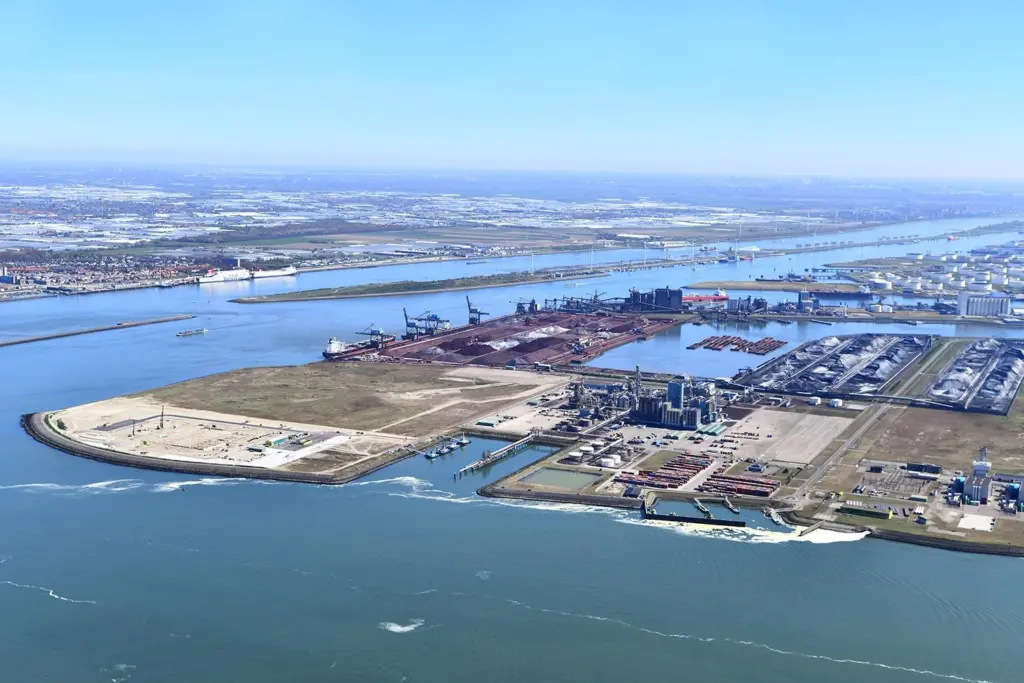
While the ports of Le Havre, Rotterdam, Antwerp and Hamburg are known for their involvement in handling containers, the facilities in this geographic range of more than 600 nautical miles, are much more than gateway and transhipment hubs for boxes.
On the back of challenging economic developments globally, ports in this region faced a difficult 2023, which has clearly continued into 2024. So, what are the numbers behind port performance in the region and for the major ports themselves?
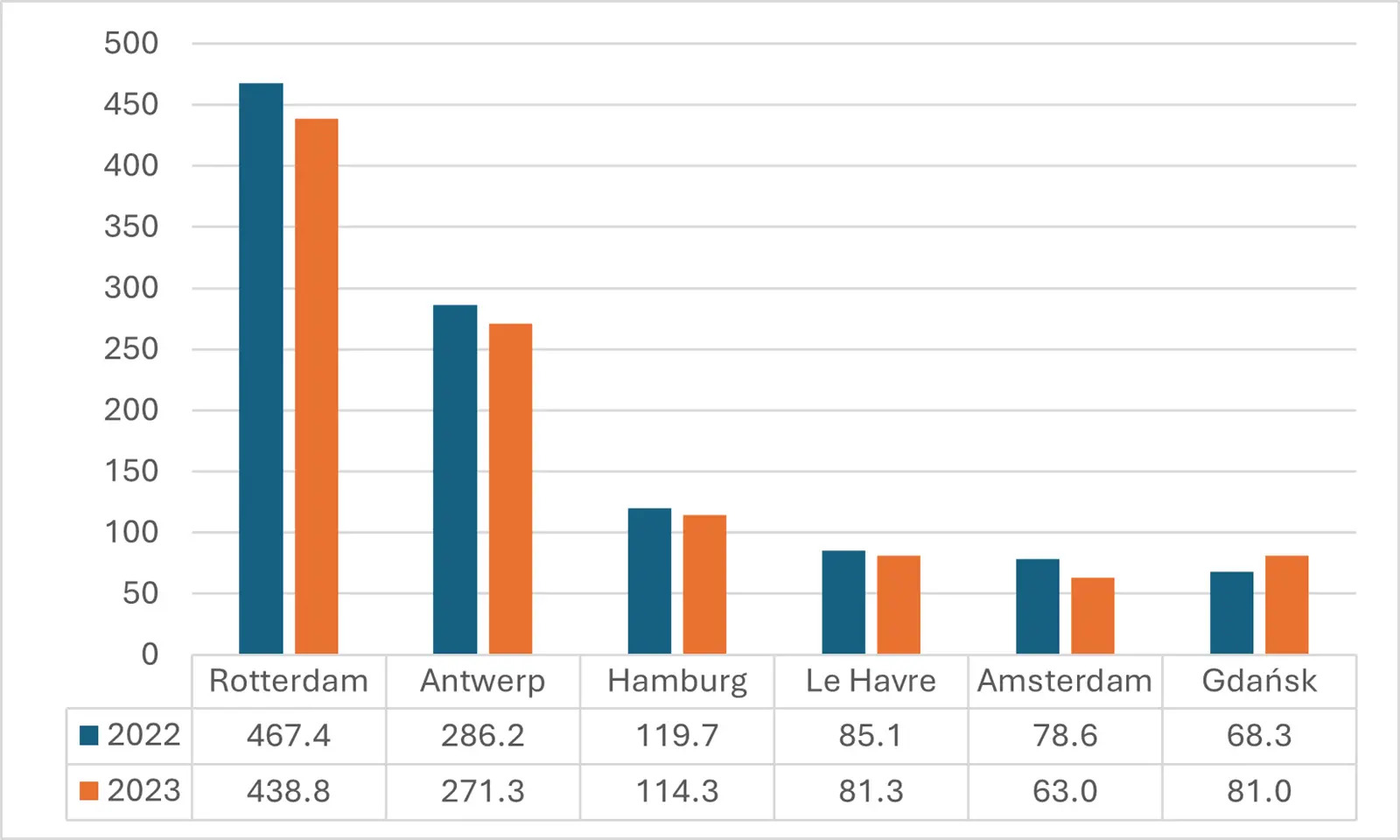
Figure 1 provides a summary of total cargo volumes handled for the calendar years of 2022 and 2023 for a wide range of key ports in the North European continental region between Le Havre and Gdańsk. Almost all of these main ports on this continent confirmed a drop of total performance for the 2023 period compared to the 12-months of 2022 – with the exception of Gdańsk, albeit that its volumes in 2022 were the lowest of each of the ports listed.
Table 1 provides a more detailed overview of cargo handling throughput for each of the listed ports, broken down by key types of activity, and for the full-years of 2022 and 2023, plus Q1 2023 and Q1 2024 activity (where reported).
There is a clear commonality from each of these major ports. Rotterdam regards 2023 as a year of transition, noting concerns about the “deteriorating investment climate” across several cargo sectors and pointing to a need for supportive government policies, while fellow Netherlands-based port, Amsterdam, agrees that it was also in “full transition” as its throughput in fossil fuels declined.
There were other similarities between the ports too. The Port of Antwerp-Bruges cites “geopolitical tensions and slowing global economic growth” as driving down industrial production and trade flows, while in Hamburg the port also confirms that “geopolitical and economic challenges” impacted cargo handling demand, adding that the “declining development of the German economy and the subdued consumer sentiment” were major factors in the results for 2023.
Haropa Port, which includes the Le Havre facilities, points to a “declining global context” and national strikes for 2023 but felt it has “stayed on course” as it entered 2024.
TOUGH START TO 2024
The two major ports in the region have seen a tough start to 2024 and based on the release of Q1 figures (as available at the time of writing in early May 2024), there are clear indications of challenges being faced for the remainder of the current year.
In Rotterdam, total throughput for Q1 2024 dropped by 1.4% compared to Q1 2023, with 111.7 million tonnes falling to 110.1 million tonnes in the first quarter of 2023. The port authority explains that the decline is mainly due to the reduced throughput of coal, crude oil and oil products, although offset by some improvements in iron ore, scrap and LNG.
Dry bulk was down by 4.5% in the first three months of 2024 compared to Q1 2023, apparently due to lower coal volumes, with less demand for thermal coal for power generation noted. At the same time, liquid bulk throughput dropped by 3.1% to 52.6 million tonnes, a fall of 1.6 million tonnes of crude oil and mineral oil products handled. Q1 2023 was also when Russian oil products were being replaced. However, throughput of LNG, as a source of natural gas, again increased, by 3.6% to 9.1 million tonnes.
| Million Tonnes | 2022 | 2023 | + / – | Q1 2023 | Q1 2024 | + / – | |
|---|---|---|---|---|---|---|---|
|
Rotterdam |
|||||||
|
Total cargo |
467.4 |
438.8 |
-6.1% |
111.7 |
110.1 |
-1.4% |
|
|
Dry bulk |
80.1 |
70.6 |
-11.8% |
17.9 |
17.1 |
-4.5% |
|
|
Liquid bulk |
212.8 |
205.6 |
-3.4% |
54.2 |
52.6 |
-3.1% |
|
|
Breakbulk |
34.9 |
32.4 |
-7.2% |
7.9 |
7.8 |
-1.9% |
|
|
Antwerp |
|||||||
|
Total cargo |
286.2 |
271.3 |
-5.5% |
68.7 |
70.4 |
2.4% |
|
|
Dry bulk |
16.9 |
14.8 |
-13.9% |
3.9 |
3.5 |
-12.1% |
|
|
Liquid bulk |
90.6 |
88.7 |
-2.1% |
24.9 |
22.8 |
-0.9% |
|
|
Breakbulk |
33.3 |
31.0 |
-7.4% |
7.9 |
7.3 |
-8.2% |
|
|
Hamburg |
|||||||
|
Total cargo |
119.7 |
114.3 |
-4.70% |
N/A |
|||
|
Dry bulk |
26.2 |
25.6 |
-0.20% |
||||
|
Liquid bulk |
10.7 |
10.6 |
|||||
|
Conventional |
1.4 |
1.2 |
-16.90% |
||||
|
Le Havre |
|||||||
|
Total cargo |
85.1 |
81.3 |
-4.5% |
N/A |
|||
|
Dry bulk |
14.1 |
12.7 |
-11.0% |
||||
|
Liquid bulk |
40.0 |
42.1 |
5.0% |
||||
|
Amsterdam |
|||||||
|
Total cargo |
78.6 |
63.0 |
-20.0% |
N/A |
|||
|
Coal |
14.1 |
7.4 |
-48.0% |
||||
|
Oil |
34.5 |
28.9 |
-16.0% |
||||
|
Gdańsk |
|||||||
|
Total cargo |
68.3 |
81.0 |
15.7% |
N/A |
|||
|
Liquid bulk |
25.5 |
37.6 |
47.0% |
||||
|
Coal |
13.2 |
13.3 |
1.0% |
||||
Boudewijn Siemons, CEO & Interim COO of the Port of Rotterdam Authority provides further analysis of the Q1 results: “The throughput figures show limited imports of raw materials and exports of finished products. This tells us that European industrial production is still suffering from high energy prices and low demand from the biggest declining sectors such as construction and the processing and automotive industries. From the growth in container throughput, however, (see following article), we see the first signs that world trade is picking up. Nevertheless, these tentative signs remain highly uncertain due to rising global tensions.”
Antwerp-Bruges fared slightly better in Q1 2024. Total cargo throughput reached 70.4 million tonnes, a rise of 2.4% compared to the same period last year. The port said that the result was achieved despite “a complex geopolitical and macroeconomic context.”
In more specific detail, outgoing flows of dry bulk rose by 9.7%, incoming flows fell by 24.4%, resulting in a fall of 12.1% in the dry bulk segment, with coal seeing a major decline of -68.8%. Throughput of fertilisers, the largest product category within dry bulk, recovered since Q4 2023, up by 33.9%, with additional demand of non-ferrous ores (+47.3%), and scrap metal (+5.7%) also higher. Lower demand from the construction sector affected throughput of sand and gravel (-12.5%) and cereals are increasingly being transported in containers rather than in bulk (hence a -43.7% drop).
For liquid bulks, growth was reported for Q1 2024 over Q1 2023 in throughput of fuel oil (+25.2%), gasoline (+12.1%) and LNG (+10%), while handling of chemicals and naphtha rose by 5.2% and 12%, respectively, despite the port authority explaining that there remained, “competitive pressure on the European chemical industry due to the high cost of energy, raw materials and labour.
TURBULENT TIMES
In releasing its 2023 calendar year results, the Port of Rotterdam provided a succinct summary of what was expected for 2024: “Against the backdrop of geopolitical developments and upcoming elections in several countries, 2024 is also expected to be an unpredictable year. It is all the more important in these turbulent times (for the port) to maintain a steady course and to implement plans that will further the transition.”
Related Articles
 EQUIPMENT
 OPERATIONS
 OPERATIONS