![PortStrategy[GreenPort]](https://www.portstrategy.com/wp-content/uploads/2026/09/PortStrategyGreenPort.svg)



MOMBASA MACHINATIONS
Another attempt is underway to introduce the private sector into container handling operations in Mombasa but like its predecessors this process is attracting criticism. Mike Mundy reports
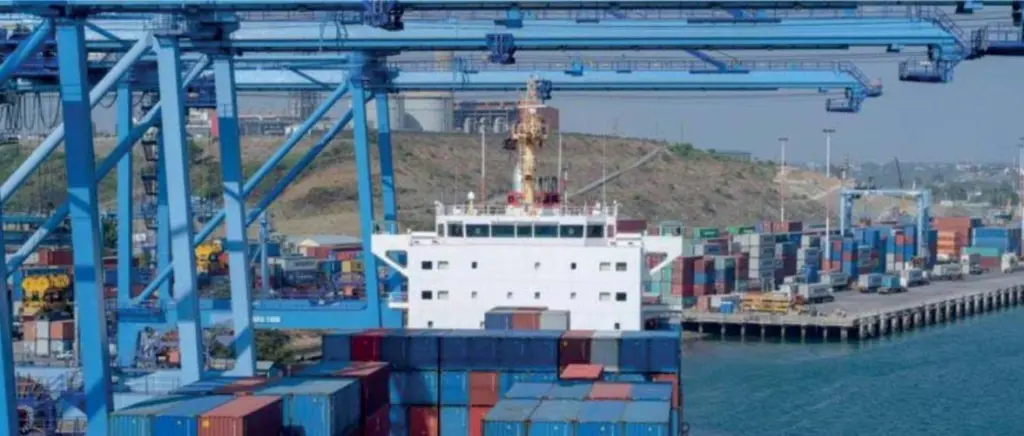
Controversy is the watchword of initiatives to privatise container handling in the port of Mombasa, Kenya and reports of the Kenya Ports Authority (KPA) undertaking a new initiative in this respect suggest that this will go down the same path.
The KPA has reportedly selected Switzerland-based Mediterranean Shipping Company (MSC) to run its recently completed CT2 container terminal facility, the 2nd phase development of the new container terminal which opened for business in 2016, with this first phase operated by KPA employees.
MSC’s involvement is understood to be via the Kenya National Shipping Line (KNSL) in which it is endeavouring to raise its stake to 47 per cent while KPA in turn relinquishes 21.8 per cent of its shares reducing its stake from 74.8 per cent to 53 per cent. The proposition is thus that KNSL will, as part of the joint venture, become the new operator of the Mombasa Container Terminal 2 (CT2), as well as offer container liner shipping (on a slot deal basis) and freight forwarding services.
The revised shareholding transaction is now reportedly with the East and Southern Africa (Comesa) Competition Commission for approval with various industry players invited to submit comments on it up until late March.
It is a fair bet to that assume that a lot of comments would have been received for diverse reasons.
PROCESS CONCERNS
It is noteworthy that over the years there has been considerable interest in the privatisation of Mombasa container terminal facilities. It is in the sights of diverse international container terminal operators and other potential investors many of whom invested considerable financial, time and other resources in the failed KPA led bid process for CT1 in 2015. This process was eventually cancelled due to the generally chaotic tender procedure and ultimately irregularities centring on last minute changes to the offer which attracted accusations of corruption. Doubtless the innocent parties in this original bid round will not be happy to know that they will not be given a second opportunity – hardly a strong testament to FDI in Kenya. Indeed, given the general history of KPA with corruption related problems and intertwined with this the failure of the last bid process there will be concern over what can be construed to be a backdoor process that gives a private entity a major stake in CT2.
It is also interesting to note that that this partnership agreement comes only a few months after the implementation of Kenya’s new Merchant Shipping Act which bars private shipping lines from operating port facilities. MSC does of course have a terminal operating arm but at the very least this is a grey area in conjunction with the deal.
There is additionally the question of whether such a terminal operating arrangement meets the spirit of the conditions stipulated in the JICA loan which has funded the terminal development, namely that the terminal should be privately operated. Is this halfway house sufficient? Can the best operator, under the best operating terms, be put in place without a competitive tender process open to a broad range of eligible parties?
Another fundamental question is the overall viability of KNSL. The Shippers Council of Eastern Africa, for example, contends that it is very difficult for KNSL to compete without its own vessels and containers and that chartering slots will only increase the cost of doing business. Further, there is a belief in the Council and among other parties that the rebirth of KNSL may well prove a still birth with it again heading into an era of mismanagement and accumulation of massive debts, as previously led to its collapse. Furthermore, the provision in the deal for KNSL to transport and handle all government cargo has been criticised as unlikely to guarantee value for money in the same way that competitive bidding for this cargo can.
There are other concerns – the Auditor General has in the past raised concerns about the dilution of KPA’s stake in KNSL and the process behind MSC’s selection.
ROOM FOR IMPROVEMENT
If it is true what they say that “the best deals are simple deals” then this new proposed operating arrangement for CT2 is most unlikely to meet this criteria. There certainly seems significant scope for improvement with history telling us a properly conducted open tender process has a lot of merit attached to it.
Related Articles
 EQUIPMENT
 OPERATIONS
 OPERATIONS