![PortStrategy[GreenPort]](https://www.portstrategy.com/wp-content/uploads/2026/09/PortStrategyGreenPort.svg)






Reefer freight rates exceed dry cargo
Despite an unprecedented drop in reefer seaborne trade last year, reefer container freight rates are outperforming the dry cargo trade, according to analysis by Drewry.
The recently published Reefer Shipping Annual Review and Forecast report also predicts this divergence to continue with projected average annual growth of 3.6% for containerised reefer trade up until 2027.
Drewry estimates that total worldwide seaborne reefer cargo declined to 137.5 million tonnes last year, representing a fall of almost 1%, the first time in over 20 years and compared to flatlining trade for dry cargo.
Supply chain disruptions, rising input costs and a return to normal demand after the peaks of 2021, all contributed to the decline, says Drewry.
Despite such adversity, reefer shipping trade is recovering through 2023, with every key reefer-intensive trade route reporting year-on-year growth so far this year. Seaborne volumes are projected to rise 1.5% by the end of the year with containerised reefer trade expanding at 2.3%, outpacing flatlining wider container shipping cargo demand.
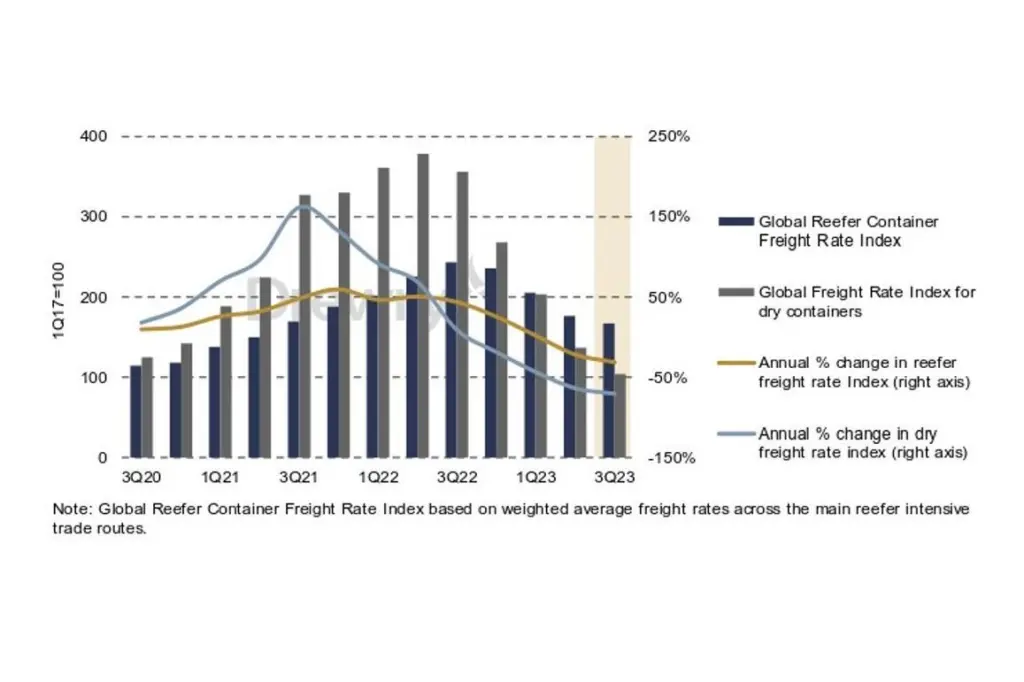
Reefer container freight rates have been declining since their peak during Q3 2022 but at a more measured pace than for dry freight, says Drewry.
Drewry’s Global Reefer Container Freight Rate Index, a weighted average of pricing across the top 15 reefer intensive deepsea trades, declined 22% to US$4,840 per 40ft in the year to Q2 2023 with initial indications suggesting the fall will have accelerated to 31% by the third quarter. Despite such corrections, reefer container freight rates remain 60% above pre-pandemic levels, while pricing for dry cargo has reached parity.
Related Articles
 EQUIPMENT
 OPERATIONS
 OPERATIONS