![PortStrategy[GreenPort]](https://www.portstrategy.com/wp-content/uploads/2026/09/PortStrategyGreenPort.svg)





UK retailers urge better use of northern ports
UK retailers have joined port operator Peel Ports Group to call for a new strategy that makes better use of northern ports.
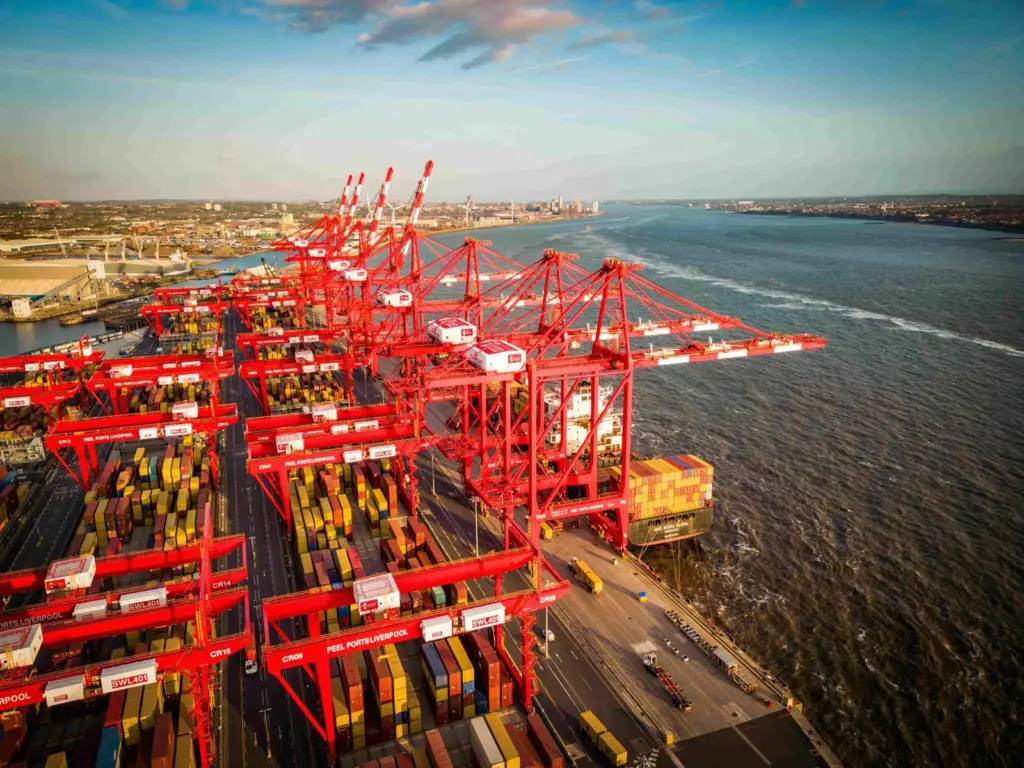
Currently 90% of deep-sea containerised cargo enters the UK via southern ports, despite 60% of these goods being destined for the north.
This leads to a variety of problems, including insufficient rail and HGV driver capacity, congested roads, cargo delays, inefficient logistics and increased pollution from unnecessary road journeys.
“A north/south, two-port UK strategy could address many of the country’s logistics challenges, transforming and modernising supply chains for retailers and other cargo owners,” said Stephen Carr, group commercial director at Peel Ports Group.
The new approach was discussed during a British Retail Consortium webinar jointly hosted by Peel Ports Group and including representative from TJ Morris and Trinity Logistics.
The panel highlighted how a two-port strategy would increase operational efficiency for retailers, allowing them to be more responsive to customers and reducing delay.
The panel urged shipping lines, the government and port operators to work together to bring this two-port strategy to life.
“There’s a high level of support from the retail sector, driven by a need to better optimise the flow of seaborne cargo to enable much greater landside efficiencies,” continued Carr.
In a recent Peel Ports survey of UK retailers and cargo owners, 76% said they wanted to see goods imported closer to their end destination with 79% believing that more efficient transportation is needed to reduce greenhouse gas emissions.
“Retail industry leaders have spoken,” concluded Carr.
“They want a multi-port import strategy to release the pressure on the supply chain they so heavily depend on. Now is the time for our industry to work together to implement a two-port strategy without delay.”
Related Articles
 EQUIPMENT
 OPERATIONS
 OPERATIONS