![PortStrategy[GreenPort]](https://www.portstrategy.com/wp-content/uploads/2026/09/PortStrategyGreenPort.svg)

APMT takes a slice of EAS
News that APM Terminals is taking over 30 per cent of a failed shipyard in Suape came as a big surprise. Rob Ward looks at the implications
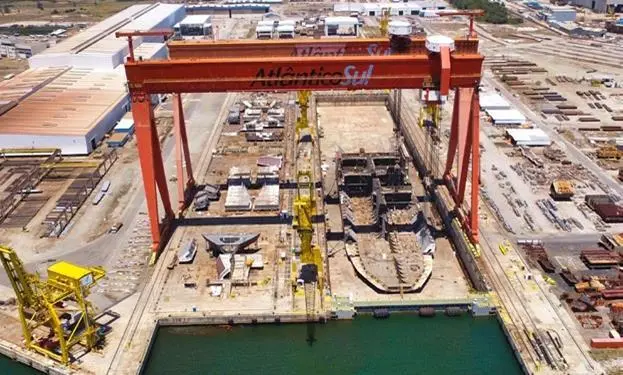
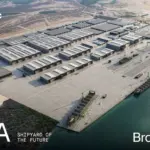
Writing about Brazilian ports and shipping means it’s easy to be accustomed to big surprises and shock news, but the announcement in late July that APM Terminals (APMT) will be taking over 30 per cent of the land currently occupied by Estaleiro Atlantico Sul (EAS), the failed shipyard in Suape, did come as a massive surprise to many Brazilian port and shipping aficionados.
APMT says it will invest up to Reais2.6billion (US$503.04 million) in the new terminal and will create 338 direct and 1300 indirect jobs in the process. It will open by the end of 2025, with a capacity for 400,000 TEU per annum, delivering a 55 per cent capacity uplift to the port as a whole.
The opening of the new APMT operated terminal is expected to herald a more competitive environment and in particular exert downward pressure on terminal pricing. To-date the ‘only game in town’ has been Tecon Suape, which serves the city of Recife (40km away and a metropolitan population of four million) and the state of Pernambuco, an important one for fruit exports (especially melons, mangoes, grapes and lemons).
PAINFUL RESTRUCTURING
EAS has been going through a painful “restructuring” process brought on by out-of-control corruption highlighted by the Lava Jato (Car Wash) political imbroglio that led to the demise of Sergio Machado, the president of Transpetro (the logistics and shipping arm of Petrobras, the state-controlled oil company) and various politicians in the PT left-wing government of Lula and Dilma Rousseff.
EAS opened in 2009 and was originally built for the construction of 48 Suezmax oil tankers for Petrobras, but only two were ever built and the first one, the 157,055 dwt Joao Candido, that was launched had “weak welding problems” so was not certified until a year later. Only four tankers were ever built by EAS and by 2019 administrators were called in to “restructure” operations and find “other users” for the area known as Isolated Production Unit B (UPI-B).
Against this background the liquidators, along with the Suape Industrial Port Complex (port authority for the port), adopted a dual strategy of selling off part of EAS (UPI-B) and creating competition for Tecon Suape, which is majority owned by International Container Services Inc (ICTSI) of the Philippines.
ICTSI also bid for the EAS site but its offer, of Reais450million, was just Reais5m less than that offered by APMT and, ICTSI says, it was not allowed to bid any higher and has since launched an appeal.
TIGHT-LIPPED
Sources close to APMT are staying tight-lipped, but the company did issue the following statement:
“APM Terminals has made the higher offer to acquire part of the area of EAS in the Port of Suape, with the intention of establishing and operating a container terminal.
“APM Terminals made an offer to EAS in the acquisition of an Isolated Productive Unit (“UPI-B Cais Sul”), which comprises part of the area of EAS shipyard, including its southern quay wall. APM Terminals has been declared the bid winner by the bankruptcy estate and is currently waiting for such decision to be confirmed by the judge responsible for EAS’s judicial recovery process. APM Terminals sees great potential in the region.”
Feedback from those close to APMT suggests that operating a terminal out of Suape will allow the multi-national operator to develop a regional hub and give some options for liner services – both from Europe and, possibly, the Far East – to turn some vessels in Suape and relay cargo via smaller feeder ships. Its sister company Maersk Line owns the rapidly growing Brazilian flag operator, Alianca Navegacao e Logistica, which has regular services to the south of Brazil and the River Plate.
However, one port consultant, who did not wish to be named, proffers the view that developing business out of Suape and Pernambuco in the northeast of Brazil “needs to be done very carefully, so as not to disturb the company’s efficient and profitable business out of Pecem,” located on the Brazilian North coast.
LEVEL PLAYING FIELD ISSUE
Another port consultant, based in Recife, commenting on accusations of current robust pricing in Suape, told Port Strategy that it “was unfair to blame high box costs purely on Tecon Suape”.
“It is the extortionate port fees paid to the federal and state governments that ratchet up the overall costs, and as a TUP [Private port terminal], the APMT terminal on the EAS site will not have to pay these fees,” he said. Further, that this, “To me seems to be grossly unfair, and I think Tecon Suape has good reason to challenge this arrangement with the justices. Perhaps a re-assessment of the existing port fees for Tecon would be a solution.”
Related Articles
 EXPANSION & DEVELOPMENT
 CONTAINER & CARGO HANDLING
 PORT & TERMINAL NEWS